James Baker
The Brief
For part one of ‘subject and sequence’, I will be demonstrating the effects of shutter speed and aperture on a photograph. I will end up with eight photographs centring around a certain theme in which I am particularly interested.
These eight photographs will comprise of:
x2 demonstrating shallow depth of field.
x2 demonstrating a deeper depth of field.
x2 demonstrating a fast shutter speed.
x2 demonstrating a slow shutter speed.
Idea One
I have been playing bass guitar for six years, so it’s fair to say I have somewhat of a mild interest in it. So much so that I have accrued a fair amount of instruments over the years, and I quite like the idea of my eight photographs being focused on them. I especially feel I can demonstrate a shallow depth of field quite well, for example, I could take a photo facing from the bottom of the guitar up the neck, with the body and nearer parts of the strings being more sharp and gradually things becoming softer towards the head. I have seen this aesthetic done before and would rather like to try it myself and perhaps even include it in my final body of work. Another good shallow depth of field shot could be a close up of my harmonica, with the first few holes in focus and the rest les and less so. Slow shutter speed could be demonstrated with a bass string being plucked and the camera capturing its movement, I’d say a shutter speed of about 1/4 of a second would be about right for this to work.
Idea Two
I’ve always been drawn to the sea, this was one of the reasons that led me to join the Navy in fact. I feel that using this as my focus could yield some interesting results, for example my slow shutter speed shots could be used to show the water washing over rocks, which would create quite a compelling and aesthetically pleasing effect. Also for shallow depth of field I could focus on something, perhaps a shell, a rock or even a seagull (if it stays put long enough), with the unfocused background being half and half with the sea and the beach. The advantages for the deeper depth of field shots in this environment would also be great, I could find some higher ground and take the shot of the whole sea and beach area, or alternatively maybe find something like a small pier or a jetty that I could shoot down, which would be a good way to demonstrate the sharpness over the increasing distance.
What Do The Camera Controls Actually Do?
There are three pillars of photography, they are aperture, shutter speed and ISO, so here’s a brief overview of what they mean and how they are used effectively.
Aperture: This is how wide the lens has been opened and therefore how much light is being allowed in. This determines the depth of field in a shot, and is measured on the camera in ‘f numbers’, the higher this ‘f number’ i.e f.22, the smaller the lens opening and vice versa. So for example, a shallow depth of field (the focus of the image being sharp and in focus while the background is blurred) would require a low ‘f number’ i.e f.3.4 and so a wider lens opening, the opposite is true for a deeper depth of field.
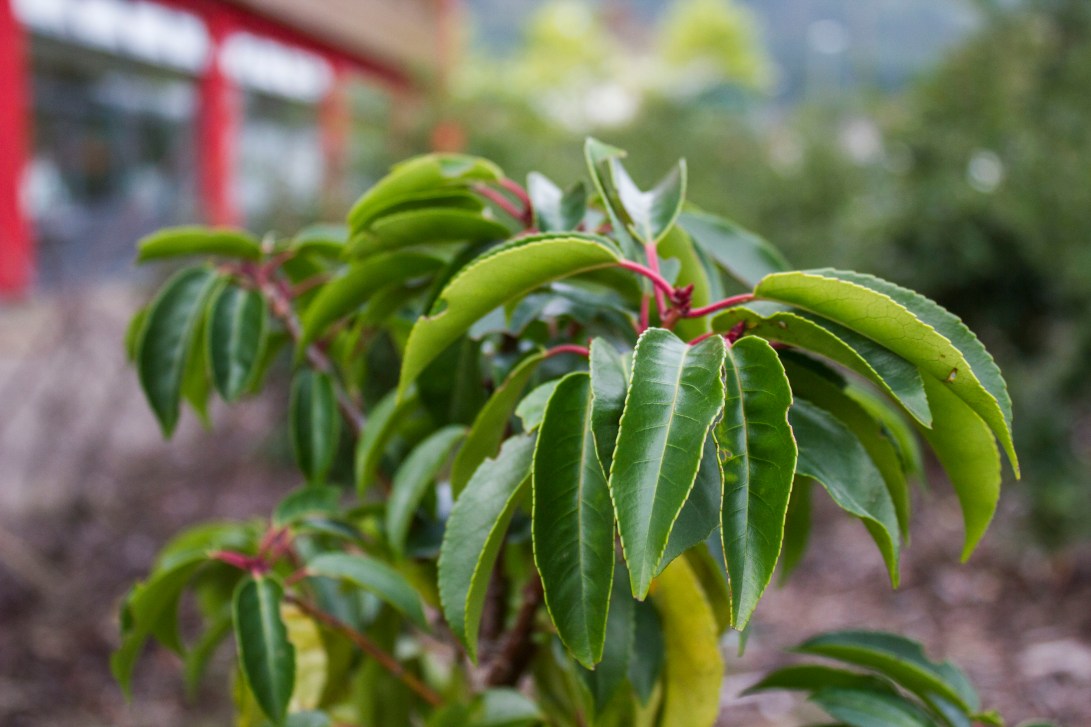 A photo I took using a low f number, demonstrating shallow depth of field.

http://marissalwatson2404.blogspot.co.uk
This photograph perfectly demonstrates a deeper depth of field as all of the image is in focus.
Shutter Speed: Shutter speed is pretty much as it sounds, it’s the speed at which the shutter opens and closes. Shutter speeds are measured in seconds, although for the most part tenths, hundredths and thousandths of a second, if you want to allow more light in, then a slower shutter speed i.e 4 seconds will be necessary, this captures motion blur because the shutter is open longer and so captures more movement, therefore it shows up in the photograph as blur. If however you wish to freeze something in time, a very quick shutter speed i.e 1/1000 of a second would be required, so as to allow light in for a minuscule amount of time and thus only capturing the image of that particular split second.
 http://thecanadianpics.blogspot.co.uk
A great demonstration of fast shutter speed, capturing the split second the object displaces the water.
 http://thecanadianpics.blogspot.co.uk
This photograph demonstrates slow shutter speed, the photographer appears to have used a very long exposure time (probably 15 seconds or more), to capture the movement of the cars along this road, giving the appearance of their movement in the photo.
ISO: This is essentially how sensitive your camera is to the light that is available. It is measured from 100 and goes up until about 3200 on most cameras but it can go a lot higher. The lower your ISO setting, the less sensitive your camera is to light and so the darker the image will be, this is best utilised in situations where there is an abundance of light and the image would be better served if that light was made less prevalent, higher ISO settings would be used for low light situations so as to gather any and all available light. ISO is also related to the speed at which an image is captured, for example, at a setting of 100 the sensor (the part that changes the light sensitivity) may need one second to capture the image, whereas at 1600 it needs a sixteenth of that time to capture the image. This can make a world of difference especially when attempting to freeze a moving subject in time.

This series of photos explain well how differing ISO settings affect the light in an image.
Down The Park
One fairly sunny afternoon in October, we decided to head to Waunfawr Park near the college, as it would provide an excellent opportunity to go out and take some shots of the local scenery and hone our skills.
Here are some of my favourite shots from the day.
Deep Depth of Field:
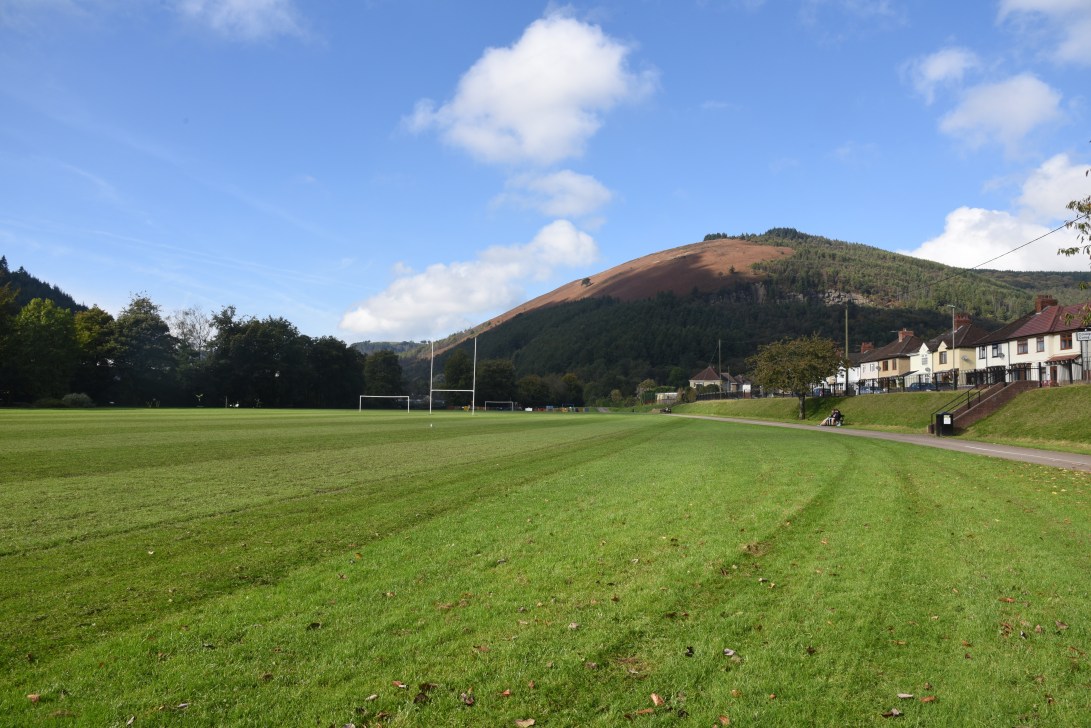 To achieve a deeper depth of field in this photo, I set my aperture to f14. I feel the lines in the grass give a sense of distance in the foreground, and obviously the mountain provides a beautiful backdrop.
 Again, I set my aperture to f14. Like the lines in the previous picture, the trees give a feel of distance and the viewers eyes follow them further and further into the photograph.
Shallow Depth of Field:
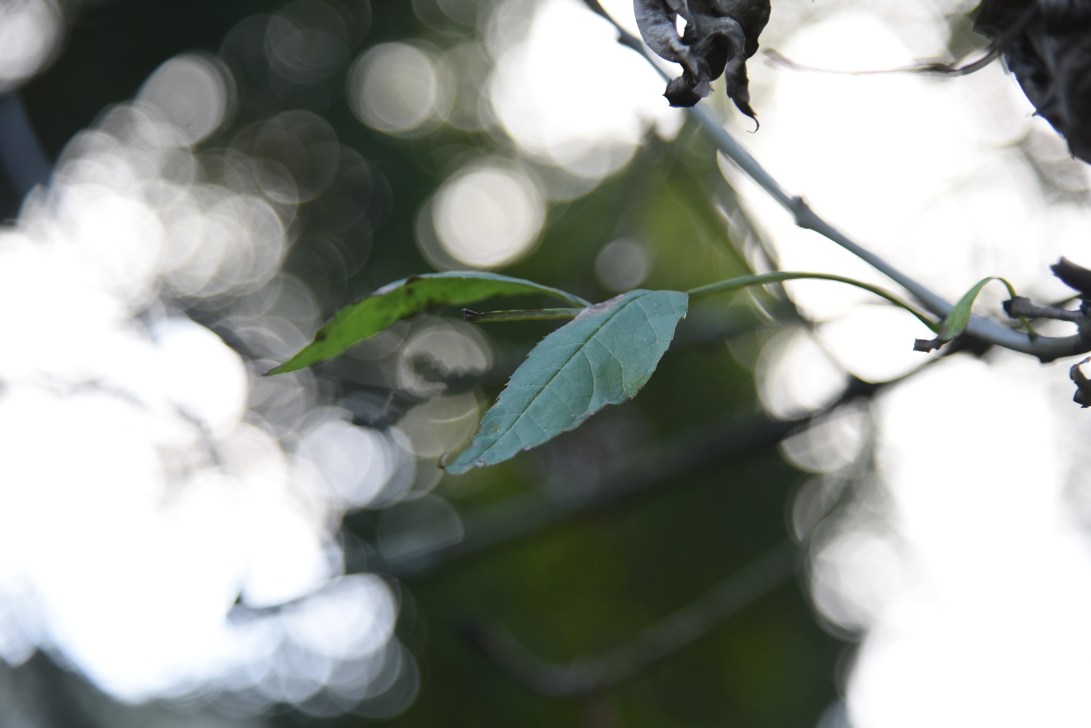 For this shot, I focused on the leaf and as a result, the blur in the background has had an interesting effect on the light coming through. I used an aperture of f4 on this shot.
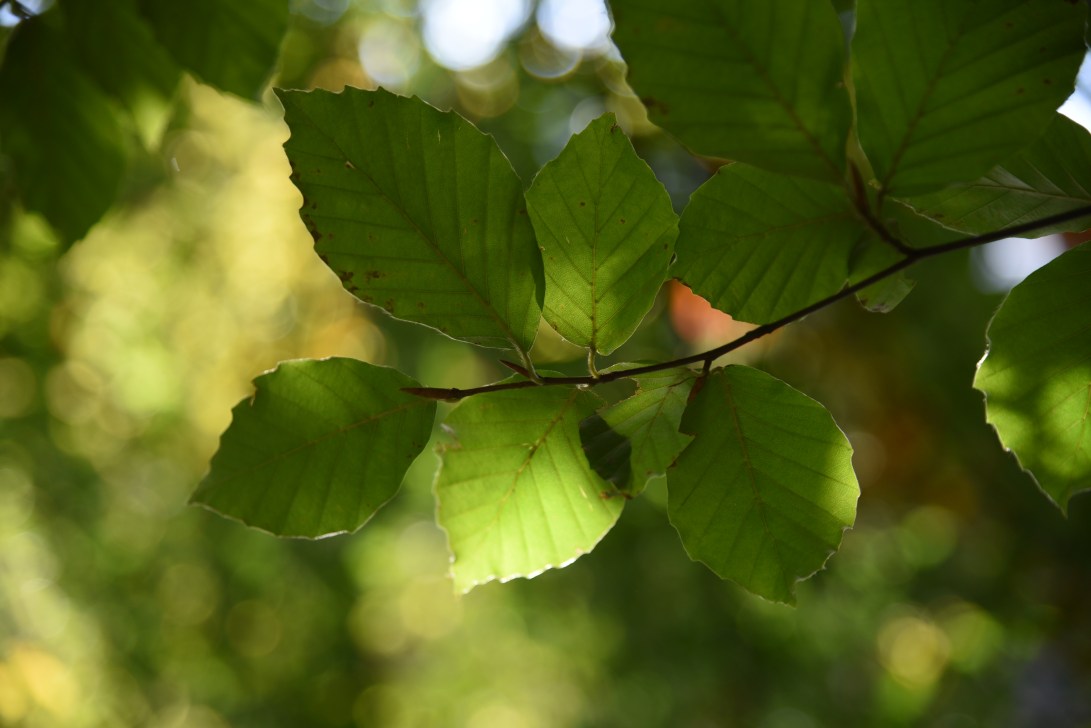 For this shot I used f4 again. The light illuminating and shining through part of the in focus leaves gives a very aesthetically pleasing effect, and the background being almost a golden blur in some parts give the impression of a gorgeous Summers day (even though this was in October).
Fast Shutter Speed:
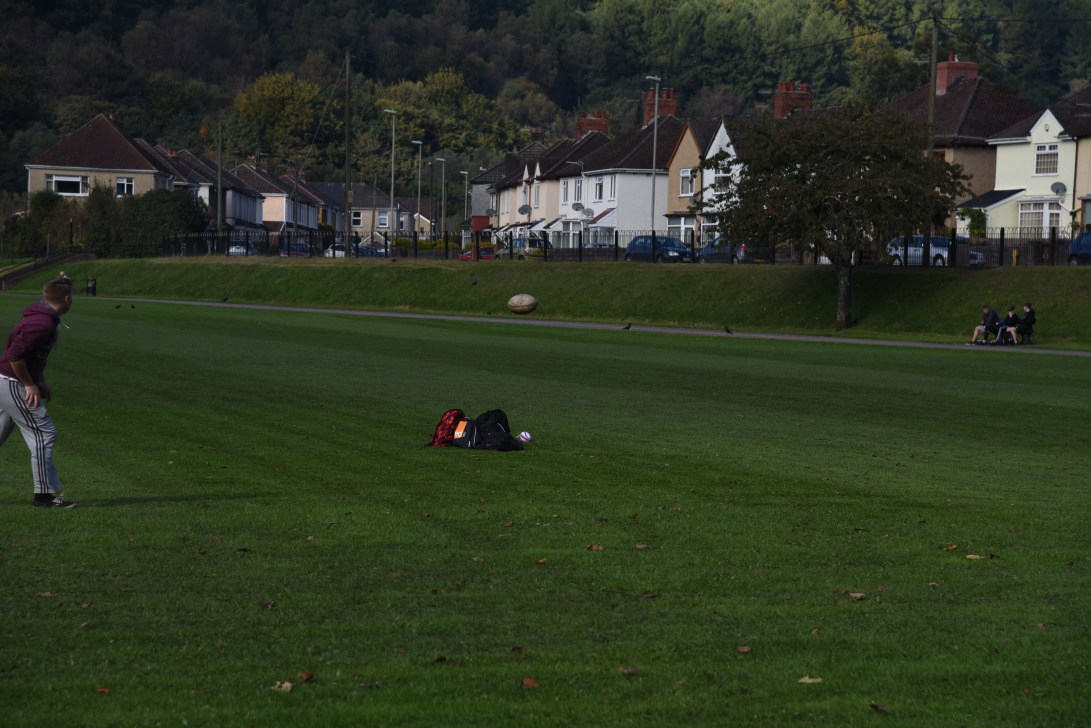 To capture this rugby ball and freeze it, I used a shutter speed of 1/1250. I’m glad I managed to get a decent shot of it because I feel that it helps give the viewer a better idea of the essence of the place.
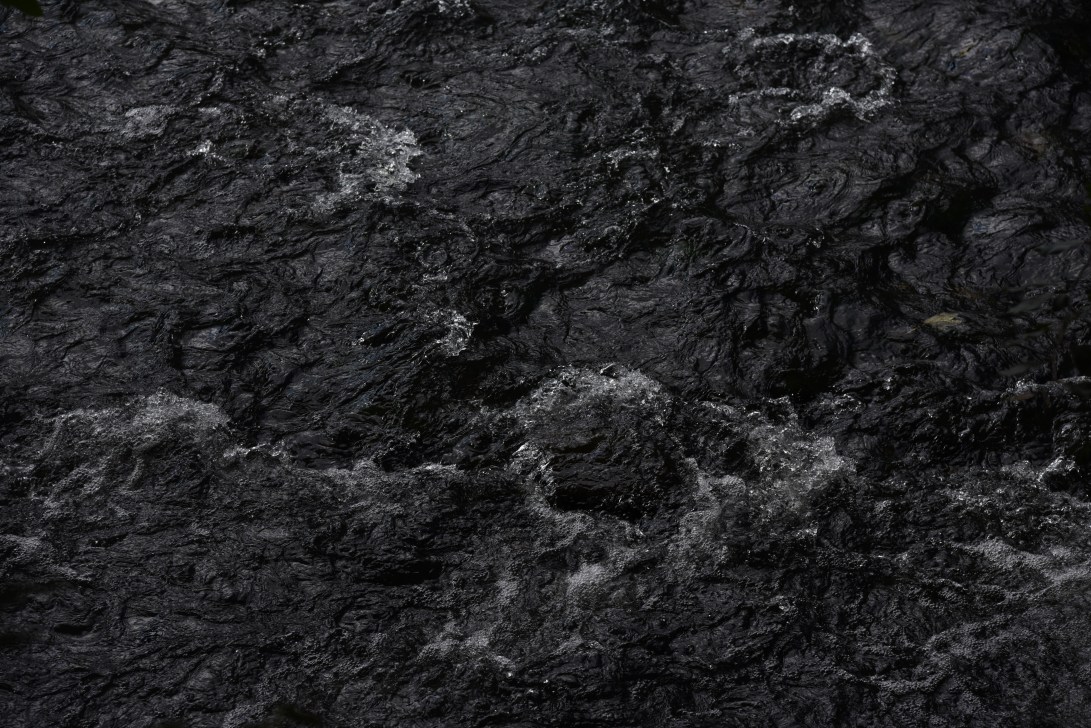 Again for this shot I used a shutter speed of 1/1250. I think the darkness of the water and the fact it has been frozen so well makes it look like some sort of rock, which I particularly like about this image.
Slow Shutter Speed:
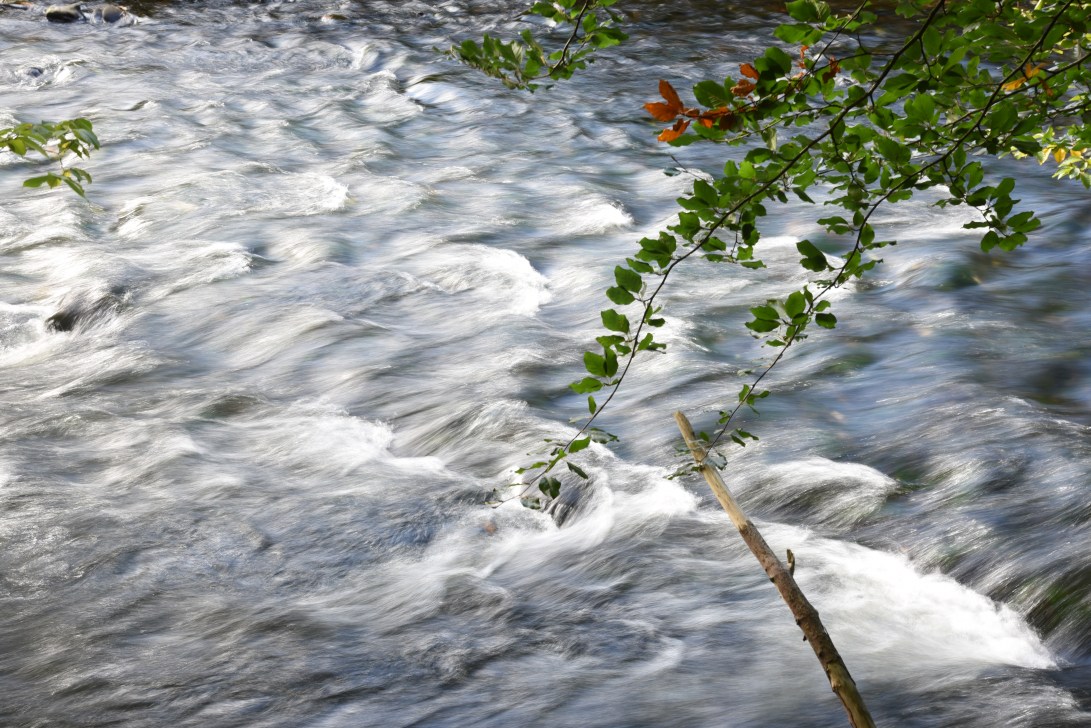 I had never really tried portraying motion using a slow shutter speed before (in this case using a shutter speed of 1/5). I think it went very well, helped in no small part by the shade provided by the surrounding trees to prevent over exposure. To stop most of the camera shake I held the camera against the fence (in the absence of a tripod).
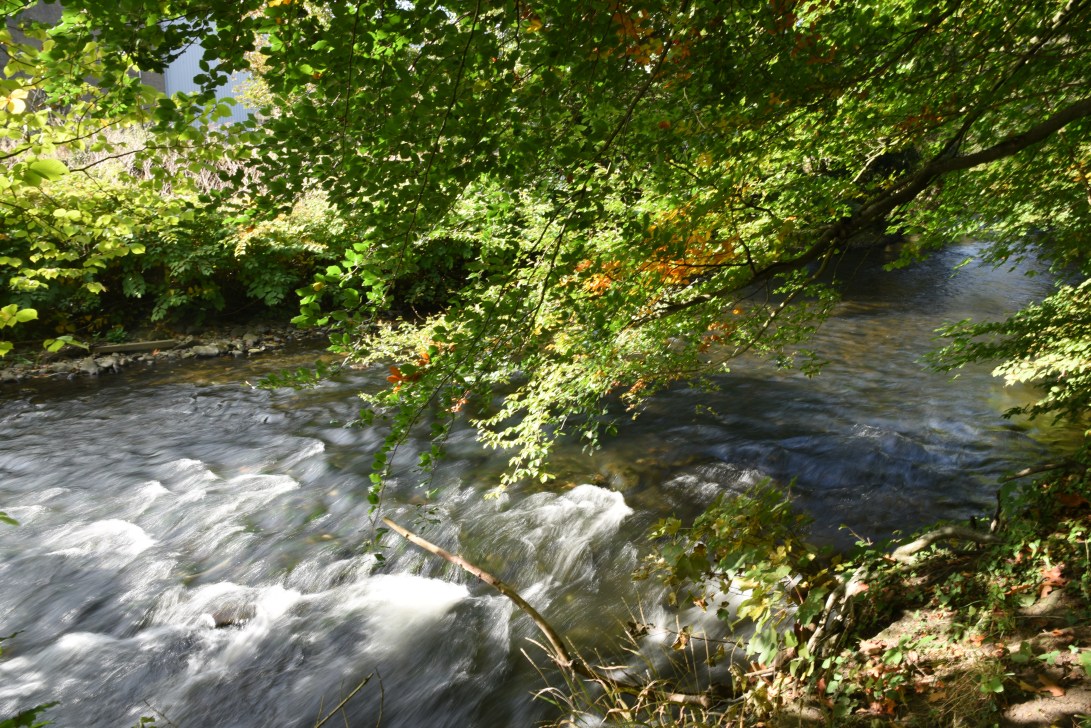 This was captured using 1/4 of a second. Just a wider view of the motion of the river.

Here is a contact sheet containing the majority of the shots I took that day.
Day Out In Barry Island
In one of my ideas I discussed previously, I talked about my affinity for the sea and how I would like to try out the eight shots on it. A few of my ideas for specific shots didn’t quite go to plan (especially the close up of a seagull, they were a tad camera shy), but overall apart from a few blips it was quite a decent day of shooting.
Deep Depth of Field:
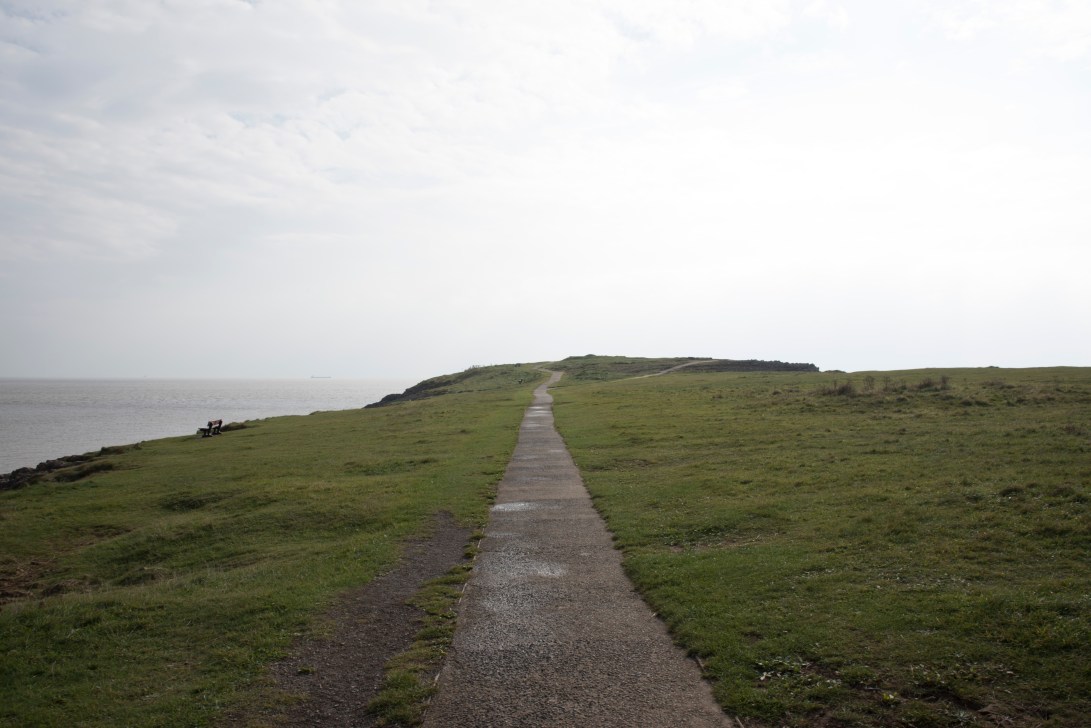 I particularly like this shot because the path has no discernible end, it just appears to be going out into the sea. I used an aperture of f16 to try and capture as much detail as I could without pushing the ISO too high or shutter speed too slow to compensate.
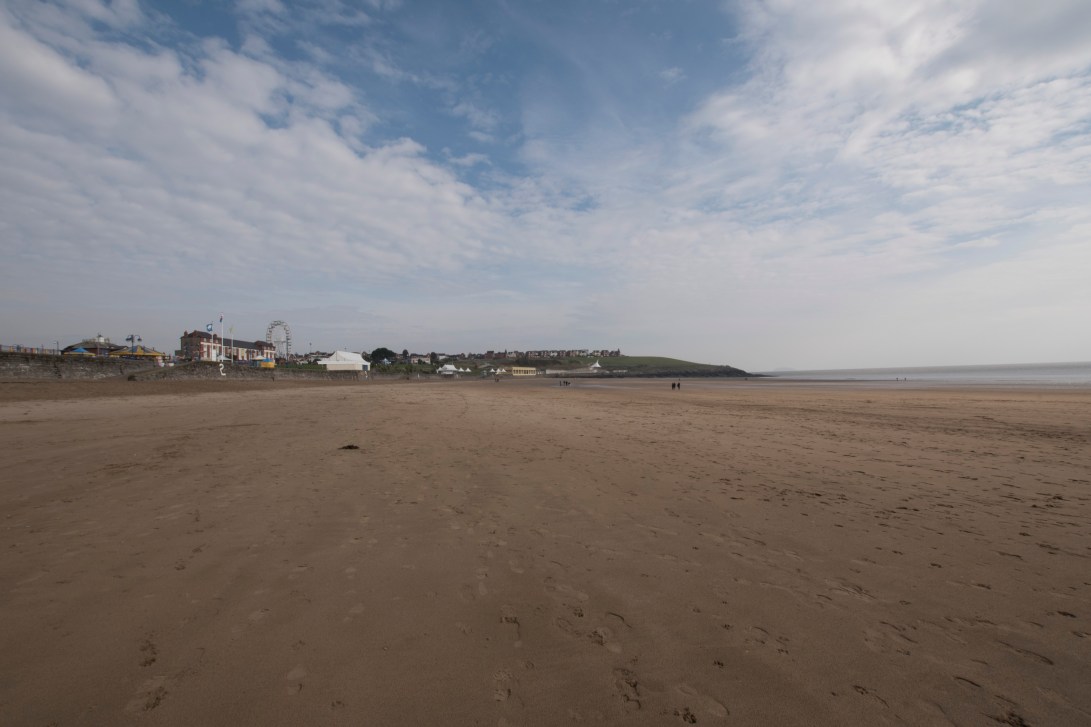 I used a 10-20mm wide angle lens for this shot. I enjoy it because it adds a bit of distortion to the sky and the sand, making them both appear as I saw them, which was outstretching and seemingly endless, rather than just a flat looking image with all the bare facts. I used an aperture of f16.
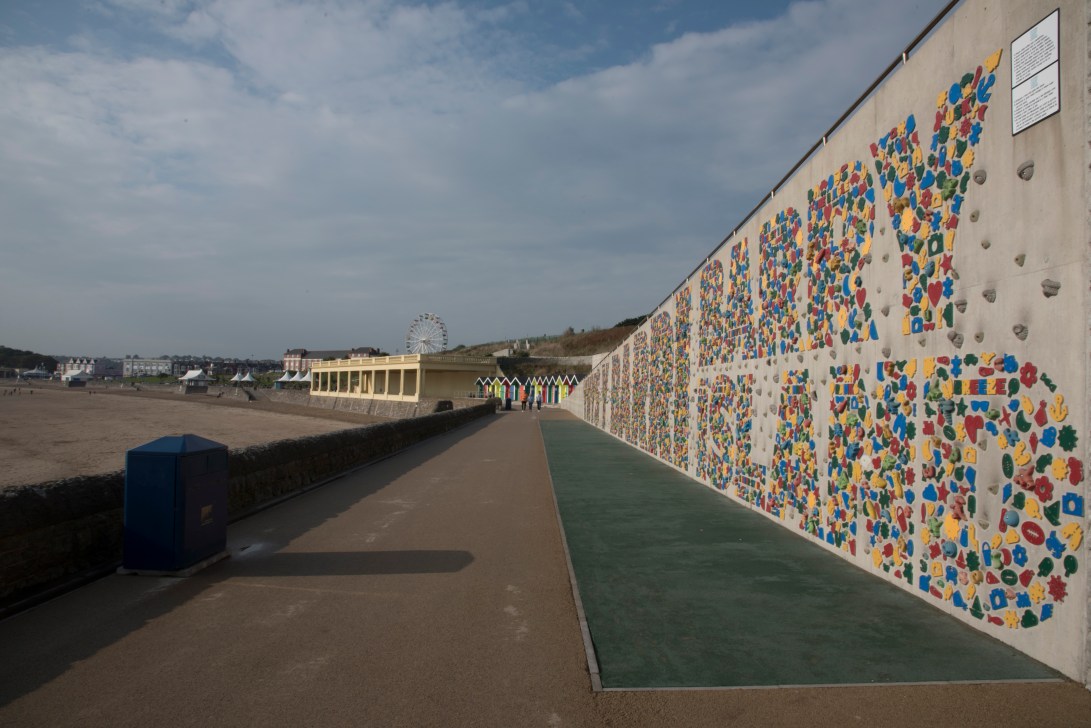 In this photo I ensured the point at which the wall ended was in the centre of the shot, to both obviously demonstrate the deep depth of field and to almost cut the image into three separate scenes (the wall, the walkway and the beach). To me it almost gives the feeling of zooming into the image, this is due to everything becoming smaller and until one particular point. I used an aperture of f22.
Shallow Depth of Field:
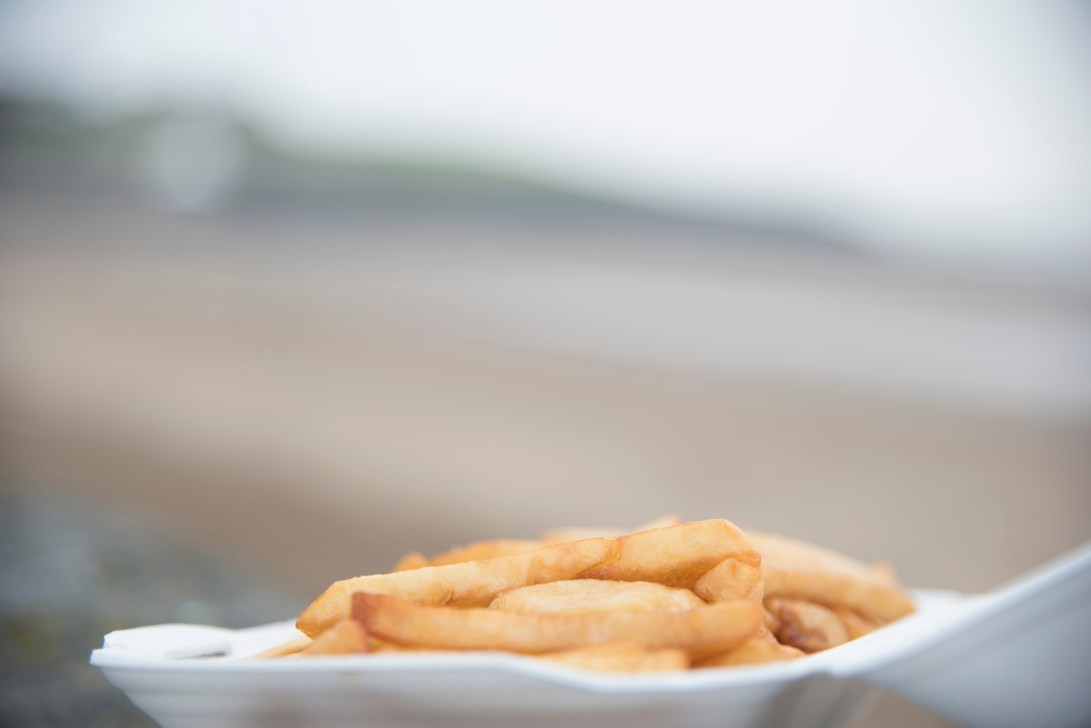 I decided to capture the classic British seaside experience in this shot, simply a carton of chips with the beach and sea blurred in the background. I used an aperture of f4.
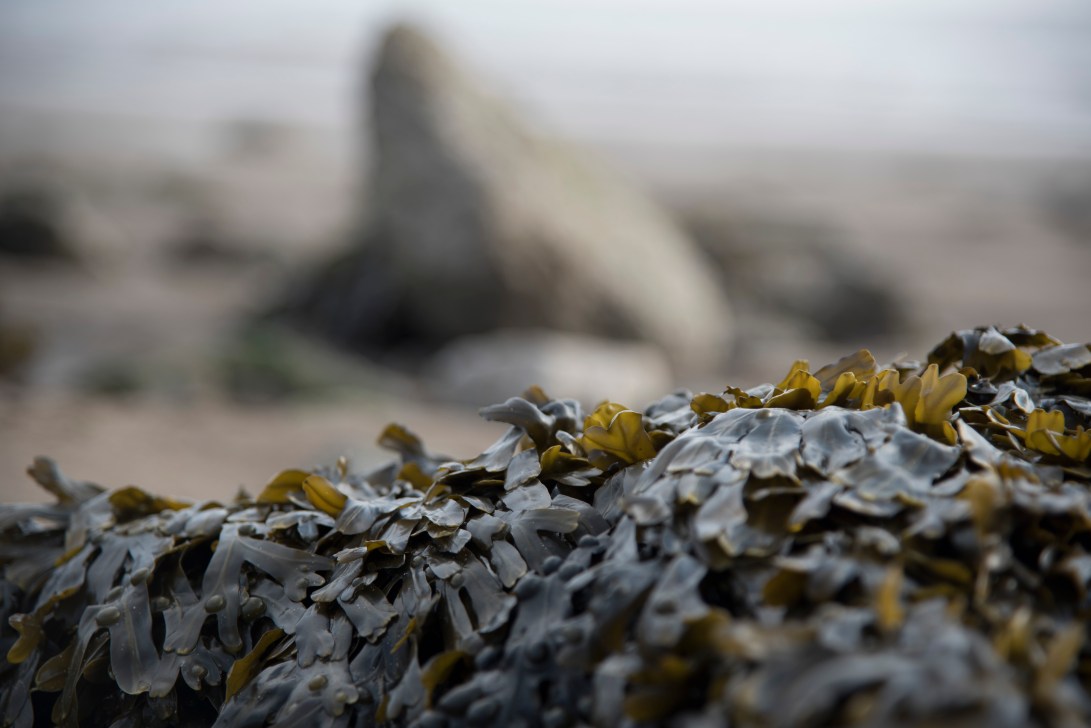 This shot for me has pretty much all the essential elements of the beach (barring a crab or two), but I decided to focus on the seaweed because I particularly liked the detail I could get from it, and I think it’s a lot more interesting than focusing on the rock. My aperture setting was f4.
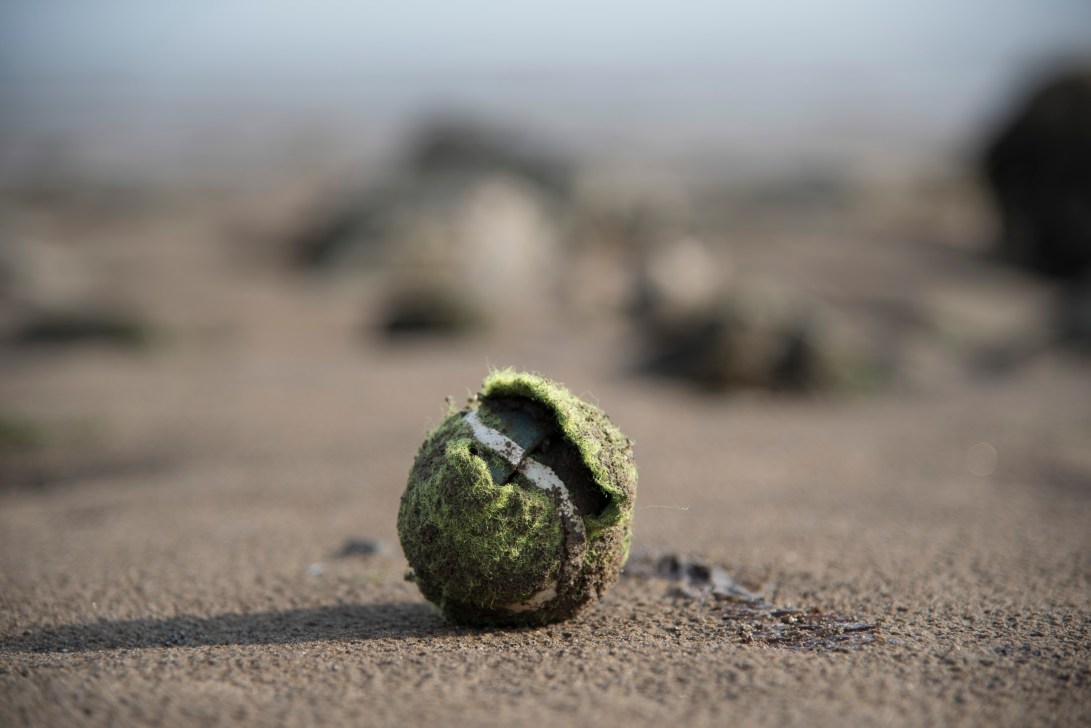 This is my favourite shot of the day, I love the amount of detail I got in the old chewed up tennis ball, it is also another important aspect of the beach as many people take the dog for a game of fetch here, and this is the aesthetically pleasing wreckage left behind. Again, my aperture setting was f4.
Fast Shutter Speed:
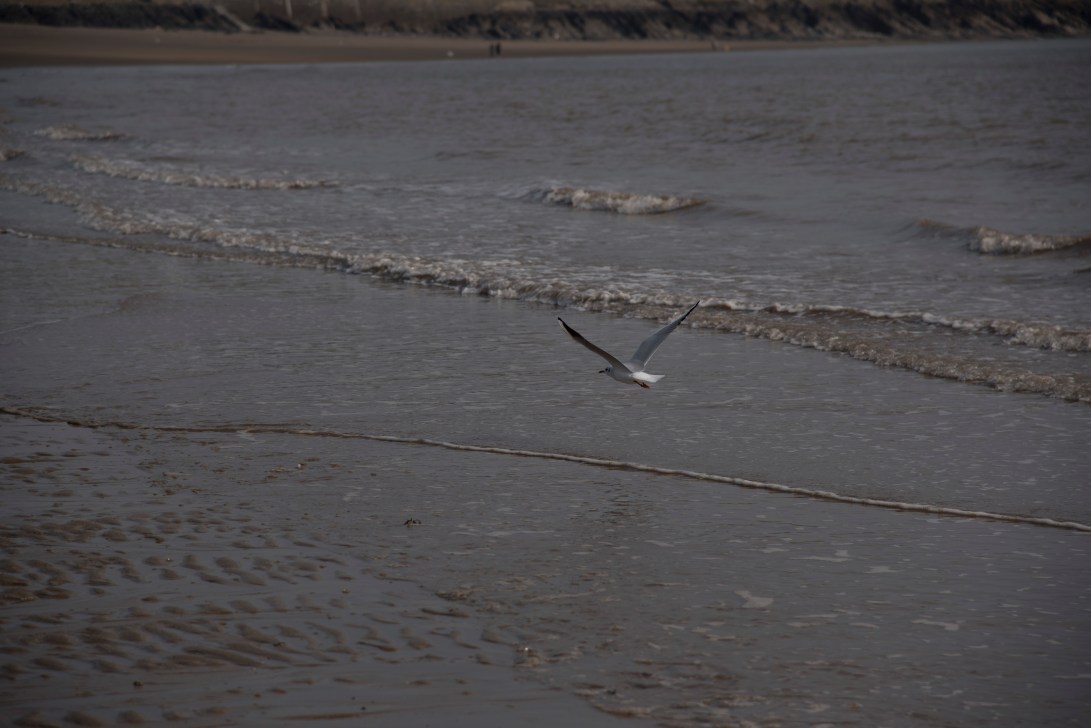 For at least one of my fast shutter speed shots, I knew I had to capture a seagull in flight and freeze it as seagulls are an integral part of the scenery when by the sea. I used a shutter speed of 1/1250.
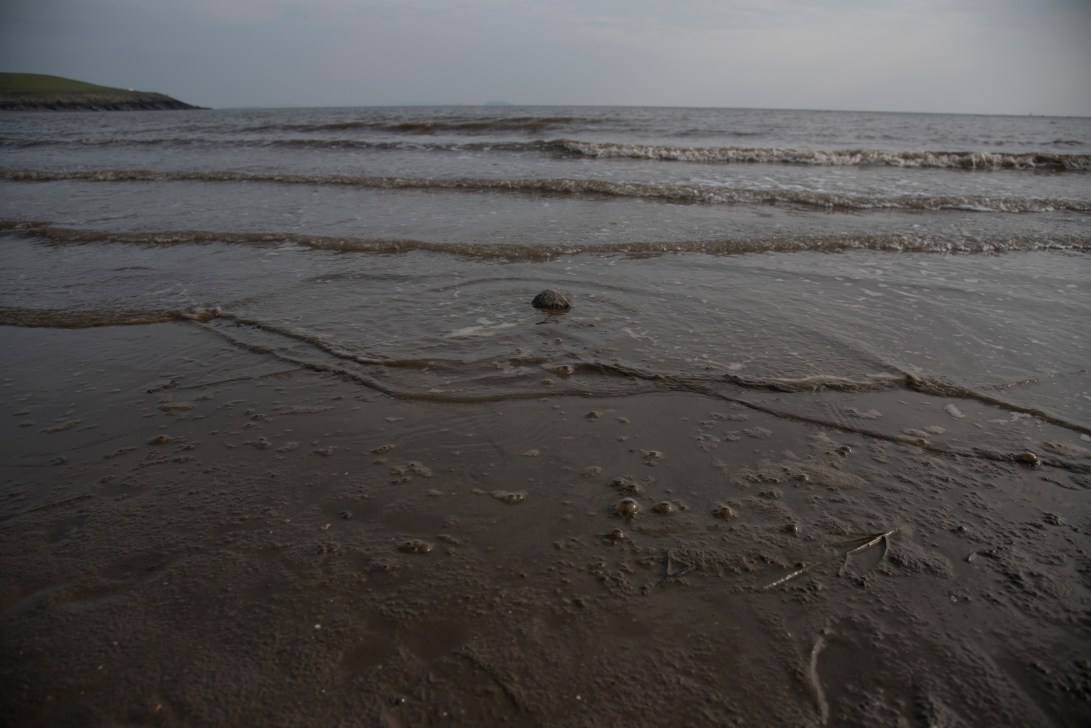 In this shot I have stopped the waves in time, now to me they look like staggered, jagged steps up to the horizon. My shutter speed setting was 1/1250.
Slow Shutter Speed
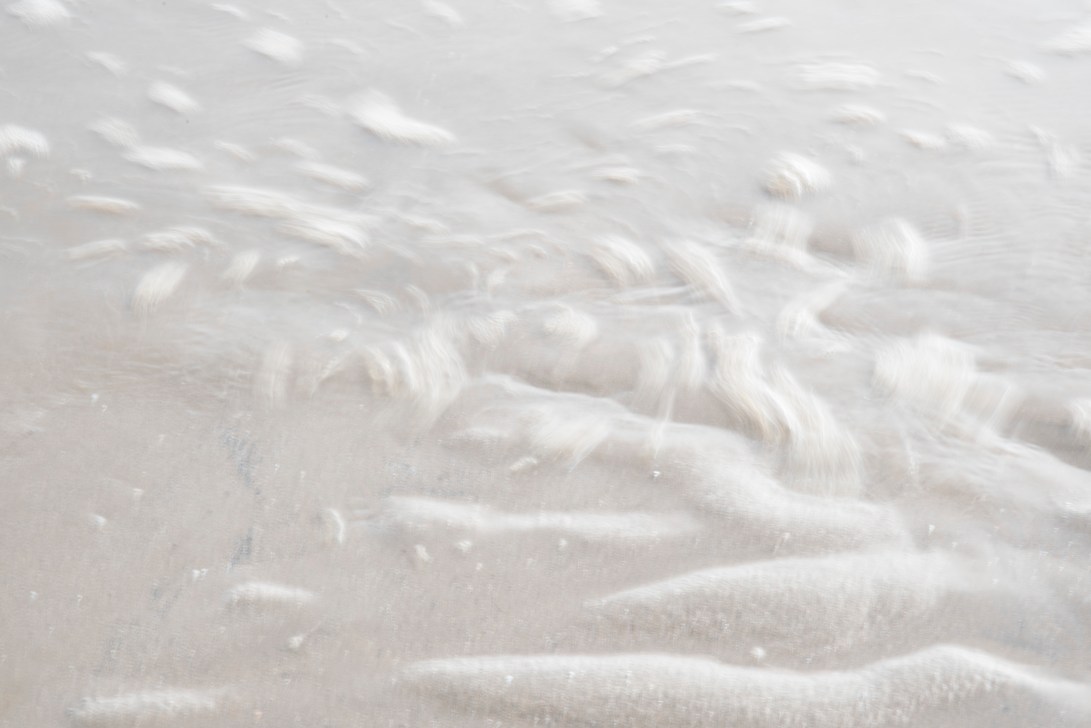 This was my most successful shot of this nature on the day, here I’ve captured the motion of the froth washing over the sand, admittedly it could be much better but the light was not particularly forgiving. My shutter speed setting was 1/4.
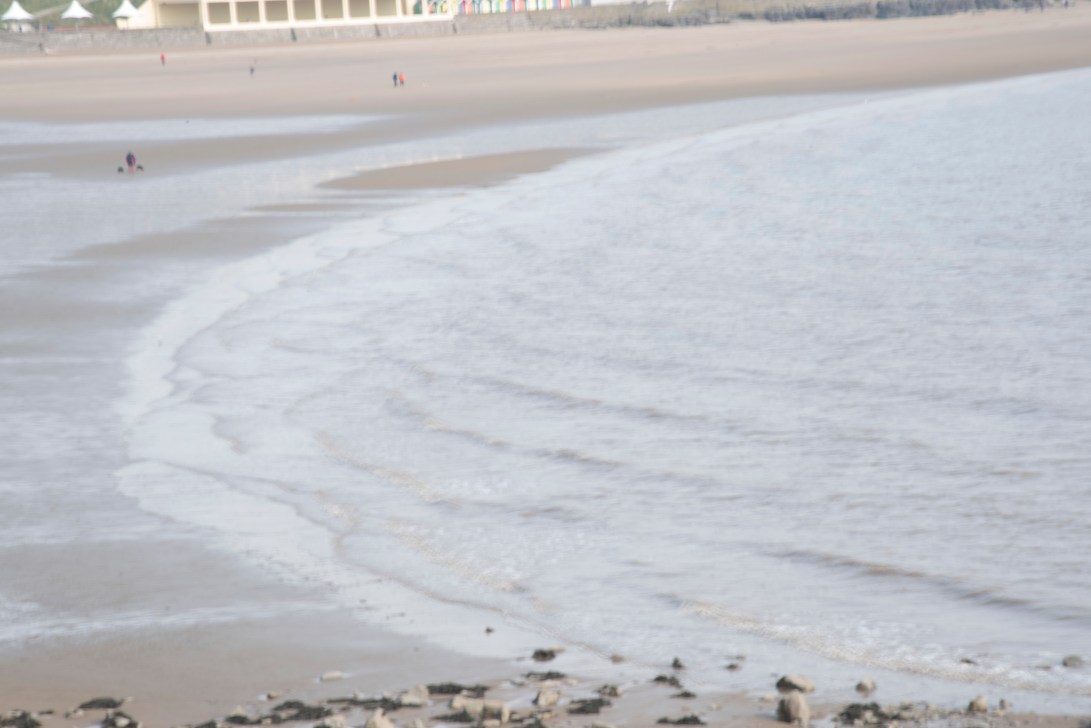 Last (and probably least) we have the motion of the waves coming in, this was not as I’d intended it at all, the light was, as I mentioned, not forgiving. Therefore I couldn’t fully strike the balance between capturing the motion blur and stopping the image becoming over exposed. Again my shutter speed was 1/4.
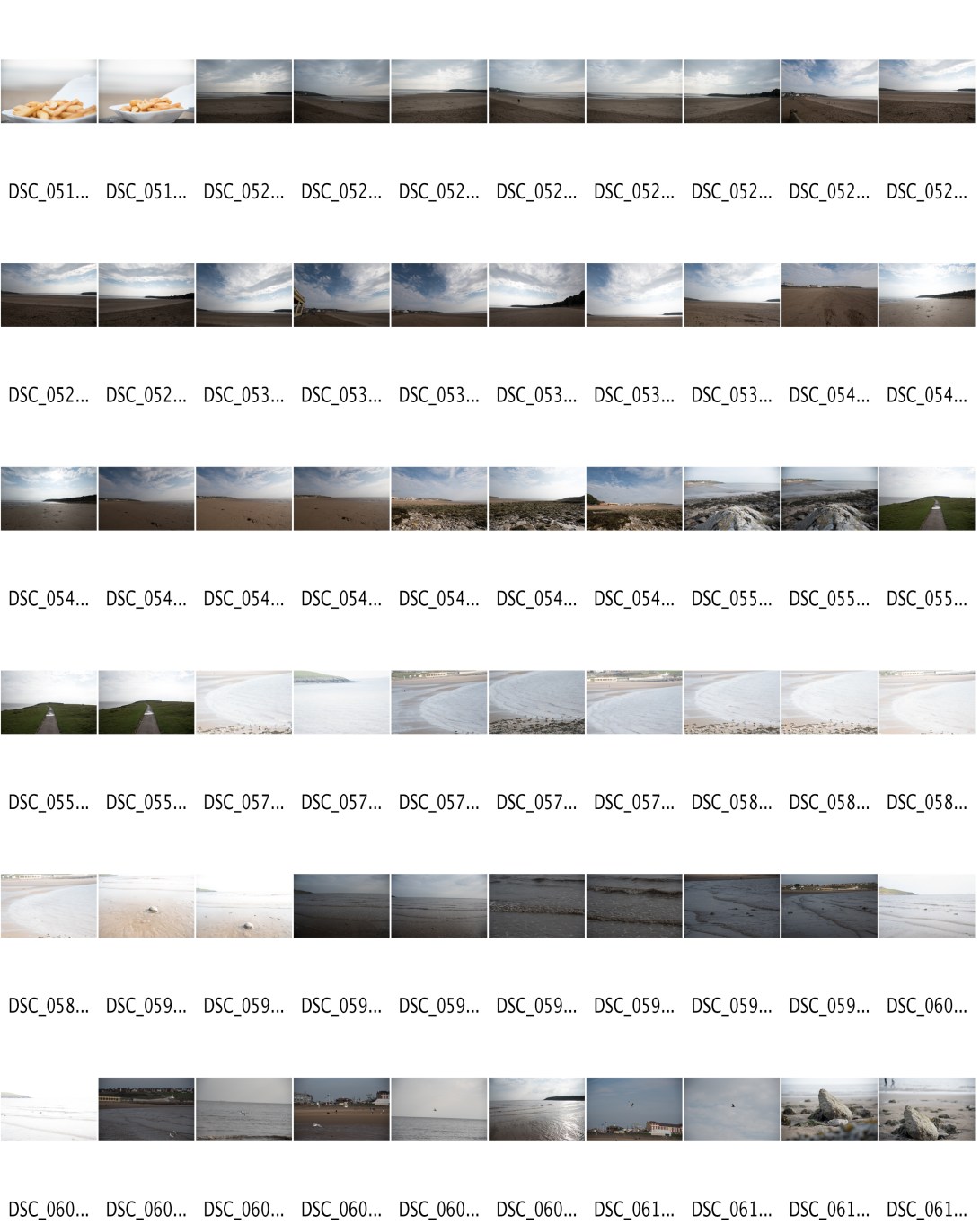
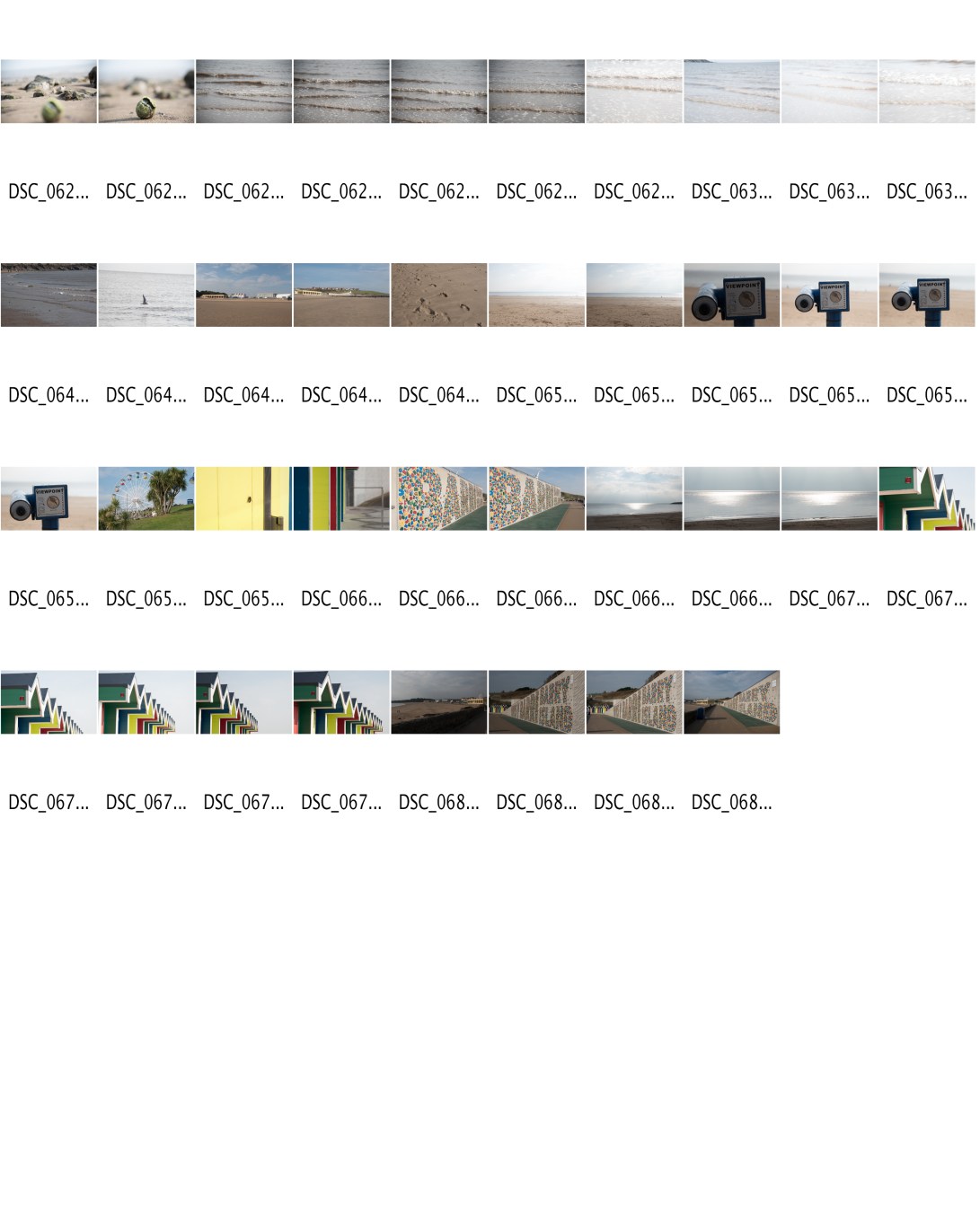
For this photo, I employed the use of a tripod to help reduce as much camera shake as possible that would be otherwise emphasised by the slower shutter speed. This was my setup:

Harold Eugene ‘Doc’ Edgerton
An electrical engineering professor at MIT, and was involved in deep sea photography. He also used fast shutter speeds to capture fast moving events.
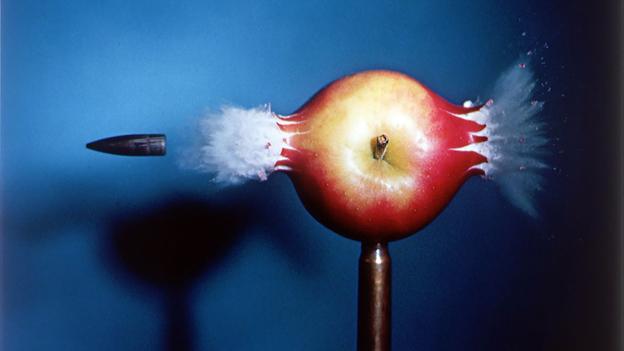 http://www.bbc.com/future/story/20140722-the-man-who-froze-the-world
This image to me is pretty much the dream when it comes to fast shutter speed, the ability to capture a speeding bullet at the moment it goes through an apple, showing all the immediate after effects on the apple that would be missed by the naked eye. Goodness knows how many orchards he went through to get this shot just right. To get this picture, a flash was used and considering the average bullet travels at 2500 feet per second, it would have to be a shutter speed of about 1/960,000 to get the bullet movement down to about 1/32 of an inch during exposure (not entirely sure on the maths I’ve done to work this one out, but it seems about right).
Idea Three
Before I went off to the Navy, I wanted what many people my age wanted, to get out of my little village and see a bit more of the world (although I just ended up seeing a bit more of the UK but thats by the by). But during my time away I began to appreciate my little corner of the world a bit more, it’s where I grew up and where the majority of things that have happened to me so far have taken place. So even if it doesn’t end up being my final piece, I’d like to take these eight photos of Pontyclun, I have a few ideas of some shots I want to take, the rest I’ll have to come up with as I shoot. For example, one of my deep depth of field shots could be down the main road, obviously I’d have to use a fairly fast shutter speed too due to all the movement that would be occurring, but at the same time try not to pump up my ISO excessively, I’d like to use my wide angle lens for this but I’ll see how it looks on the day. Also it is a tad overdone, but one of my slow shutter speed shots could be capturing the movement of cars going down along the main road. I really want to do something involving the war memorial as well, but haven’t worked out quite what that is yet, I wanted to do something up close with a wide aperture, but it’s surrounded by railings, even if I could get close enough, it’s highly likely that I’d only be able to get the names of the people on there and some of them will end up becoming blurred out, which I feel would be disrespectful. There is a river that runs through the village, which I feel would be perfect for my other slow shutter speed shot.
Idea Four
I enjoy going for walks in the woods behind my house, and I realised this could be a decent opportunity to take some photographs for this project. I could utilise the wide aperture by focusing on a plant or some form of vegetation, and use the river (yes, another river) for my slow shutter speed shot. There are many chances for a narrow aperture shot as the long paths provide excellent chance for long range detail, and I’ll hope for and (preferably flying) wildlife to come along so I can freeze them with the fast shutter speed shot.
Wander In The Woods
Deep Depth of Field
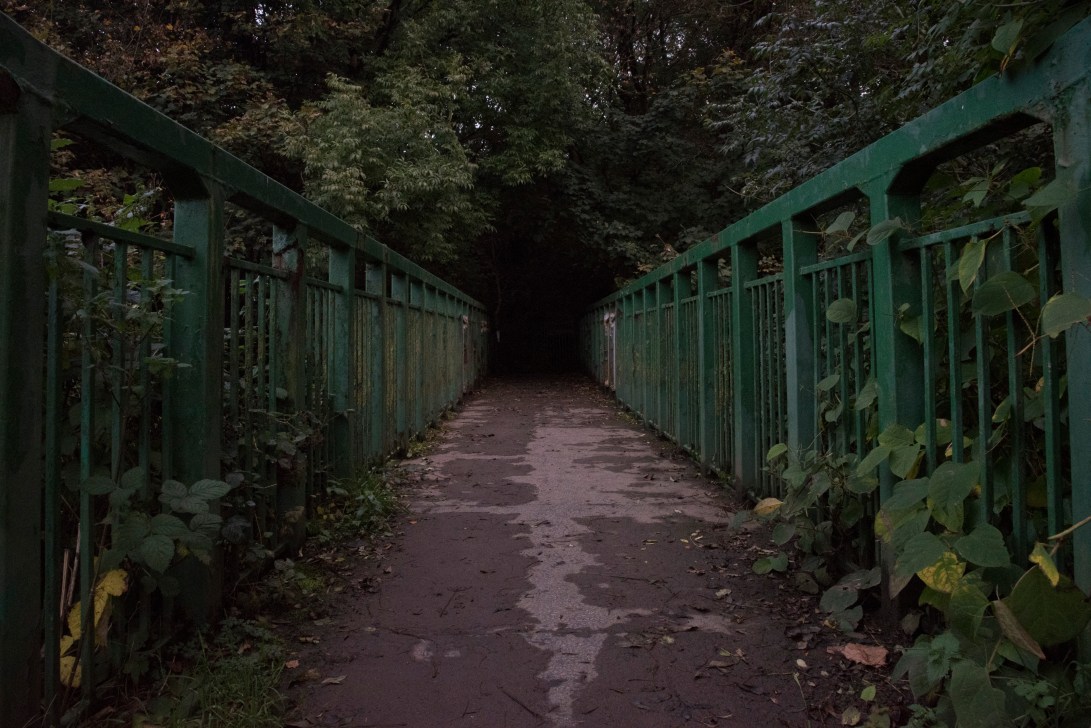
This was probably my favourite shot of the day, apart from the bridge being an excellent means of demonstrating a deep depth of field shot, I like how it leads into the darkness and how the greenery almost borders the image. For me all this gives the photo kind of an eerie vibe. My aperture was set at f.16.
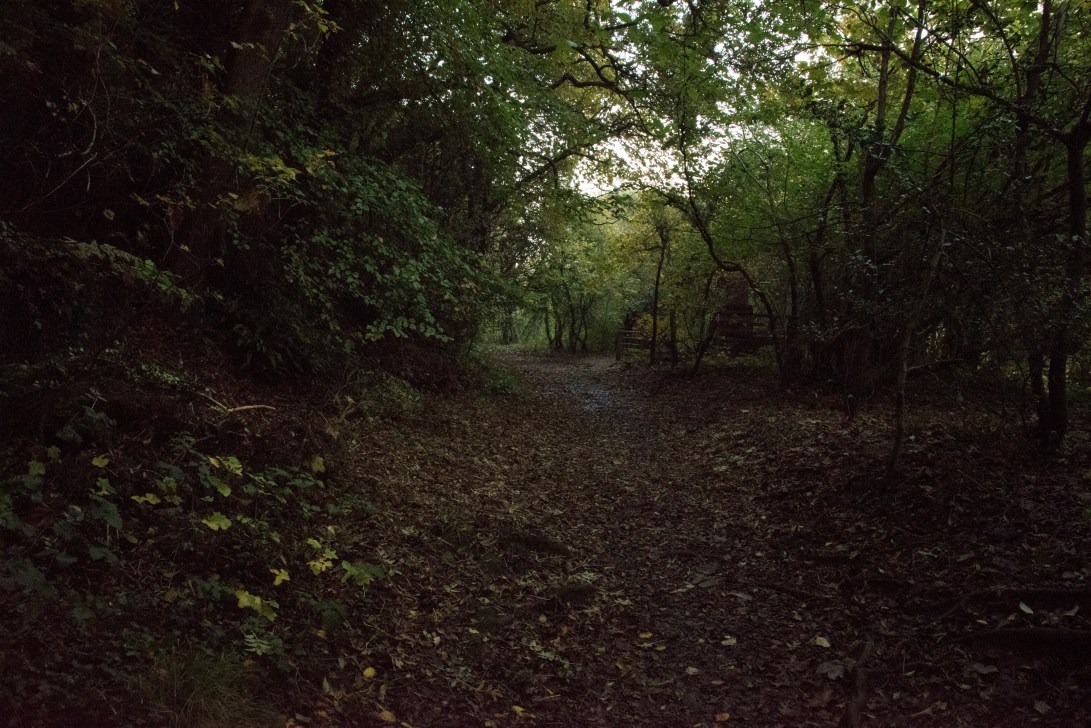
The path through the woods also provided good opportunity to show a deeper depth of field. I had to crank up the ISO a fair bit on this one, but I feel it was a necessary evil due to the amount of available light. Again, my aperture setting was f.16.
Shallow Depth of Field
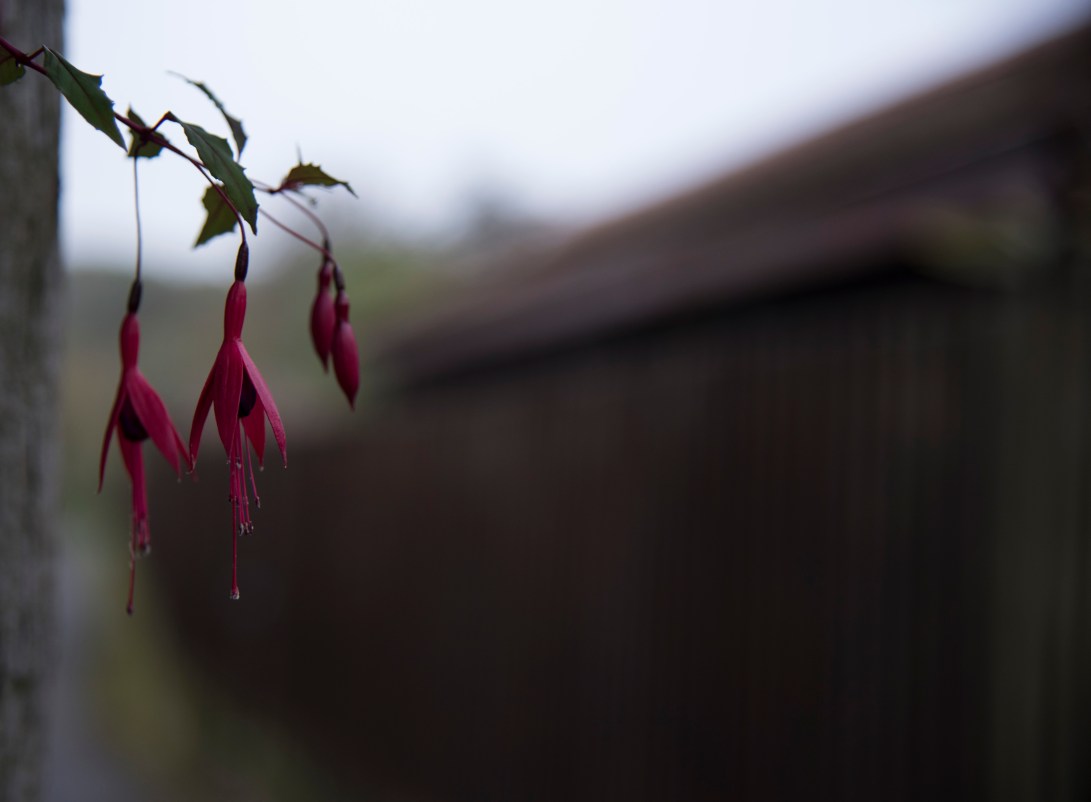
Not really ‘in the woods’ per se, but woods adjacent. I felt this shot came about very well and I was very pleased with the detail in the flowers. My only concern is that they should have taken up more of the shot, even though I’d say they are still the obvious focus, I feel that could’ve definitely improved things with this one. To achieve this shallow depth of field, I set my aperture to f.4.
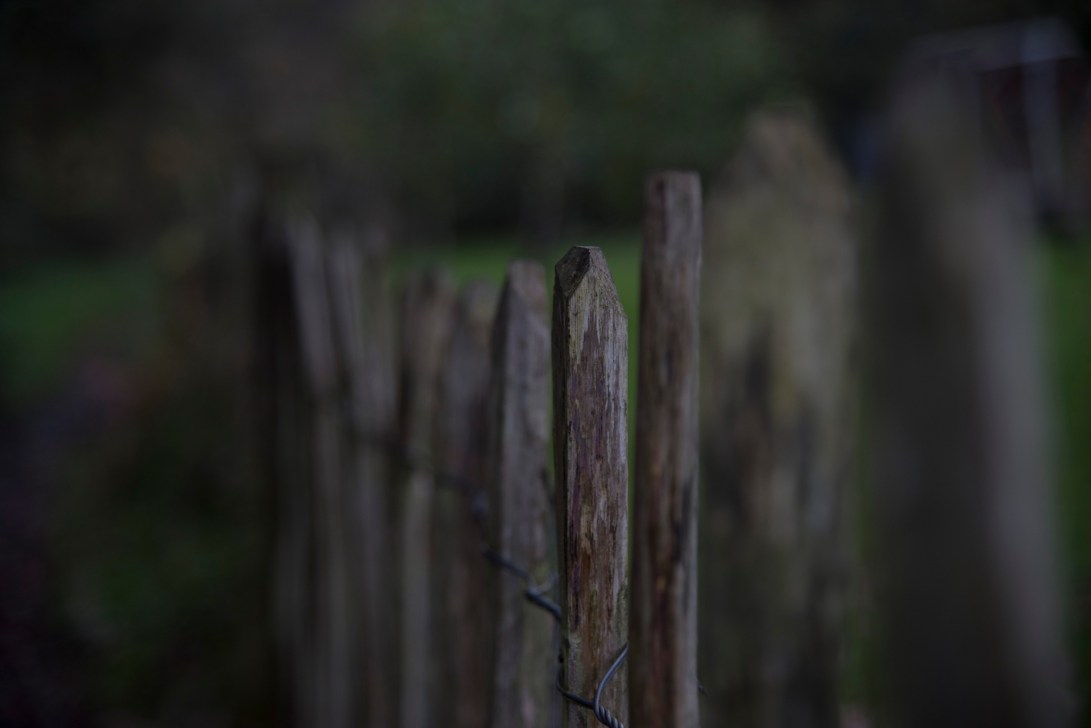
I was searching for a second wide aperture shot that wasn’t just of a leaf or something as I felt I could definitely be at least a smidge more creative given my surroundings. Fortunately I came across this fence that was perfect for the occasion, I’d have preferred the closer pieces of wood to not be quite so blurred, but I’m still rather pleased with this shot. The aperture was f.4.
Fast Shutter Speed
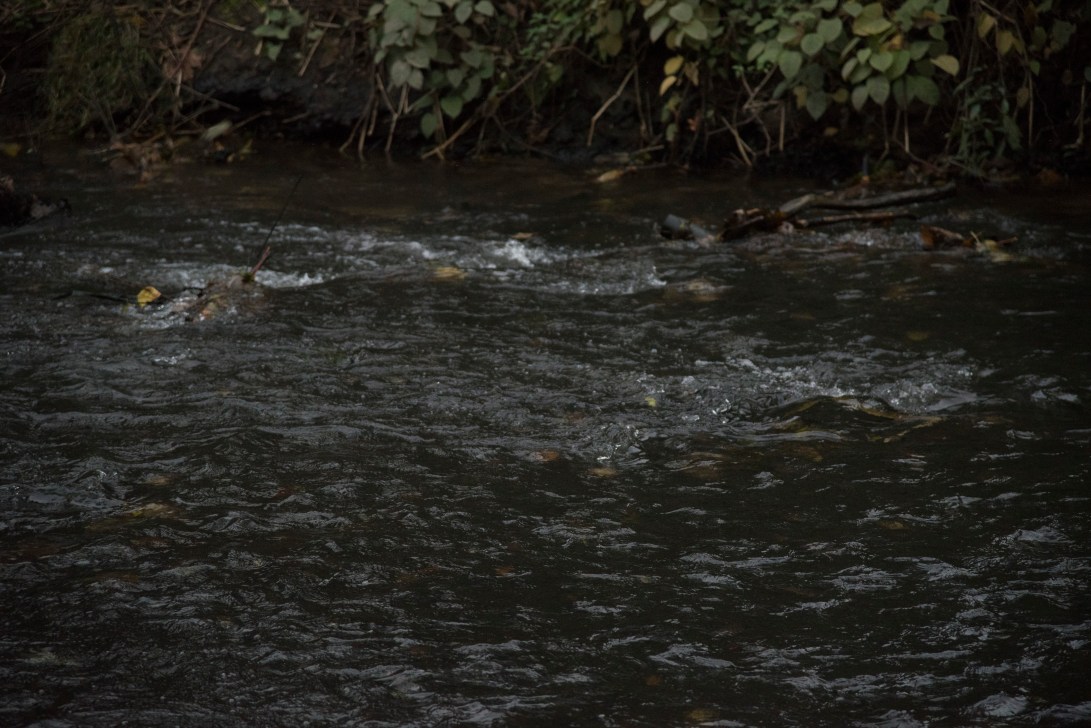
Here is where I hit a bit of a brick wall, as there wasn’t really that much movement to ‘freeze’ apart from the river, I felt it was my only real option. Overall I don’t really like this one as it’s a bit flat and even a bit unfocused in places, I could most certainly have done better with this, but it was unfortunately the best shot of this variety I had. My shutter speed was set at 1/1000.
Slow Shutter Speed
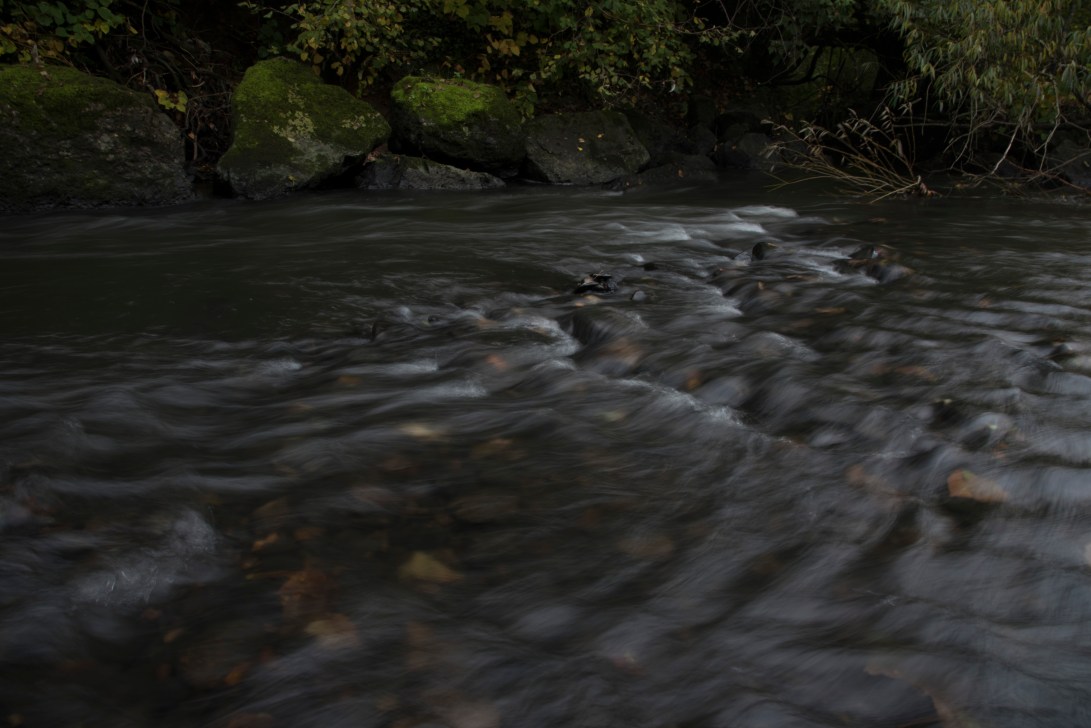
As previously mentioned, movement was not easy to come by in the woods, so again we have a motion blurred river. Lack of innovation and originality aside, I do actually like this shot, the background has little to no blur, which contrasts with and distinguishes further the movement of the river. To get the motion blur of the water, my shutter speed was at 1/4 of a second.
Ansel Adams
Ansel Adams, born in San Francisco in 1902 formed the Group f.64 with Willard Van Dyke and Edward Weston as an opposition to the pictorialist style.
 anseladams.com
As you can see by this photograph, Ansel Adams was a specialist when it came to having sharp focus throughout the image. I’d say he used an aperture of f.64 to get this much sharpness, and I’m not just saying that because he was in ‘Group f.64’, it was a very popular setting at the time. If this was indeed the case, his shutter speed must have been very slow, perhaps 15 seconds or more to absorb all the light needed for this image.
Emil Dalboe
Emil Dalboe is a photographer on ‘500px’.
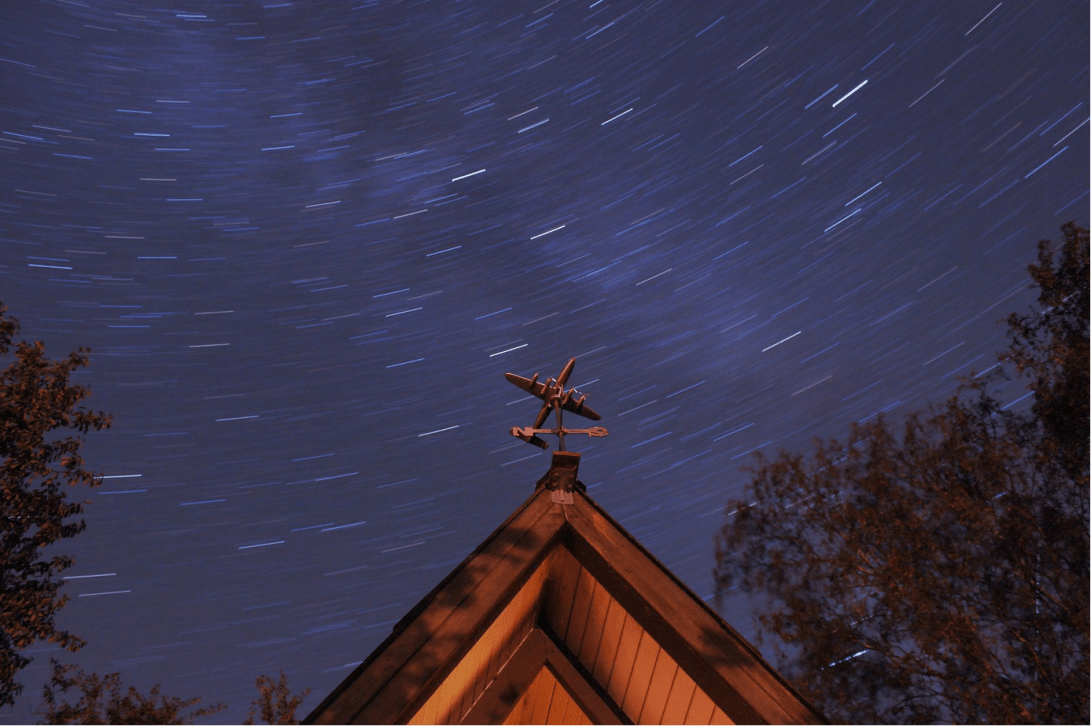
I love shots of this sort, because they show us how fast the earth is spinning on its axis, while we have no real feeling of it while it happens. It gives me quite a dizzying feeling just to look at, which makes me rather glad we don’t feel the spinning. By the length of the blur on the stars, it looks as though this shot was taken with about twenty to thirty minutes exposure.
An Alternative View
Down The Line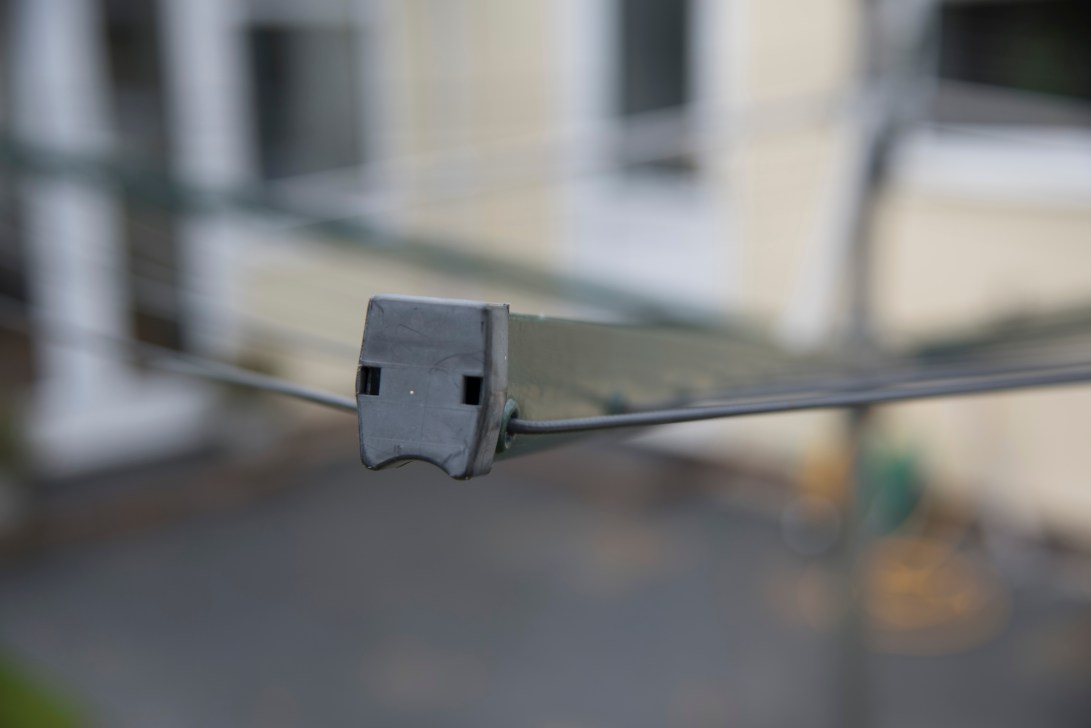
Absolutely Smashing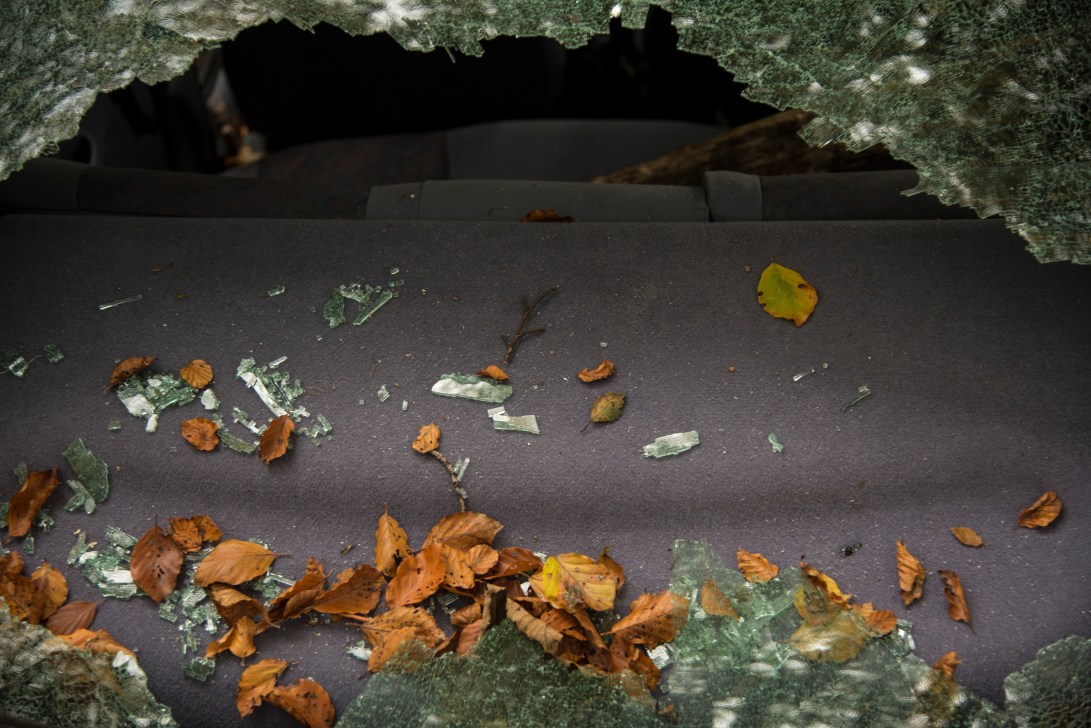
Barking Up The Right Tree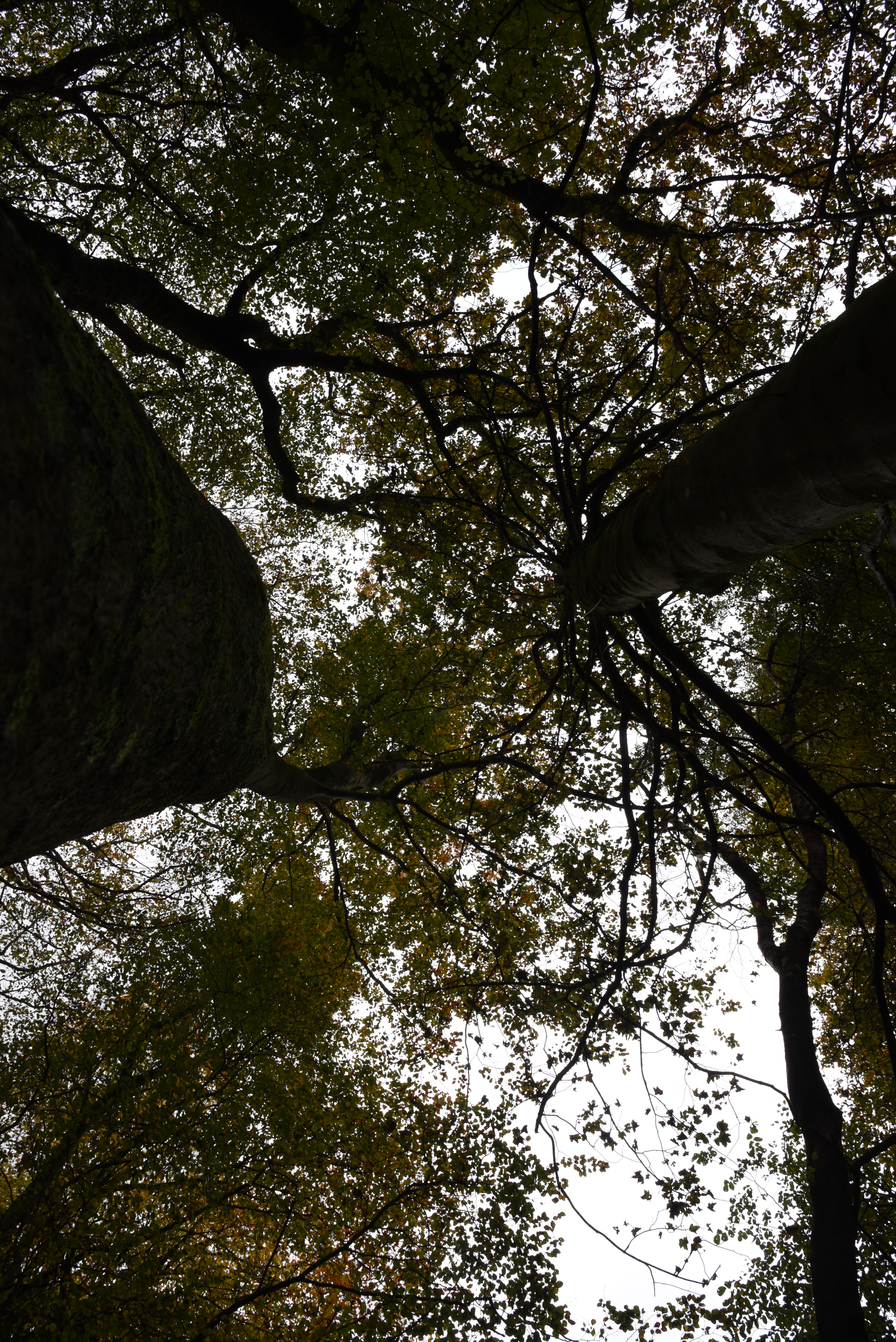
A Birdseye View
Christopher Martin
Christopher Martin is a Canadian photographer from Bragg Creek.
 https://christophermartinphotography.com
He has used the shutter speed to isolate a moving object and show the motion blur surrounding it, this is inverse to what I usually think of when it comes to motion blur, as I try to get the moving object to blur and the stationary surroundings in focus. The technique used is called ‘panning’, to achieve this he followed the movement of the bird, thus making it appear more in focus than the surroundings. I enjoy this style of motion blur because it portrays movement very well and makes for a very dynamic image. I’d say he used a shutter speed of around 1/40 to achieve this photograph.
Terri Weifenbach
Terri Weifenbach was born in New York in 1957, she attended the University of Maryland and has two books ‘Between Maple and Chestnut’ and ‘Hunter Green’.

In this photo, as with many of Weifenbach’s, a shallow depth of field is utilised by way of a wide aperture (probably f.4 or below). Also it seems that the very close objects aren’t in focus whereas some slightly further away objects are, whether this was the intention or not, it gives the impression of being surrounded by the subject matter (in this case leaves and nature). I feel this is a very effective method especially as most shallow depth of field shots I’ve seen tend to avoid any blurring unless its behind the object in focus.
Panning Experiments
We took to the streets of Crosskeys to do some panning, which is essentially following a moving object using a slightly slow shutter speed (I used 1/40 for all these shots), and trying to capture it in as much detail as possible whilst giving the background motion blur.
The Good Ones

Although either end of the vehicle is blurred, it gives it more of a dynamic edge and still gives the impression of movement, despite its imperfections, this has grown on me to be one of my favourite images of this experiment.
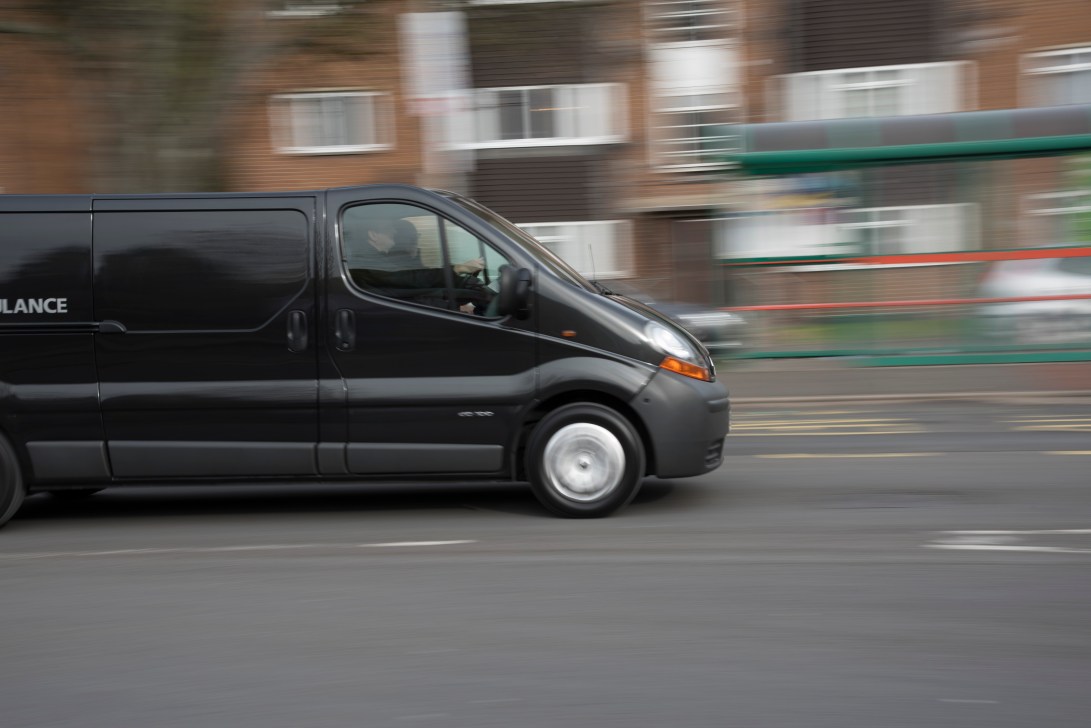
Apart from the fact not all of the van is in the shot, I’m still incredibly pleased by the level of sharpness that I have achieved, while the background is very blurry and so makes the van appear to be moving at quite some speed.
Not So Good Ones
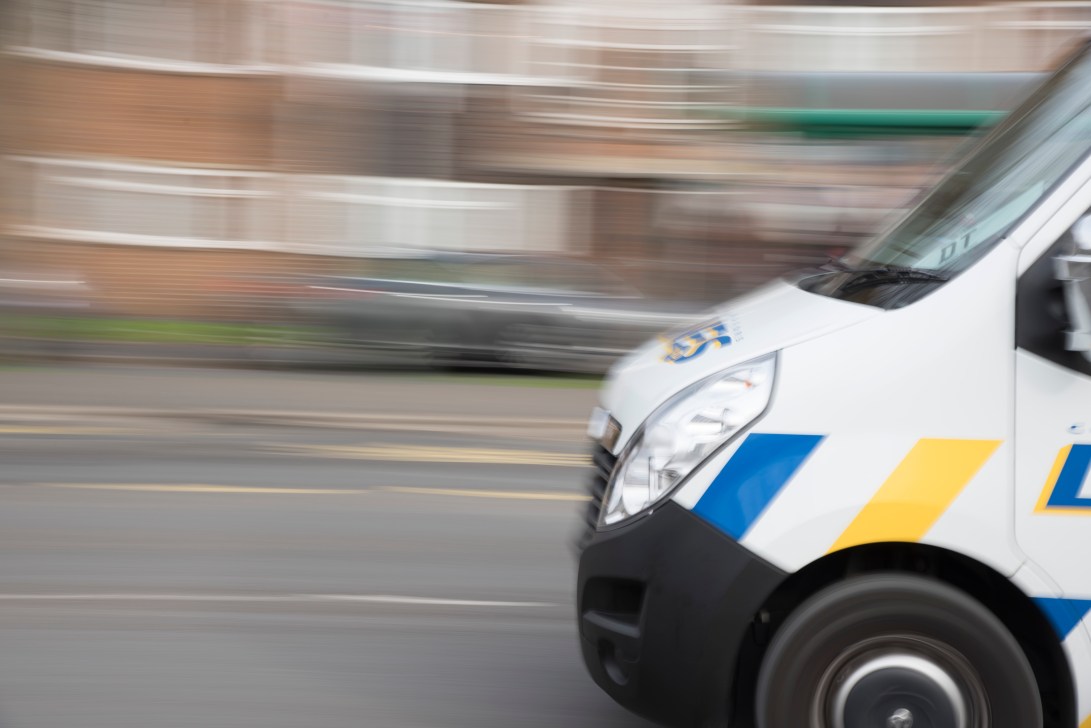
This one could’ve been really good, unfortunately too much of the van is out of the shot, also the front is slightly out of focus, which I wouldn’t mind too much were it not for my first misgiving.
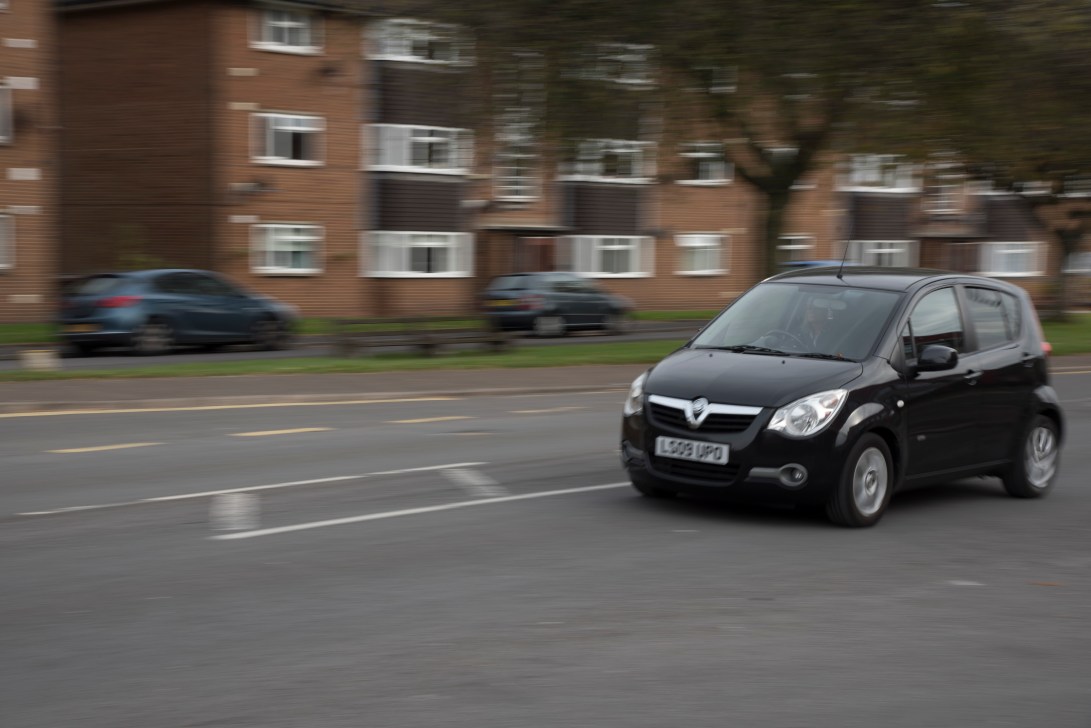
All the car is in the shot admittedly, but the very front is a tad blurry, which is emphasised by the blurred letters on the number plate which is on display due to the angle, so I’d consider this a decent effort, but nowhere near how I want my shots to look like.
Rajat Bhargava
Rajat Bhargava is a photographer on ‘500px’.

Apart from obviously having frozen the soaked tennis ball quite spectacularly, Rajat has also captured its movement in that the way in which the water is flying off the ball, showing that it is spinning to the left of the image. I’d say a shutter speed of 1/1000 or thereabouts was used to achieve this shot.
Simon Green
Simon Green is based in Consett in County Durham and started his career as a photography instructor in the British Army. As well as photography, his ventures also include filmmaking.

This is an excellent example of large depth of field, the pier is a perfect way to use leading lines to draw the viewers eyes into the image. I’d also speculate that because of the misty appearance of the water, a slow shutter speed was used, and therefore most likely a tripod (unless he had unnaturally steady hands). An aperture setting of f.22 was probably used to achieve both the clarity throughout the image and to counteract the effects of the slow shutter speed.
Mark Gray
Mark Gray,born in Melbourne on February 20th 1981 is a self taught Australian photographer known for his panoramic landscape photography. His most notable works are ‘Craig’s Hut’, ‘Reef Dreaming’, ‘Sydney Splendour’ and ‘Mystic Forest’.

I like this photo, not just because of the obvious sharpness through it, but the colour range, the blue to lilac to darker purple progression as you go up the image makes it seem almost surreal. Also the metal (I assume) fish are all pointing in the direction of the more interesting aspects of the image i.e the fountain and the coastline, thus drawing the viewer towards it. I’d venture a guess that this was shot using a slow shutter speed as it appears to be taken at night and the water from the fountain has a very misty appearance. I’d say this was shot at about f.18-22.
Pontyclun
As I said a while ago, I wanted to do some experiments with the focus being my little village of Pontyclun, for the most part I felt things went well, but there were certain instances where I had to get a tad creative to get some of the shots.
Deep Depth of Field
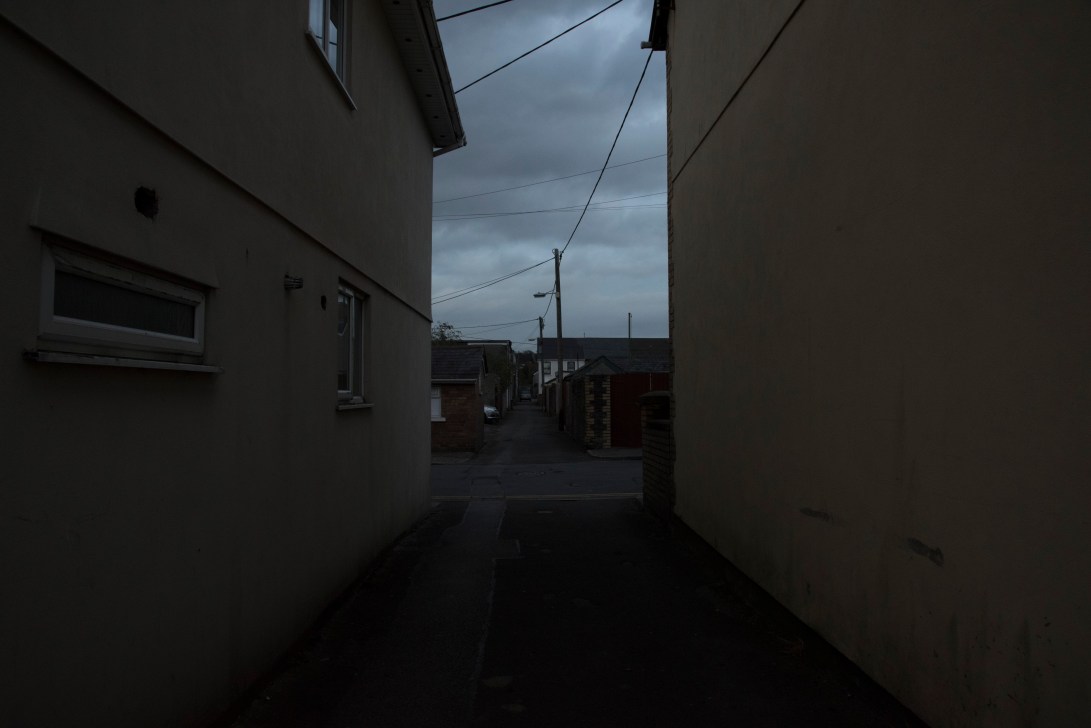
I did struggle for light with this one due to it being late afternoon and the buildings either side of me blocking out what little light there was, and the last thing I wanted to do was crank up my ISO so much that graininess overtook the image. Saying this, I do think that the darkness in the picture is reflective of what I actually saw, after all, this is a dingy, dark back alley. I feel the lines of the side of the lane create lines that draw the viewer in, and despite the lack of light, it is sharp throughout. I used a setting of f.14.
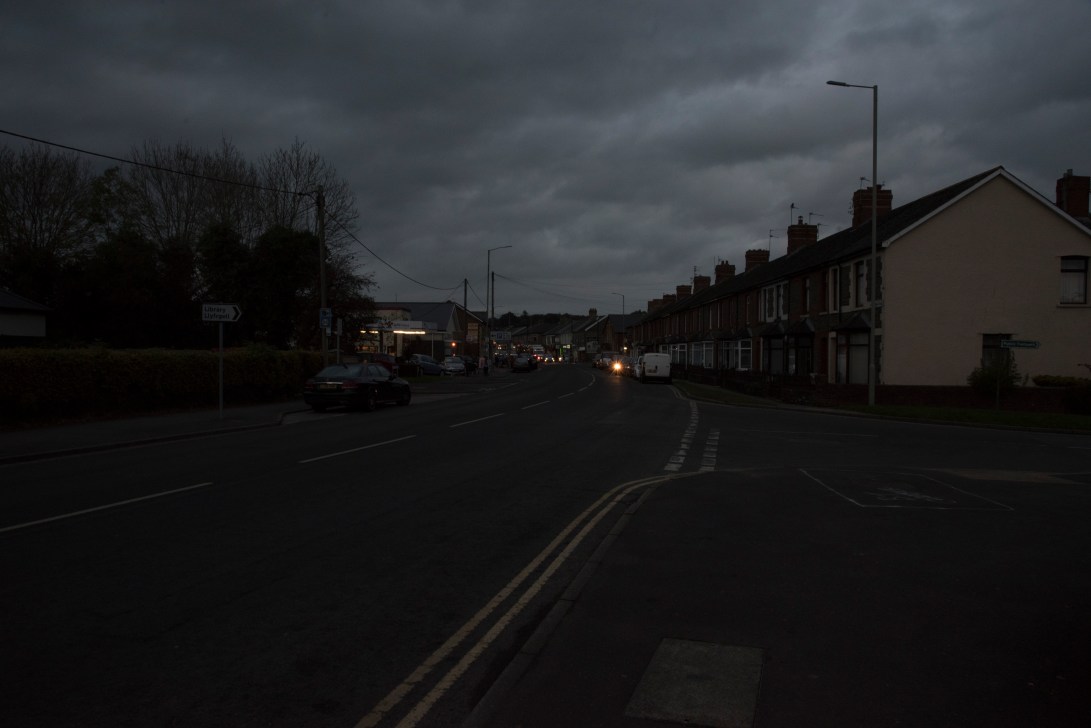
Again, with this one the lack of light is an issue, but it was a grim old evening (as can be seen by the menacingly grey clouds), and that is what Pontyclun looks like on an evening such as this. As with before, this does not affect the clarity through the image. The road also is a good leading line to guide the eye into the photo. I used f.16.
Shallow Depth of Field
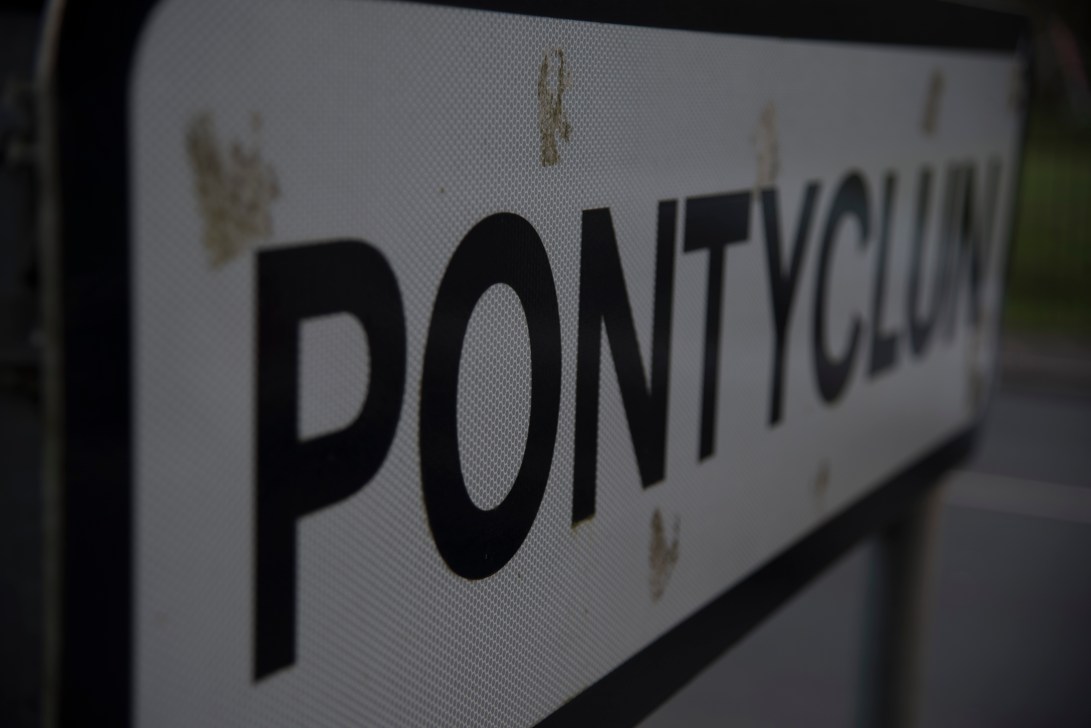
I thought that if I’m focusing on a place, I should include the sign bearing the name of that place, and a shallow depth of field shot would be the most visually interesting way in which to do it. The background, although blurred, still allows the viewer to read the letters, because if it was overly blurred, it would be a pointless image. My aperture setting was f.4.
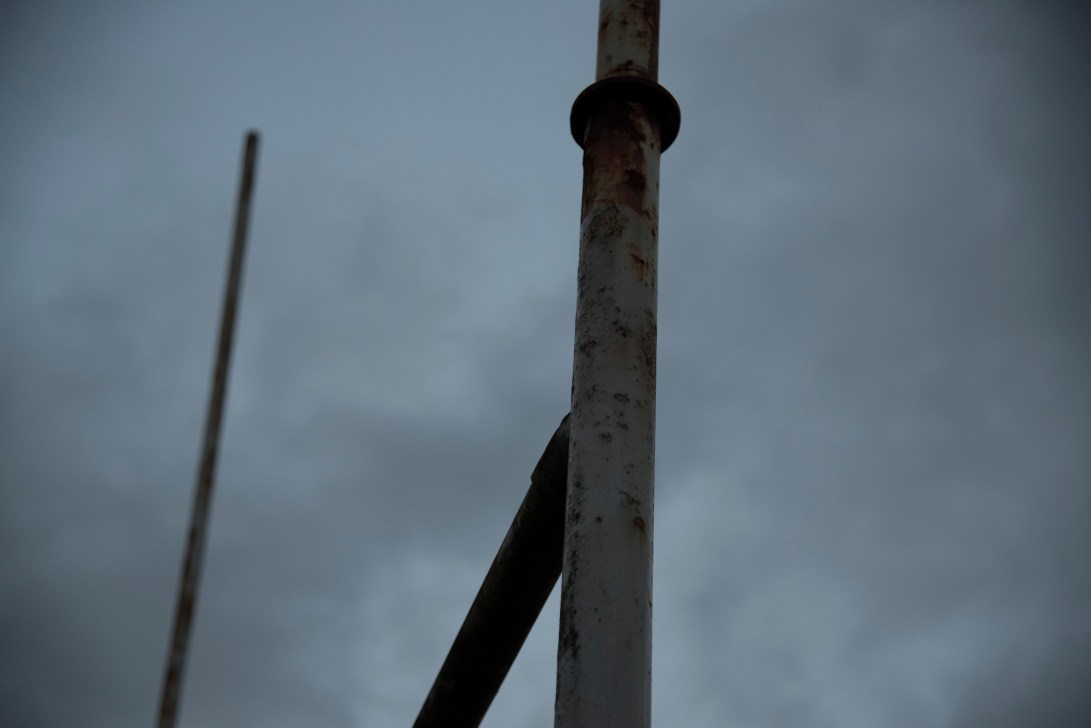
Rugby is quite popular here, as with most Welsh towns and villages, so I thought it would be good to capture this aspect of the place. Although the rust and imperfections are very sharp, the angle isn’t quite how I would have liked, I’d have preferred to have it along the crossbar, but unfortunately I’m nowhere near tall enough. I used f.4.
Fast Shutter Speed

I got this image by dropping rocks into the biggest puddle I could find and shooting in continuous shot for maximum chance of getting the best picture. After many attempts, I finally got the rock to land in the ‘in focus’ portion of the shot, so the water splash is sharp and clear. I used a shutter speed of 1/640.
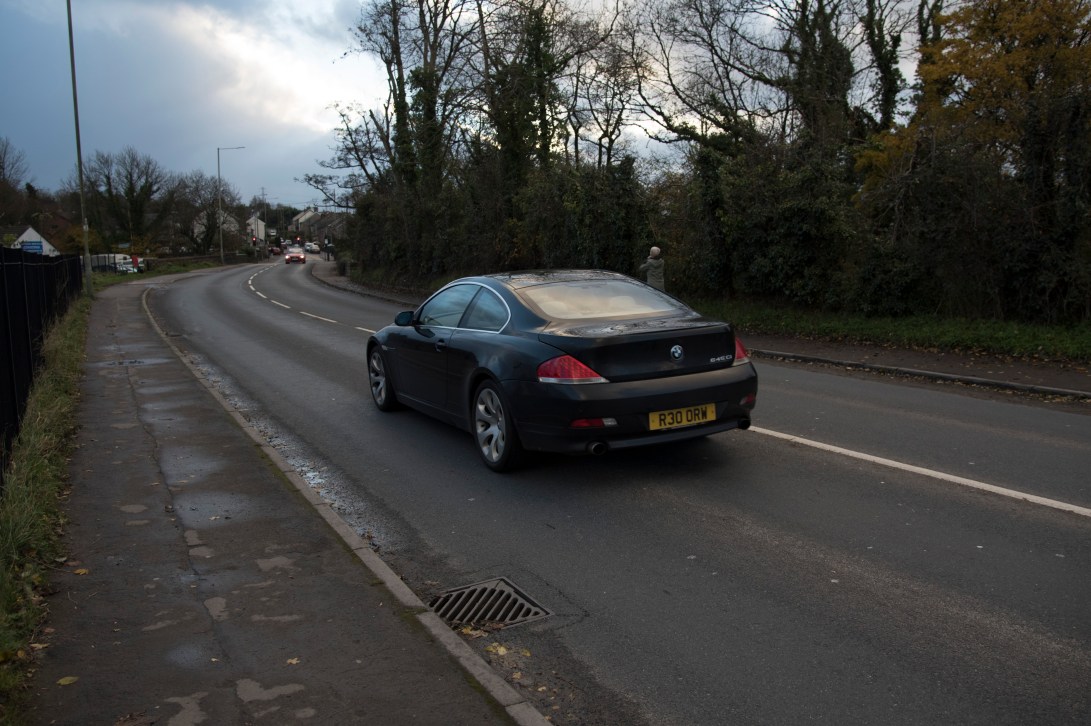
Not the most effective shot when demonstrating a fast shutter speed, but it was either this or another picture of a river, which at this point nobody wants to see. This being said however, the car was travelling at quite a rate of knots and it’s now been frozen, I used a shutter speed of 1/800 to achieve this shot.
Slow Shutter Speed
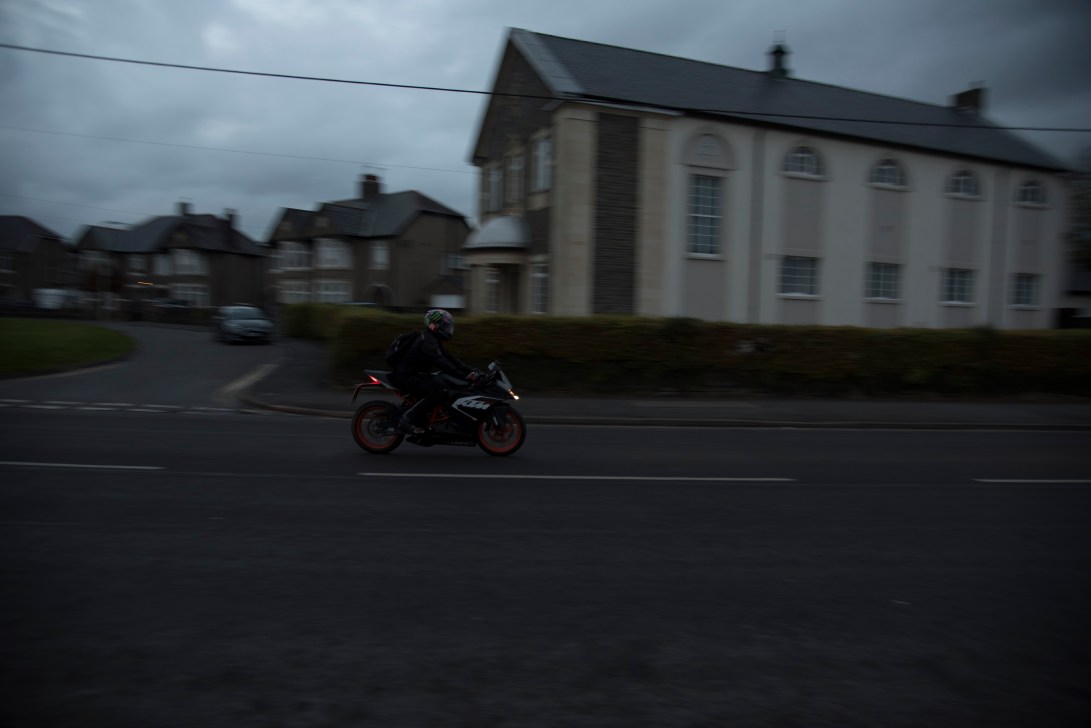
I achieved this shot with the use of panning, it took a fair few attempts and some horrendously blurry images before I got a successful shot. I was surprised at just how sharp the motorcyclist is, I’d have preferred a bit more background blur, but I am very happy with this photo. I used a shutter speed of 1/40 for this shot.
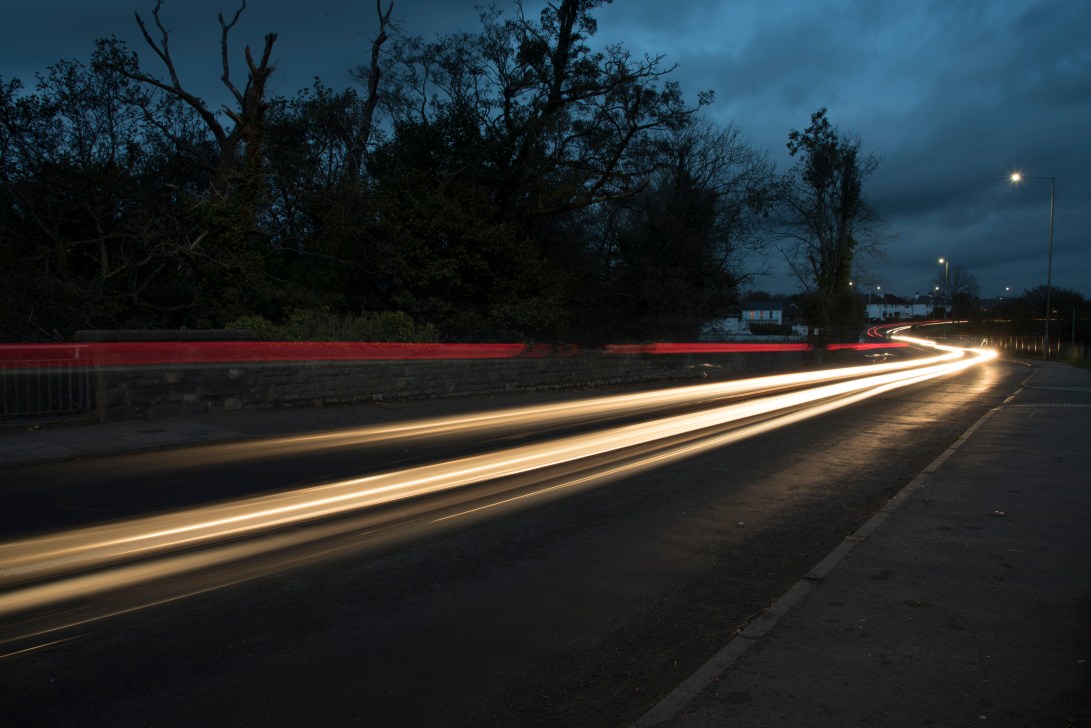
I didn’t have a tripod on me at the time, so I rested the camera on a wall as a substitute. Unfortunately the stream of traffic wasn’t as constant as I’d hoped, but apart from a few breaks in the light trail I think it’s a good attempt. I used a shutter speed of eight seconds.
Alberto Ghizzi
Born in Parma in 1975, Alberto Ghizzi is known as one of the best Italian photographers, especially for his work with macro photography.

I cant help thinking of ‘Bugs Life’ when I look at this image, with the two insects appearing to be intelligently interacting in a somewhat humorous and almost friendly way, to get something such as this in so much detail, this to me is the pinnacle of macro photography, and I would love to be able to emulate this. I’d say this was done using perhaps f.2.8 or thereabouts.
Michael Bosanko
Michael Bosanko is a light artist from Wales, he discovered the possibilities of light painting when he was in Greece in 2004 and realised that at a long exposure he could move the camera to write words with the moon.
 http://www.michaelbosanko.com/
I love light painting, the idea that one can create scenes such as this using nothing more than a long exposure lights, and a bit of creativity without any excessive editing being necessary is just brilliant. I particularly like this shot because he’s used his skills to recreate one of the best arcade games of all time: ‘Pac-Man’, the idea is simple and excellently executed. I’d say a shutter speed of a least thirty seconds was used here, and obviously a tripod.
Jack Long
Jack Long was born in Wisconsin in 1958, he is known for his fast shutter speed liquid photography, and attended the Rocky Mountain School of Photography in 2000.

This style of fast shutter speed photography is very impressive, the time and planning that must’ve gone into this shot was probably very extensive, to get the correct dyes to react in just the right way to create the impression of a flower takes a huge amount of skill. The shutter speed that was used in this shot was probably about 1/1250 of a second, although it may have been less as I did a fast shutter speed splash shot at 1/640 of a second, and that froze the water quite well in my opinion.
Cardiff Bay
We went to Cardiff Bay to do some shooting, it was an interesting afternoon/evening, we did some night time photography, a bit of light painting, and even met Derek the weatherman!
Deep depth of Field
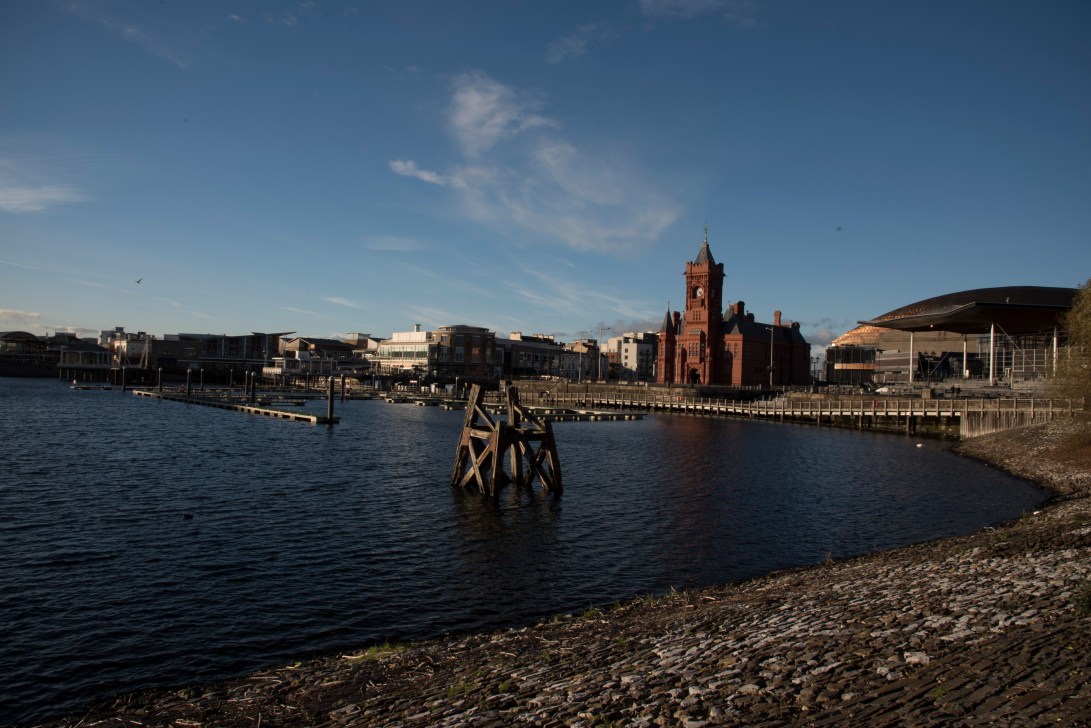
For this shot I used an aperture setting of f.18, I feel this was sufficient enough to capture the scene in enough detail all the way through. I also made sure to include as many of the important aspects of the Bay as was possible i.e the Pierhead building, the Senedd, and in the background the Wales Millennium Centre. Some parts are a bit under exposed, but overall I’d say theres a fairly balanced exposure.
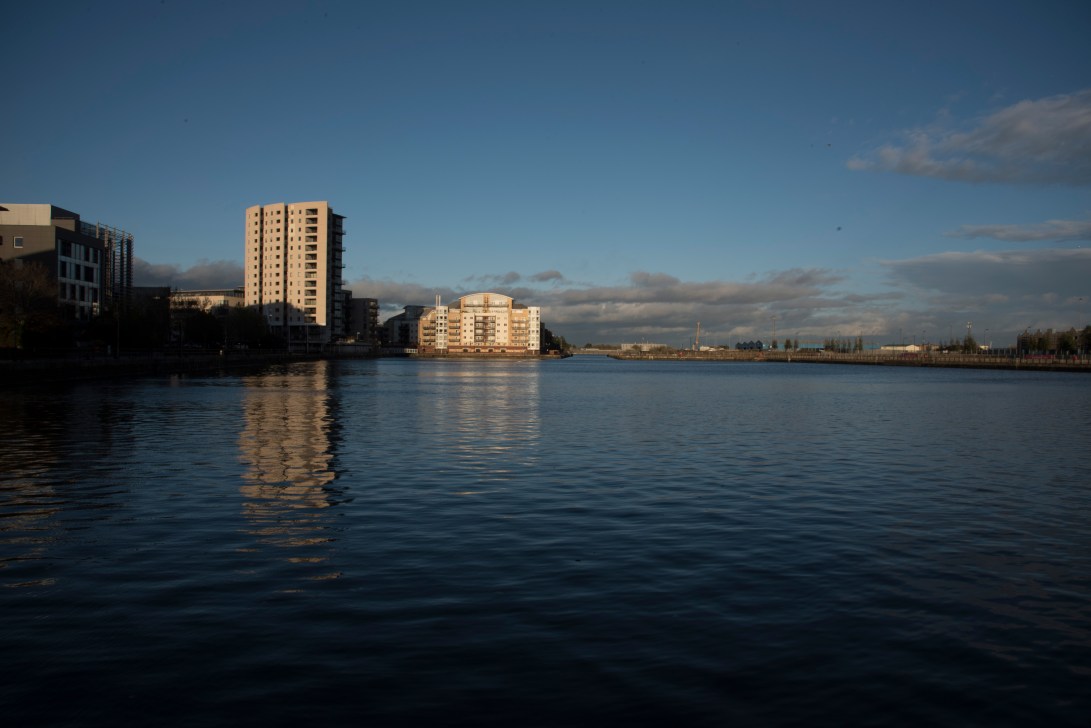
with this shot, I think the sharpness and texture of the water as I saw it at the time is maintained through the larger area, and even up the narrower part. There are a couple of shadowy areas to the left of the image where the detail cannot be seen as much, but as with the last one, this is outweighed by the overall balanced exposure. I used f.22 for this shot.
Shallow Depth of Field
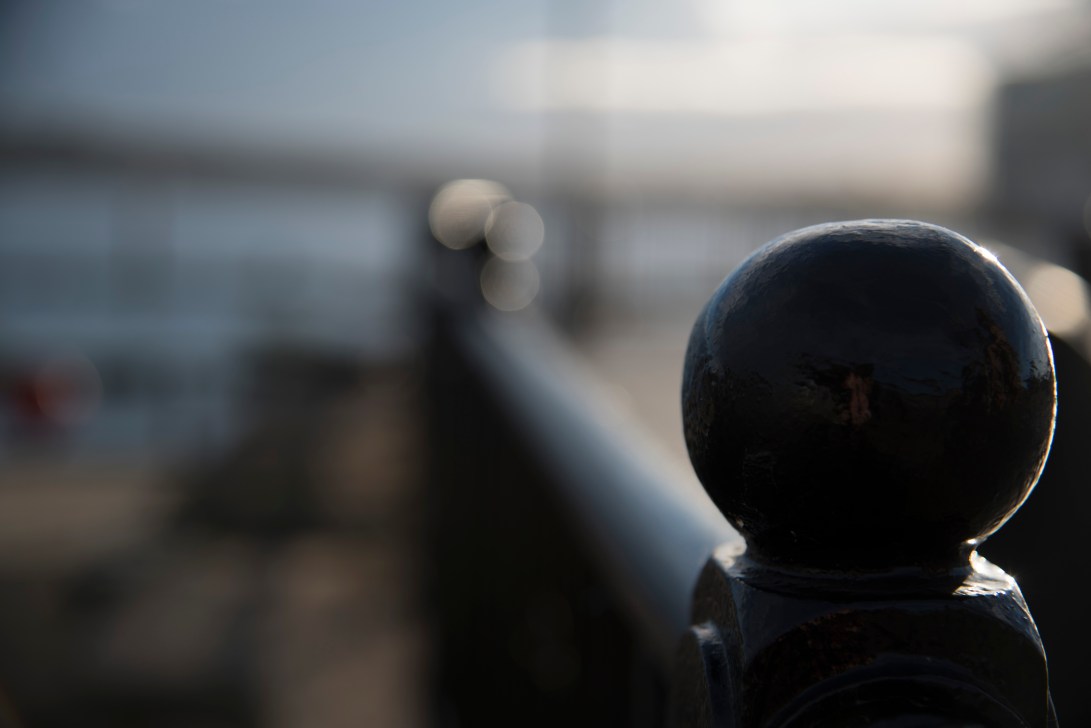
Taken down by the front, the main scene is blurred out with the main subject being the knob (at least after extensive research into what the name actually is, I think that’s what it’s called), with the gradually unfocused rail acting as a line into the image. Unfortunately you can see my reflection a tad in the subject, but overall this is a good example of shallow depth of field. I used f.4.

I particularly like this shot, because apart from the sharpness of the chain, the background, although blurred, is not blurred to such an extent that the viewer can’t see the reflections of the building in the water and other important aspects. The soft, gentle tones of the background give the shot a peaceful feel, although this is nicely juxtaposed with the harsh grey of the chain in the foreground. I used f.4 for this shot.
Fast Shutter Speed

I did struggle for fast shutter speed shots, but I like this one of the Norwegian flag frozen whilst flying proudly next to the Church. I would have preferred a side on view, but obviously that would have been impossible in the absence of a cherry picker, saying that, I think it’s a decent image and a good example of fast shutter speed. My exposure time was 1/400 of a second.
Slow Shutter Speed
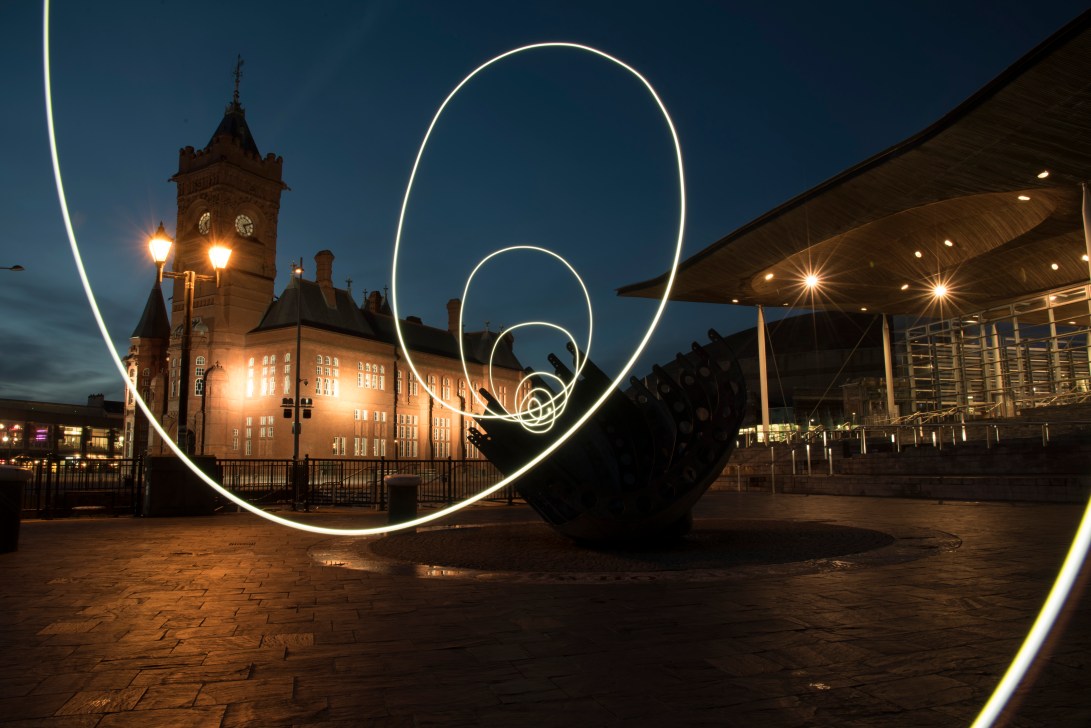
Those of us who stayed later on in the evening had a go at a bit of light painting, I used the torch on my phone to create this spiral coming from the Merchant Seafarers Memorial, getting wider to appear as if it is coming towards the viewer. I used a tripod and a shutter speed of twenty seconds to achieve this effect.

It may seem a bit repetitive to have the same image twice, but I think it demonstrates the true effect of shutter speed on an image. I like this shot because as well as capturing the motion of the flag and giving the viewer a sense of the movement, the cross appears to be quite steady,thus giving the shot substance and not just an entirely blurry flag, this is probably one of my favourite photos of the day. I used a shutter speed of 1/20 of a second.
Tim Rohwer
Tim Rohwer is a photographer on the website ‘500px’.
 500px.com/timrohwer
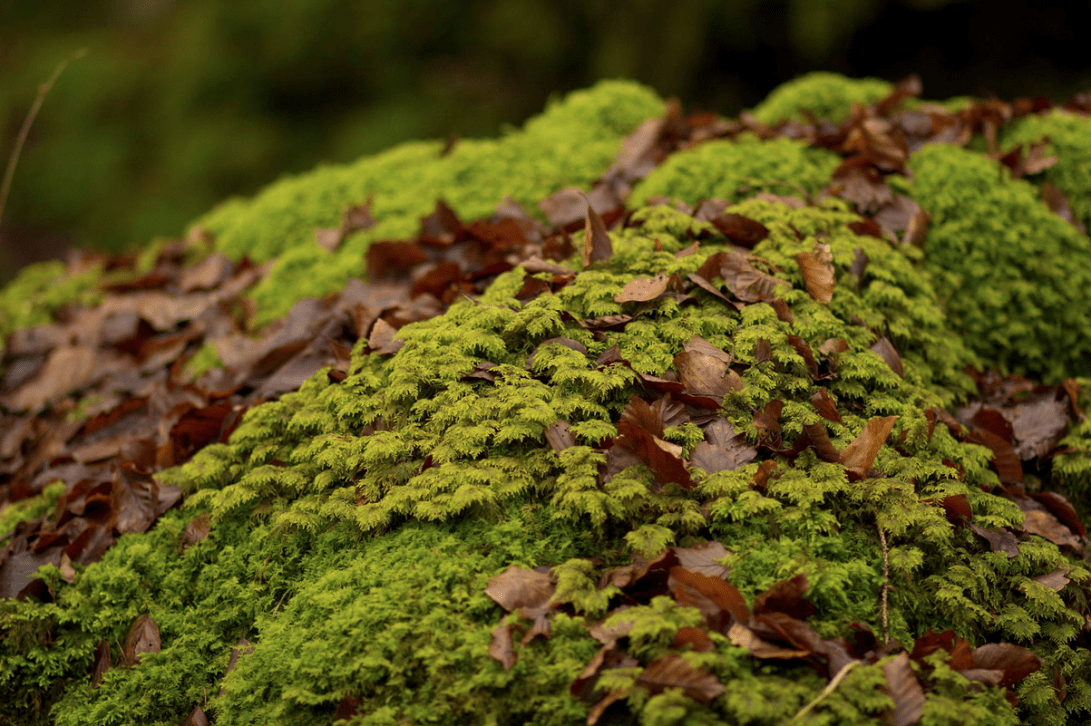
This shallow depth of field shot of the moss almost looks like an aerial shot of a forest on a hill because of the overhanging greenery, although the dead leaves admittedly somewhat ruin this facade. I like these sorts of shots because they transform the most bland objects into something more sensational. I would venture a guess that this was taken at an aperture of f.4 at most.
Thomas Joshua Cooper
Thomas Joshua Cooper, born 1946, San Francisco is an American photographer of Cherokee descent. He is known for his landscape photography and his long exposure shots of water.
 http://photographyemilyellis.weebly.com/thomas-joshua-cooper.html
This shot makes me feel as if the water is cascading towards me, and in the background, I assume it’s the sky, but it has the appearance of a wall of water and giant waves swirling about. I think this effect is heightened by the fact the photo is in black and white, as the use of colour would take away this ambiguity. I’d say this was shot using an exposure of maybe 1/3 of a second, maybe slower.
My Bass
My first idea was to have my eight images be of my guitar, and it’s taken a while, but overall I think I have my final images. Admittedly there were one or two which weren’t quite as I’d planned, but still some very good shots came from this venture.
Deep Depth of Field
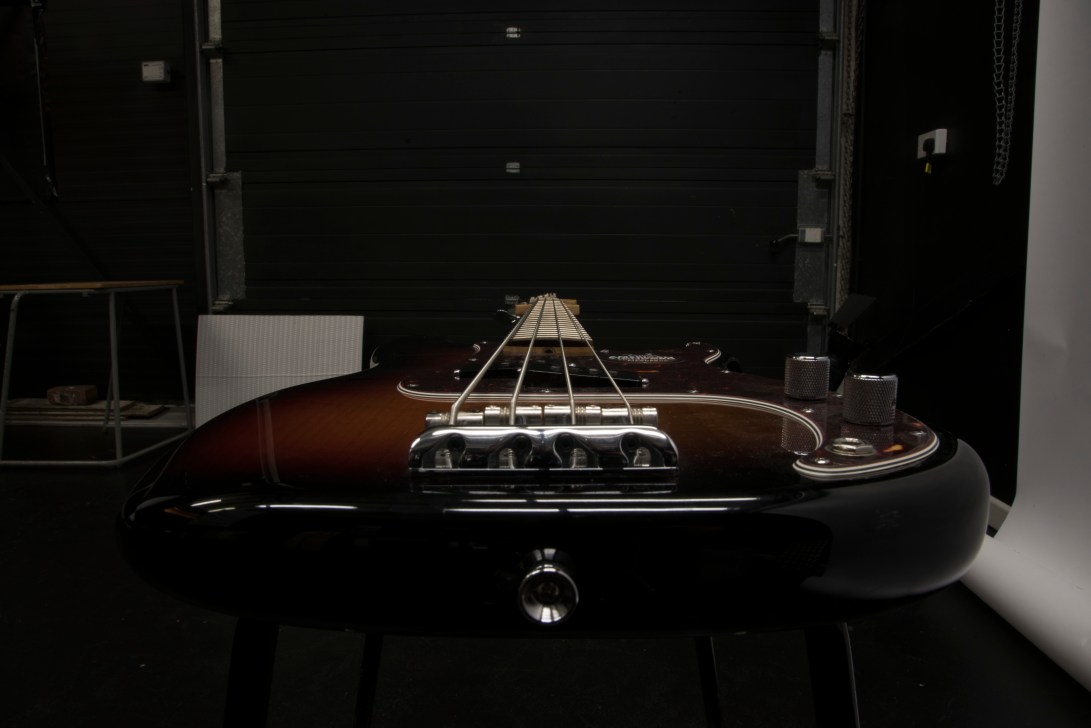
This shot is an excellent demonstration of a deep depth of field, mainly because due to the strings, we have multiple leading lines to guide the viewer into the image, and as one looks further in, it is apparent that all aspects of this image are sharp and in focus. I used an aperture of f.22 for this shot.
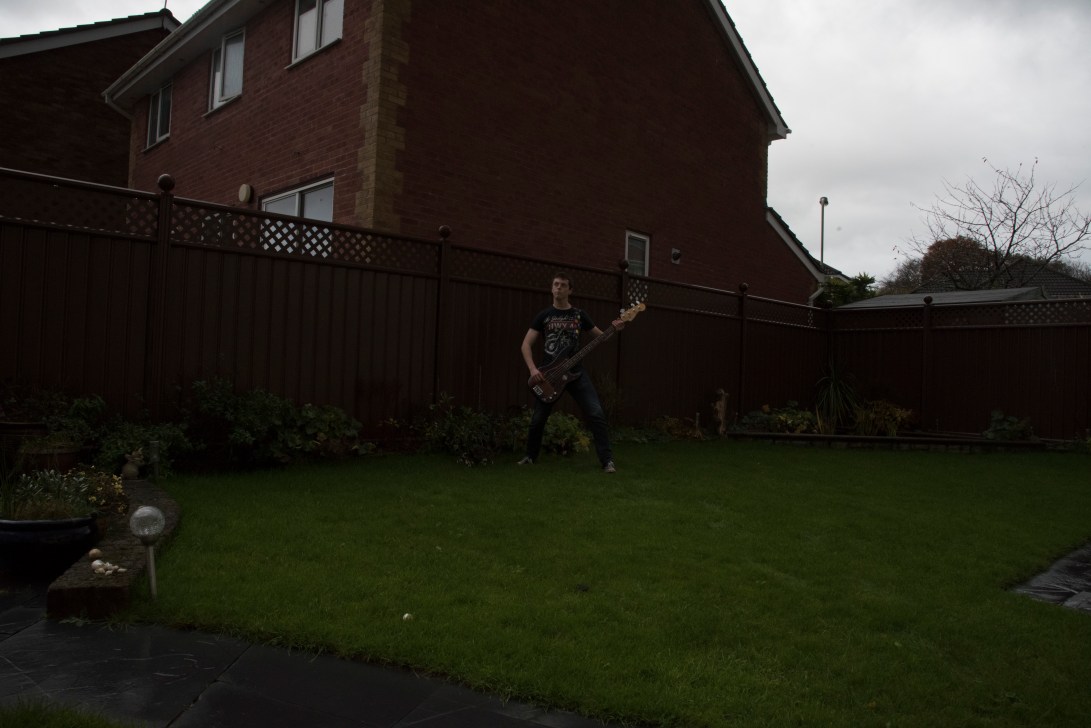
This shot is by no means the best or most creative from this eight images, but it does demonstrate a long depth of field, and lets be honest, an undeniably cool power stance with the guitar. Everything from the path in the foreground to the trees in the background is in focus, so despite my creative block, I’d say this is still a decent way of showing a large depth of field. used an aperture of f.20 for this photo.
Shallow Depth of Field
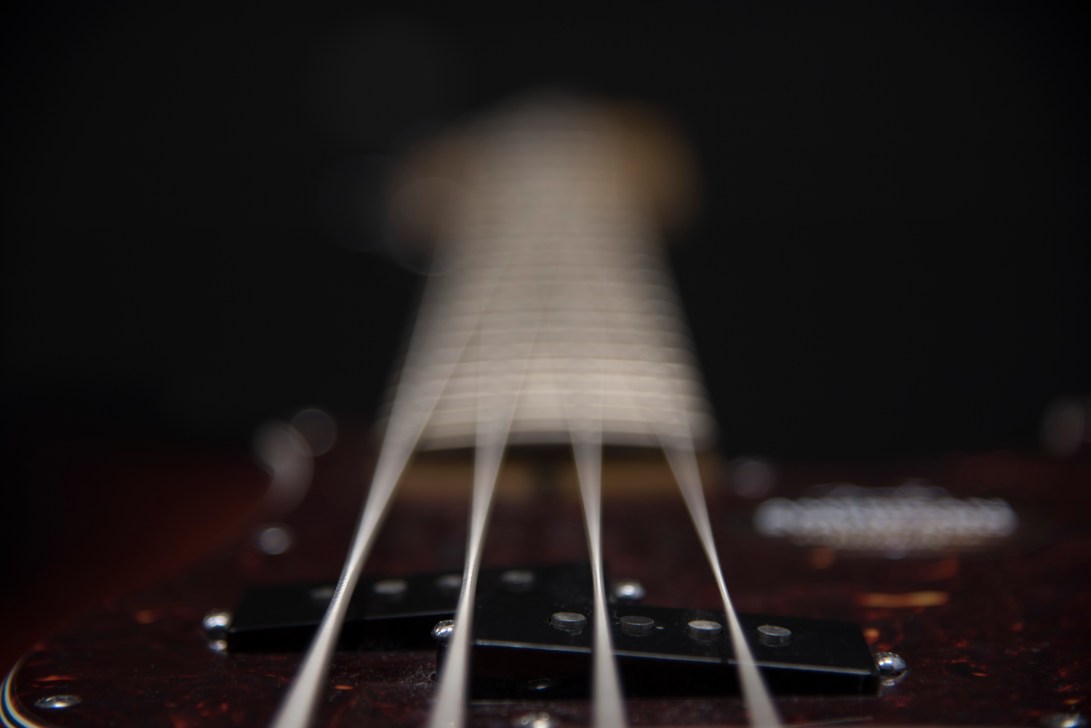
I’m very pleased with this shot, because the front pick up and part of the stings are in focus, yet as we go further back, we see the strings blur to such an extent that the two furthest away from each other eventually merge together. It is also emphasised by the fact the picture is relatively dark and shadowy, so the lightness of the strings is brought out more. I used f.4 for this shot.
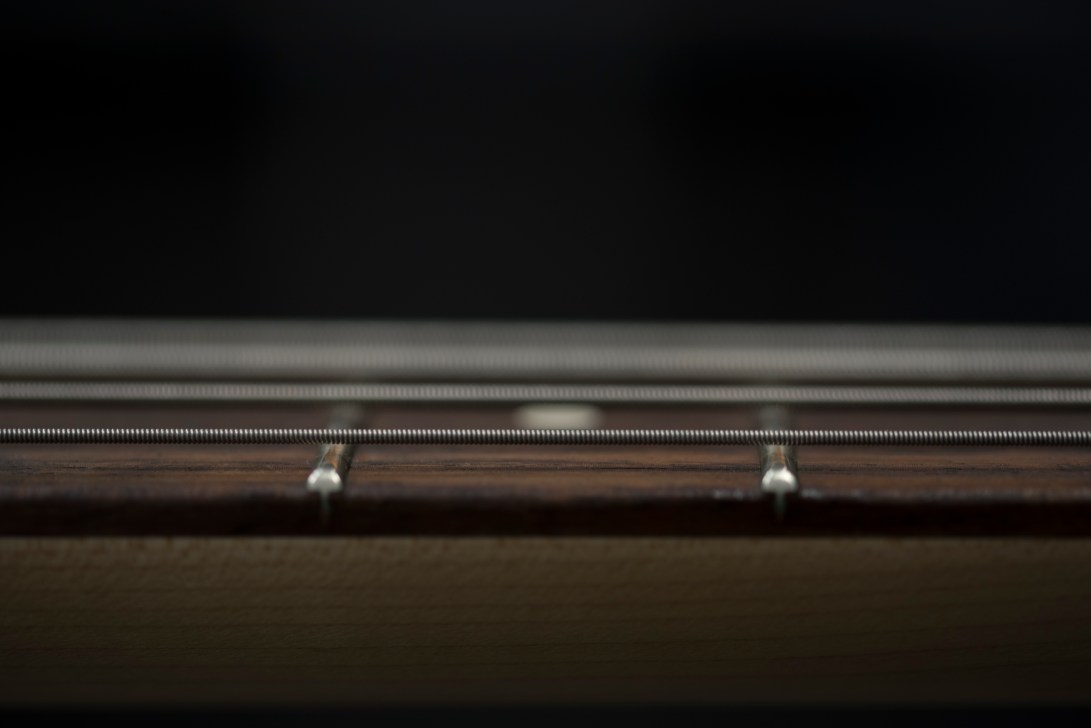
For this photo, I employed my 150mm macro lens with an aperture of f.4.2. I had hoped to use this to show, using tangible markers (the strings), the progression of blur with this type of shot, I think it worked perfectly, as we see the G string is in near perfect detail, while as the shot goes back, each string becomes more and more blurred.
Fast Shutter Speed
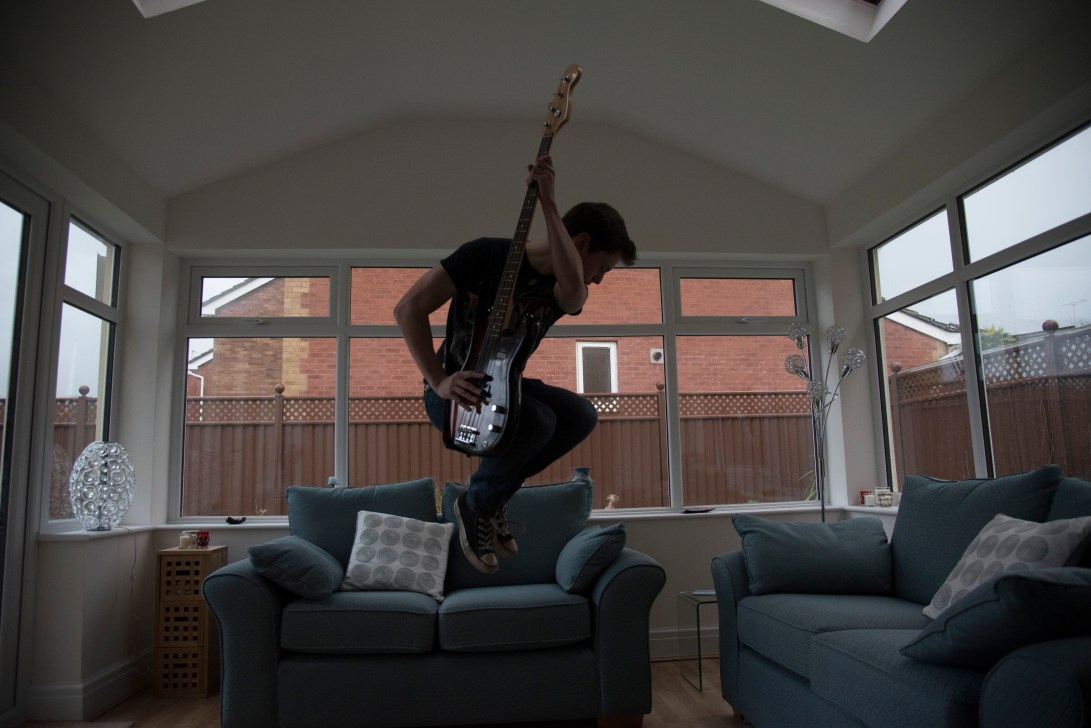
This was a tricky shot to achieve, I had the camera on a tripod and on timer, so had to reach the height of my jump at the exact point the shot was taken. Apart from obviously the fact that I have frozen myself completely in mid motion, I like this photo because due to my dark clothes and my dark guitar, the majority of my form almost seems silhouetted. I used a shutter speed of 1/800 for this shot.
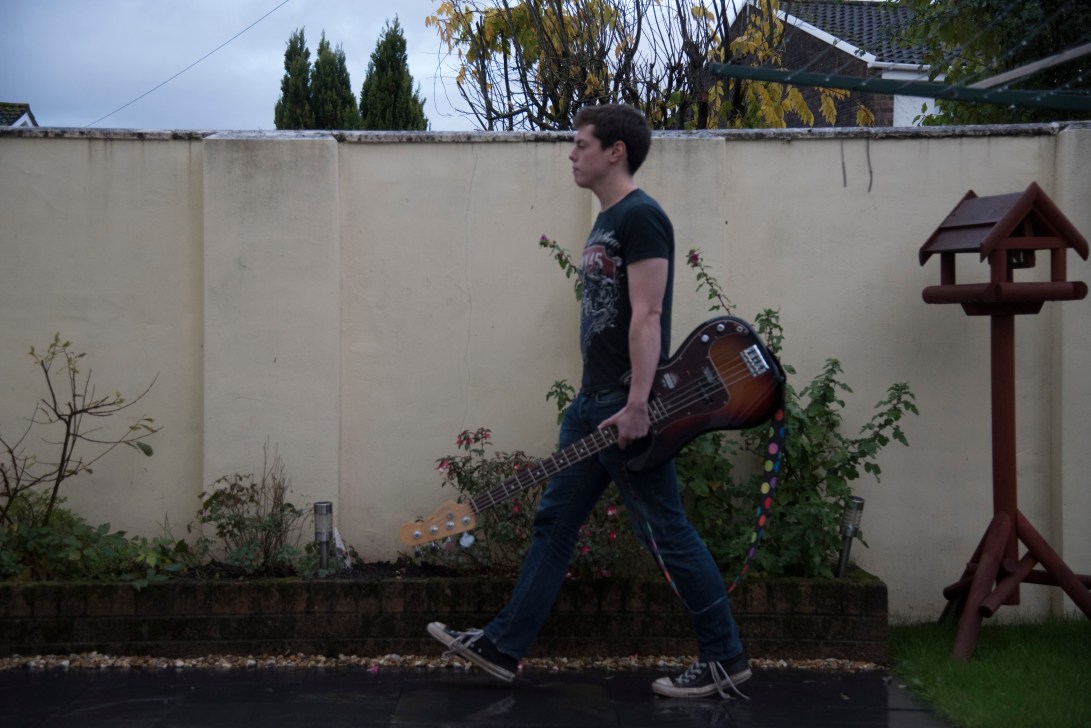
For this shot, I again used a tripod and a timer, this one still took a few shots to get right, as I had to be in a position that showed I was actually walking, rather than just standing there flat footed. I almost feel like this one could be on the album cover of some generic indie band (although probably with a more scenic background and a better looking model). I used a shutter speed of 1/1000.
Slow Shutter Speed
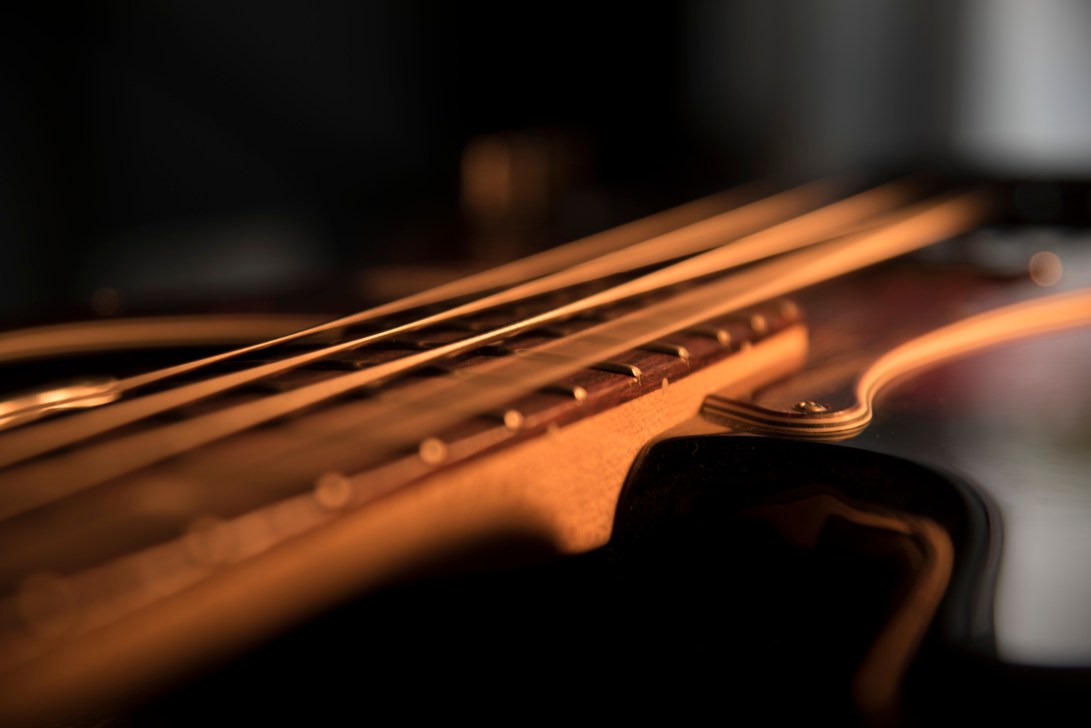
I decided to demonstrate slow shutter speed in this shot by plucking the E string and capturing the vibrations of the string as a result, as you can see, the other strings are entirely still, and in the section that in focus they are sharp, whereas the E string is blurry and you can see it faintly on either side of the range of this blur as it reaches its furthest point s of vibration. I utilised lighting in this shot to give the guitar a warm glow and so I feel it is more aesthetically pleasing to the viewer.

This shot is probably one of my favourites. I leant the guitar against a stool, put my camera on a tripod on a thirty second exposure and went a bit mad with light painting. I went through many different ideas before I stumbled upon this one, I began by drawing around the guitar with the light, then trying to light it up and drawing the ‘anarchy’ symbol in front, after that I tried devil horns on the top, all of which came to nothing. During one of these failed attempts, part of the red filter over my light flicked up, and I noticed where that had happened it gave the effect of fire, so I ran with it and that is how I arrived at this image.
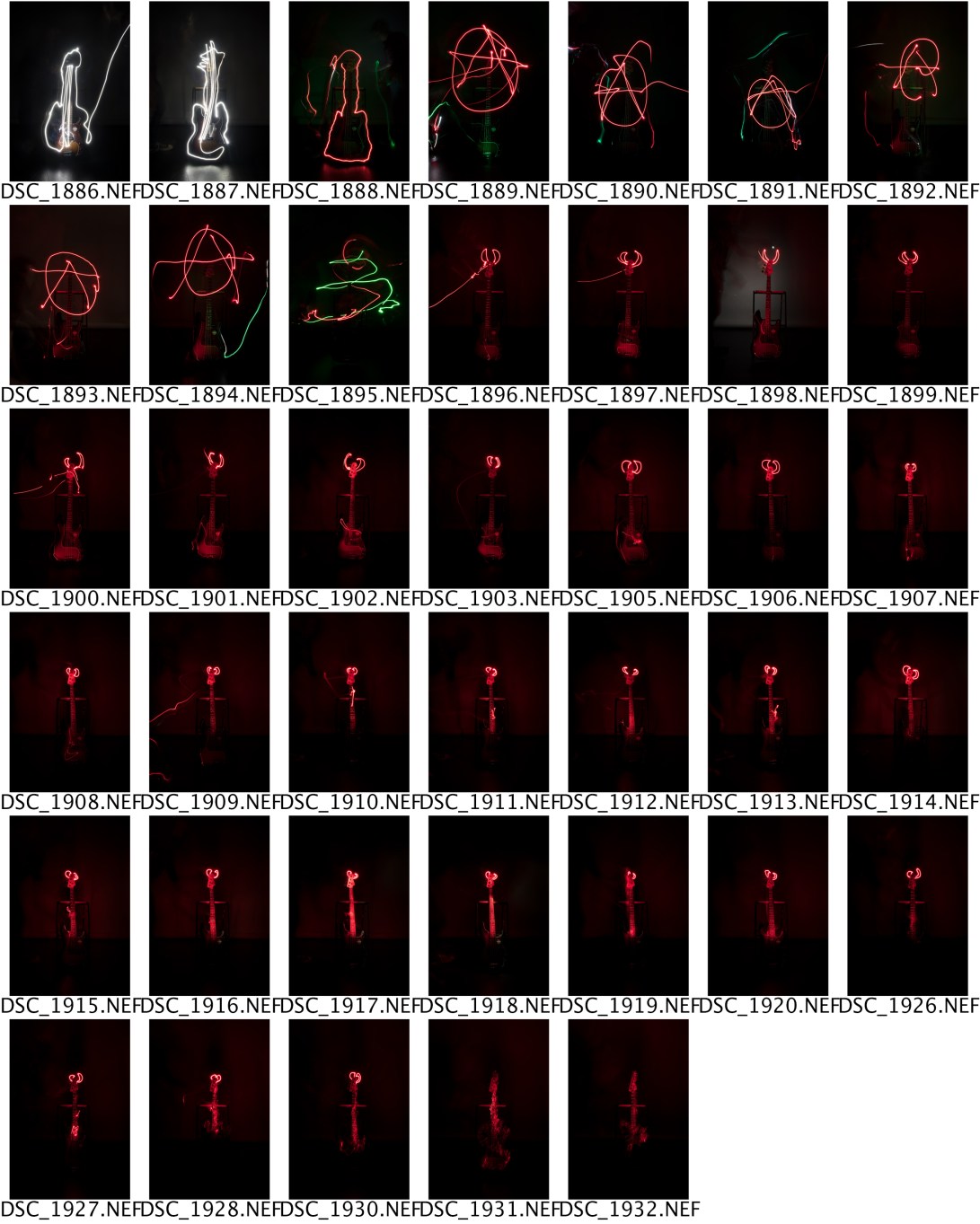
A contact sheet of my failed light painting efforts leading up to my final shot.
 jb photography