In this module, we will:
- Produce a studio portrait pastiche. We have to emulate a photograph we have chosen and researched, any creative techniques used in the original image will have to be applied to best recapture the photo. The final product will be printed at either 18″ x 12″ or 12″ x 8″.
- Produce 20 street portraits. These must be of people we have never met before, include a diverse range of people, taken using a focal length of between 50mm and 85mm, taken as ‘passport photos’ with no smiling and must be presented as a contact sheet in RAW and must have the same format and cropping for consistency.
- Produce an environmental Portrait. This has to be a portrait of a person within the environment that is relevant to their hobby or work. This must be shot in two ways, one with natural lighting and the other with artificial lighting (constant or flash). The subject must be looking at the camera and may not be performing their hobby, although may have items associated with their hobby in the picture with them.
All final imagery will be uploaded to this page.
Lighting Experiments
We took to the studio and split into groups to try our hands at using the various lighting attachments while taking portrait shots of each other. Here are, in my opinion, the best shots I achieved with each attachment.
Barn Doors (Open)
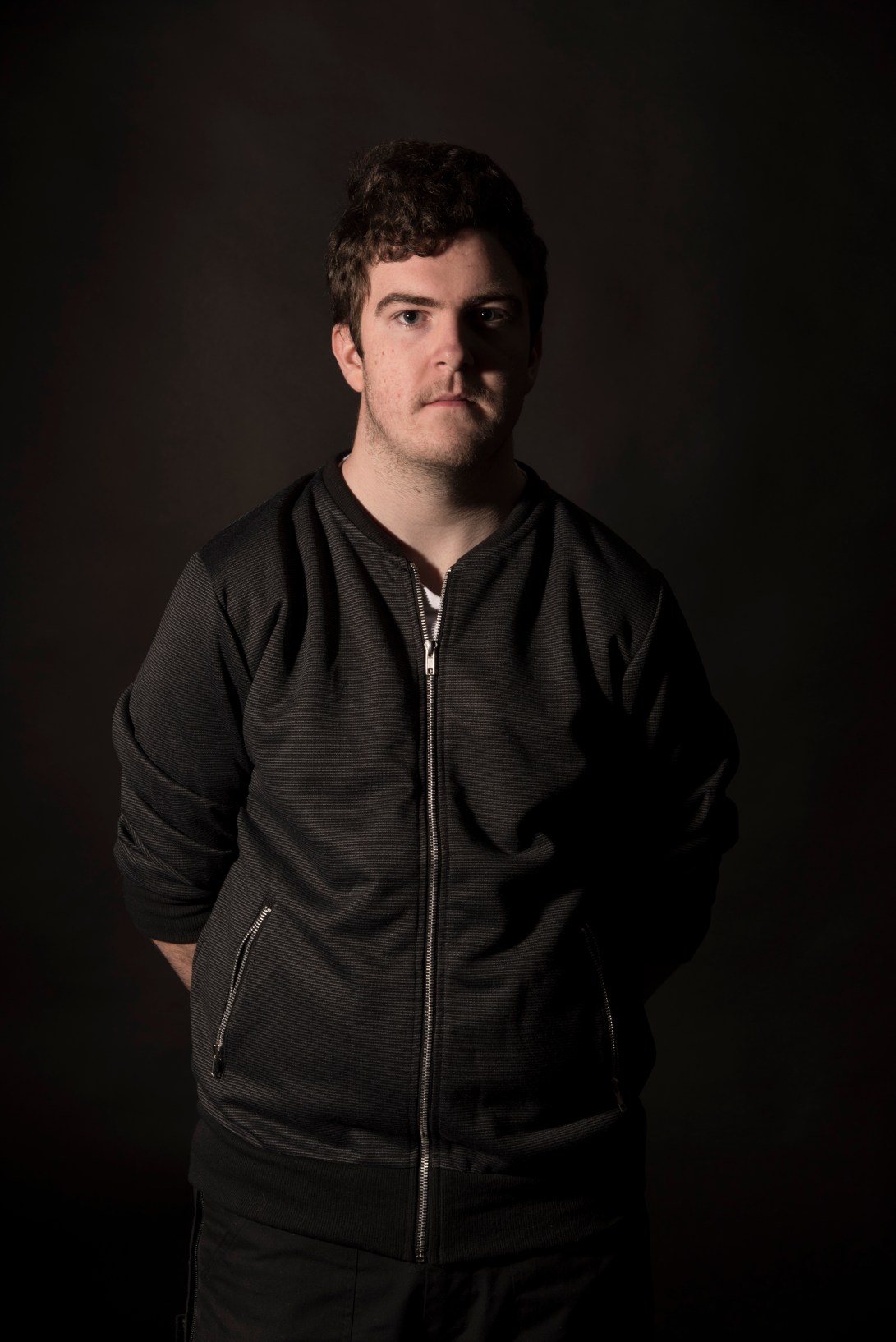
The ‘barn doors’ are movable flaps around the light that can direct the light in the desired direction at the subject. Here we have opened them so the light is very harsh on the subjects face and creates a hard shadow.
Barn Doors (Closed)
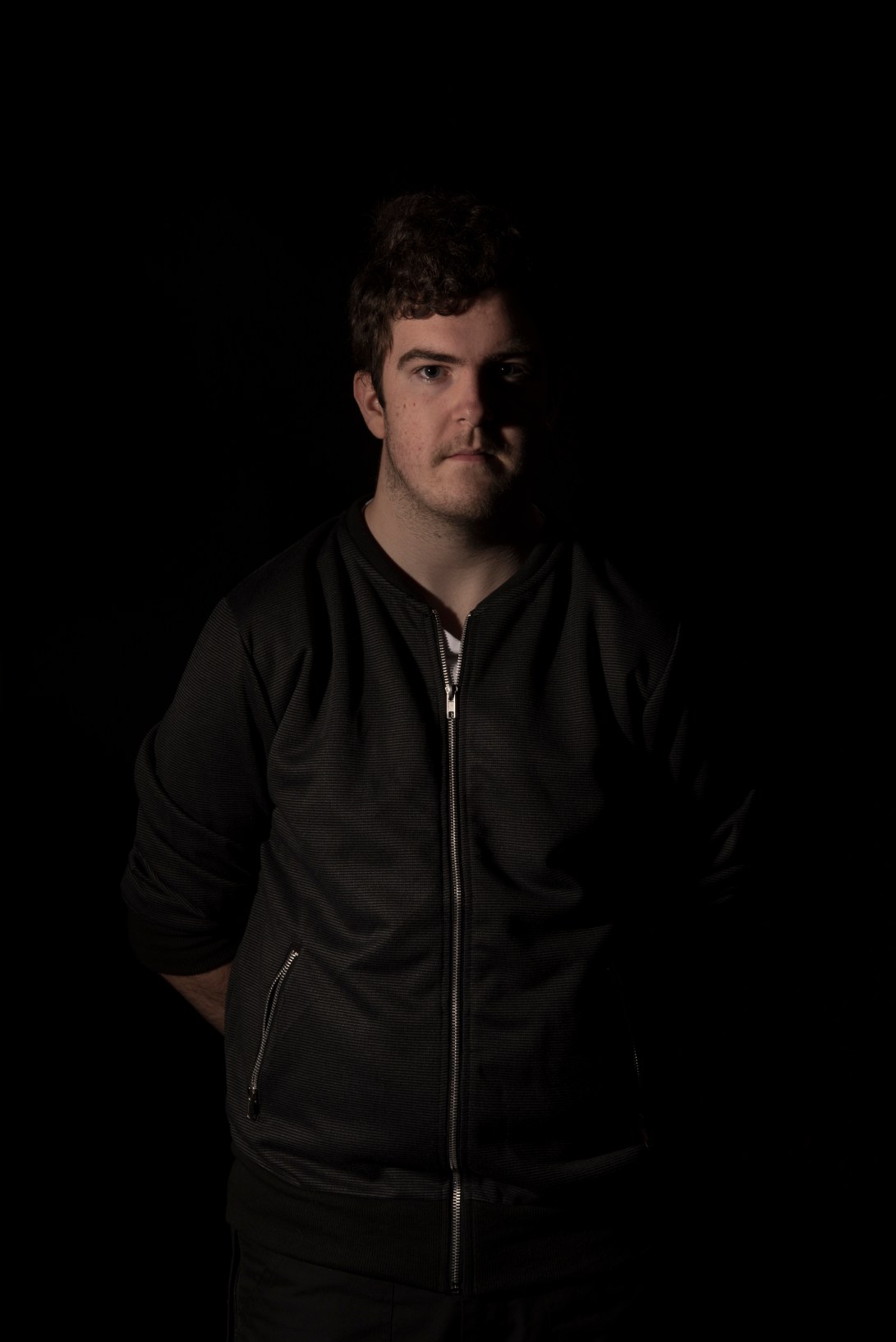
Here we have closed the barn doors significantly, this can be seen as the light on the subjects face is less harsh than the previous photo, the shadow is still very hard, but appears somewhat less so because the light created by the barn doors is less severe.
The Snoot
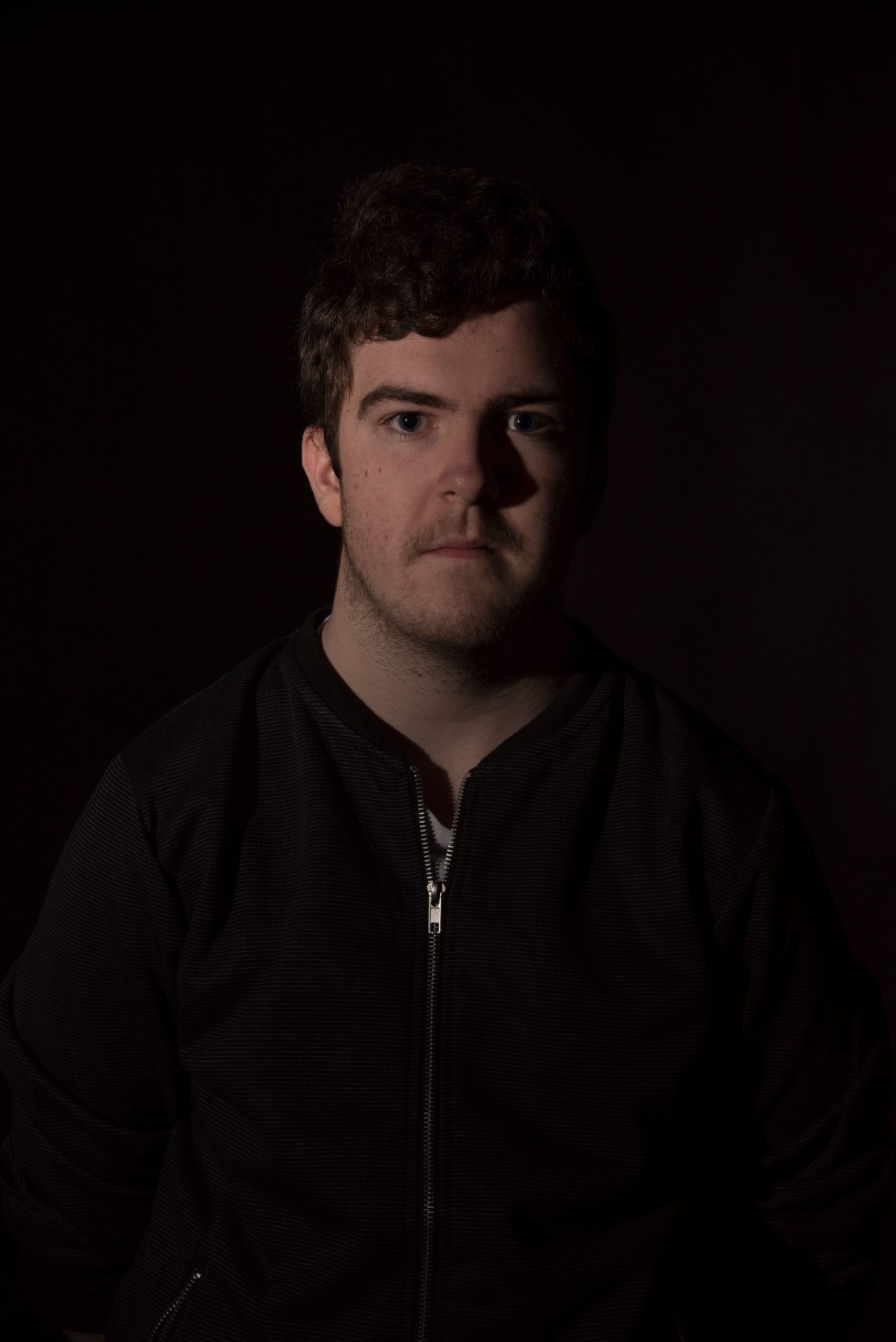
The snoot is effectively a spotlight, it has nothing to soften the light, it is merely a cone that concentrates the light onto a certain part of the subject. As you can see with this photo, it creates very hard shadows, these shadows cover almost half of the subjects face, and due to the direction the light was pointed in, has created a very large shadow of the nose.
Beauty Dish
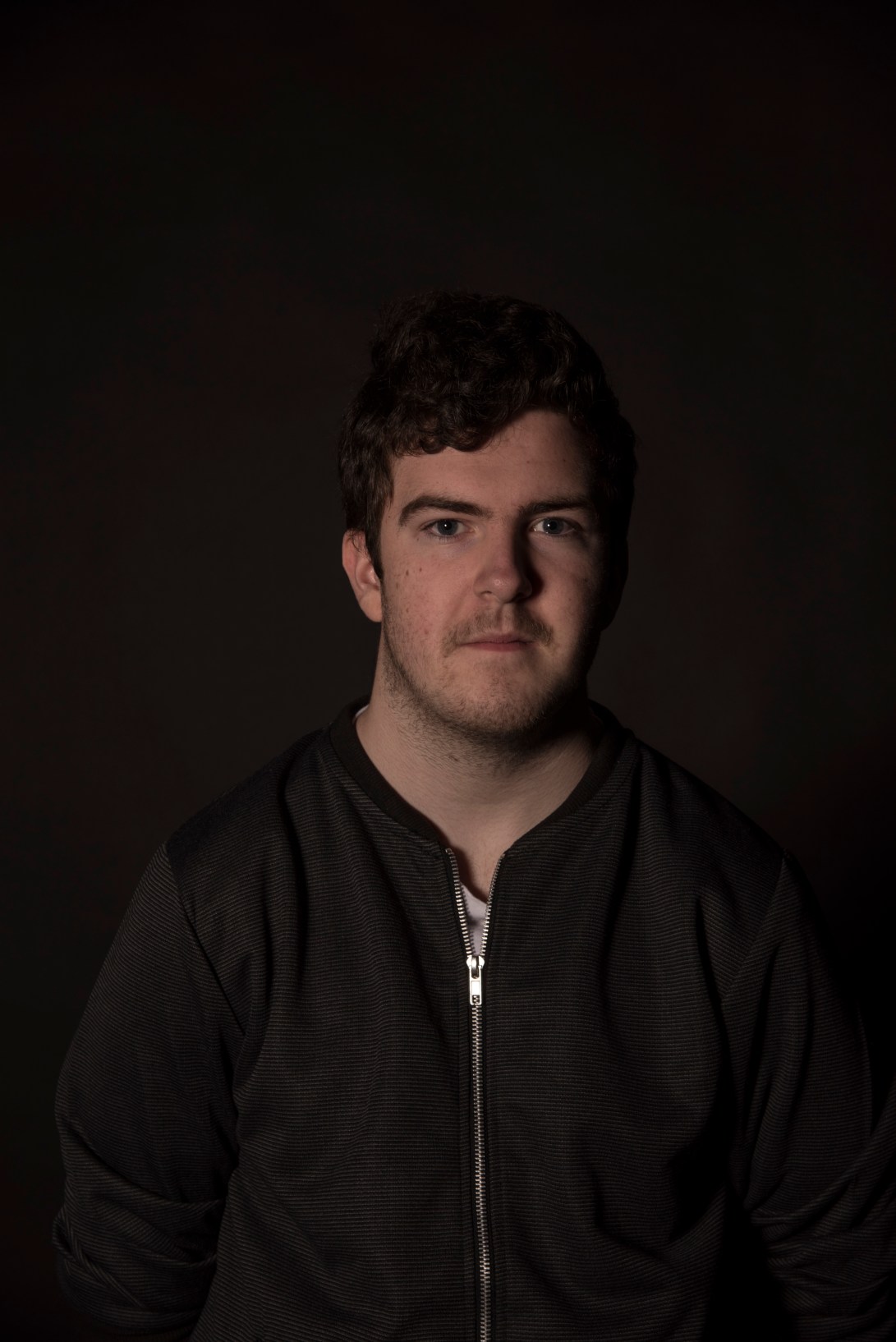
The beauty dish attachment gives off a wide angle of light due to the fact its is a dish, so there’s nothing to block the light from going in all directions, it also causes softer shadows, as can be seen in this photo, this is because of a light diffuser in front of the bulb.
Honeycomb
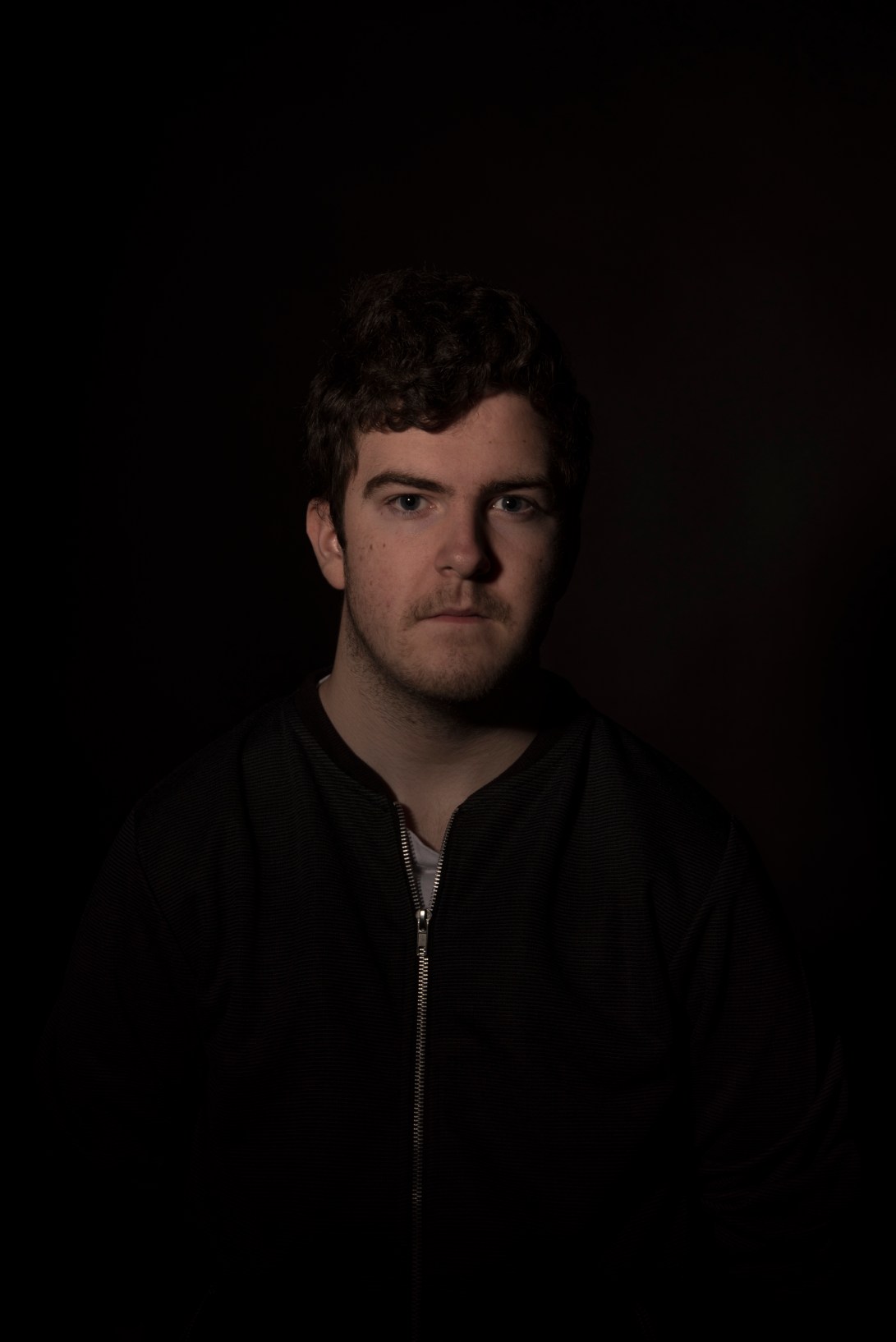
The honeycomb causes hard shadows, as can be seen again with the nose shadow, although with this image we placed the light in a slightly more central position than some of the other shots, so there was less shadow cast over the face, and more of the face was visible. It also gives off more direct light, as I said though, the light was in a more central position so it covers most of the face, but the right of the face that the light didn’t reach is very heavily shadowed, showing the lack of coverage of the light from this attachment.
Soft Box
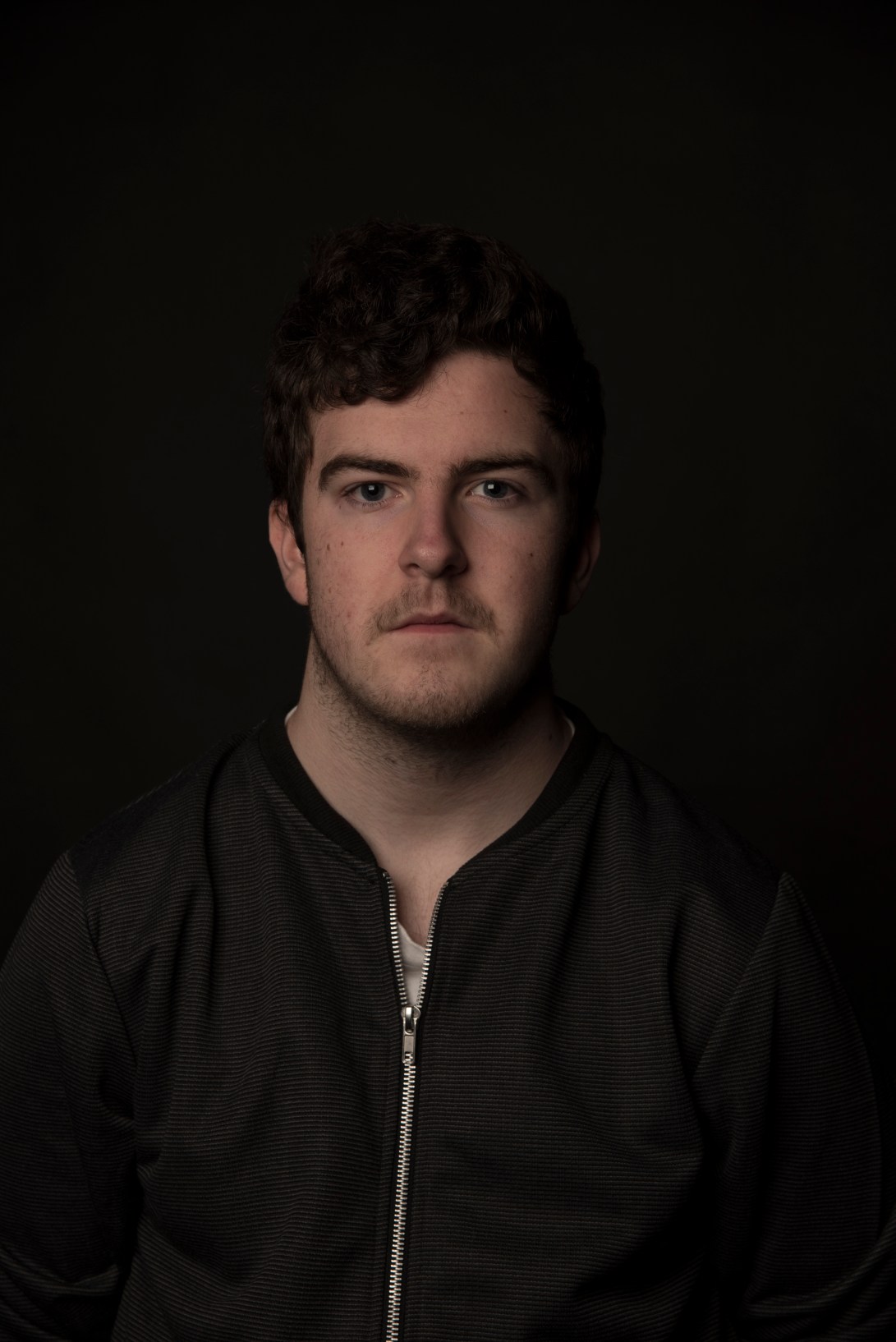
The soft box diffuses light especially well, so causes very soft shadows, as can be seen here, wheres with more harsh lights, the shadows here almost blend with the light rather than producing a definite line between the light and the shadows, this is more aesthetically pleasing in my opinion as it gives the shot a more professional look.
Annie Leibovitz
Annie Leibovitz has photographed many celebrities in her time, including the likes of Leonardo DiCaprio, John Lennon, and of course the two brilliant gentlemen you see below. I particularly like this image and would like to try replicating it (obviously with different people, although if Sir Patrick and Sir Ian could come along then that’d be awesome). I particularly enjoy the somewhat greenish tint to this shot, which gives it a particularly (in my opinion) epic, almost film poster like. I think I should use two lights, one to illuminate the background, and another to light up the faces, which would be above them and in a central position, I would do this because there is no side shadow from Patrick Stewart’s nose, but there is a bit of down shadow (indicating it is from above). Also the greenish tinge I mentioned can be achieved in photoshop.

My Attempt
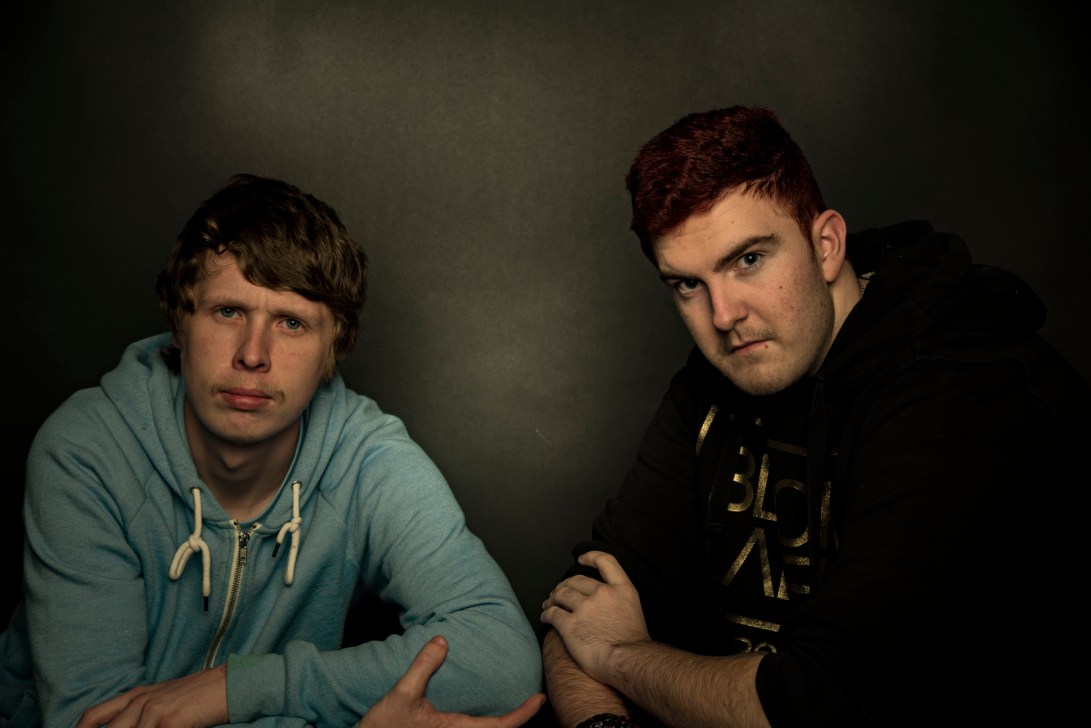
Apart from some positioning inaccuracies, I personally think that this was a very good first attempt at a pastiche. The lighting attachment used was the softbox, which although may not have been necessarily used in the original shot, gave the best and most accurate lighting, I had tried the honeycomb but alas to no avail. Once I achieved a shot I felt I couldn’t improve upon, the rest was all in the editing, I noticed a greenish tinge to the original which I emulated as best I could, and shaped the light on the background to be as close to Annie Liebovitz’s shot as possible.
Fashion Portraits
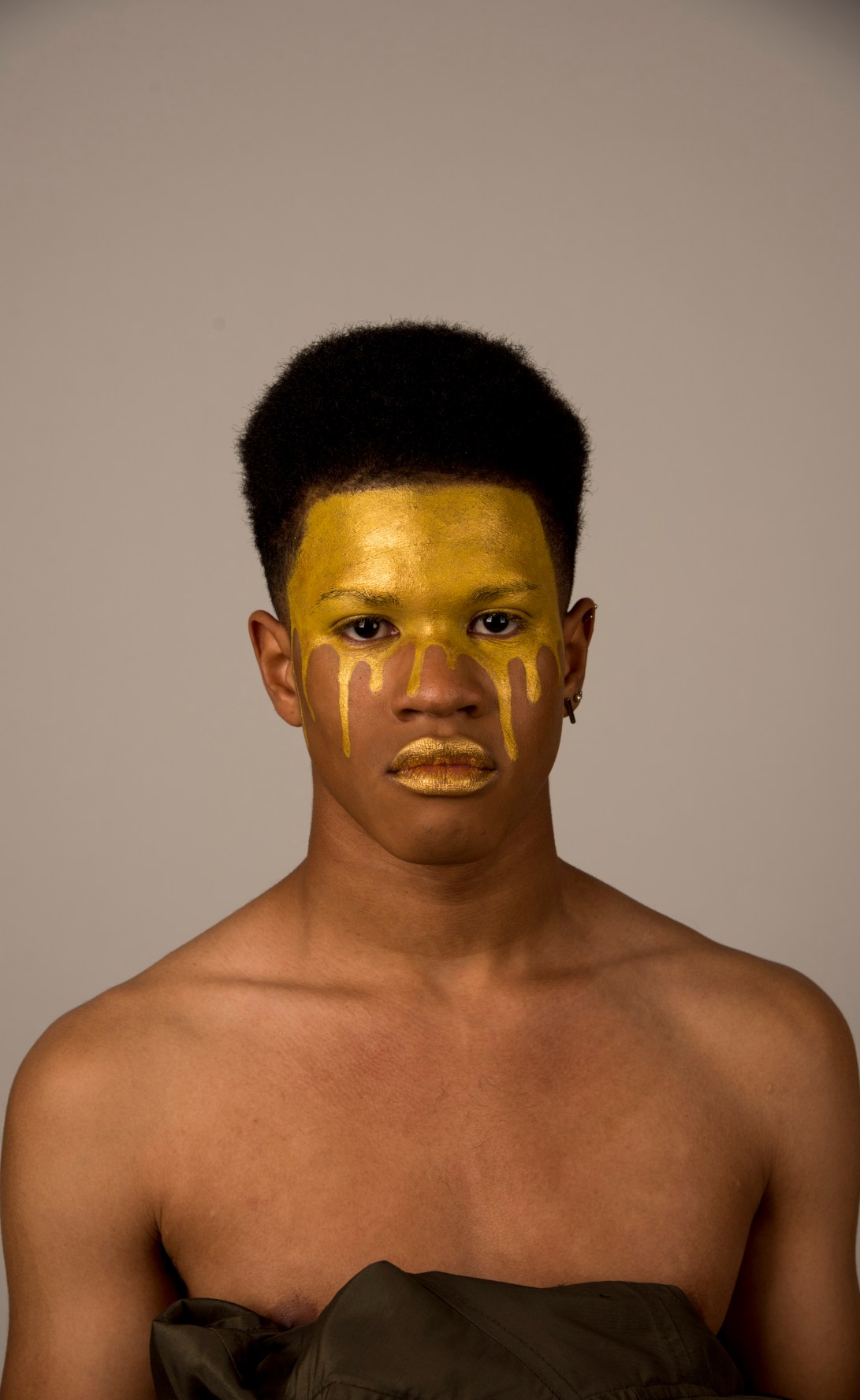
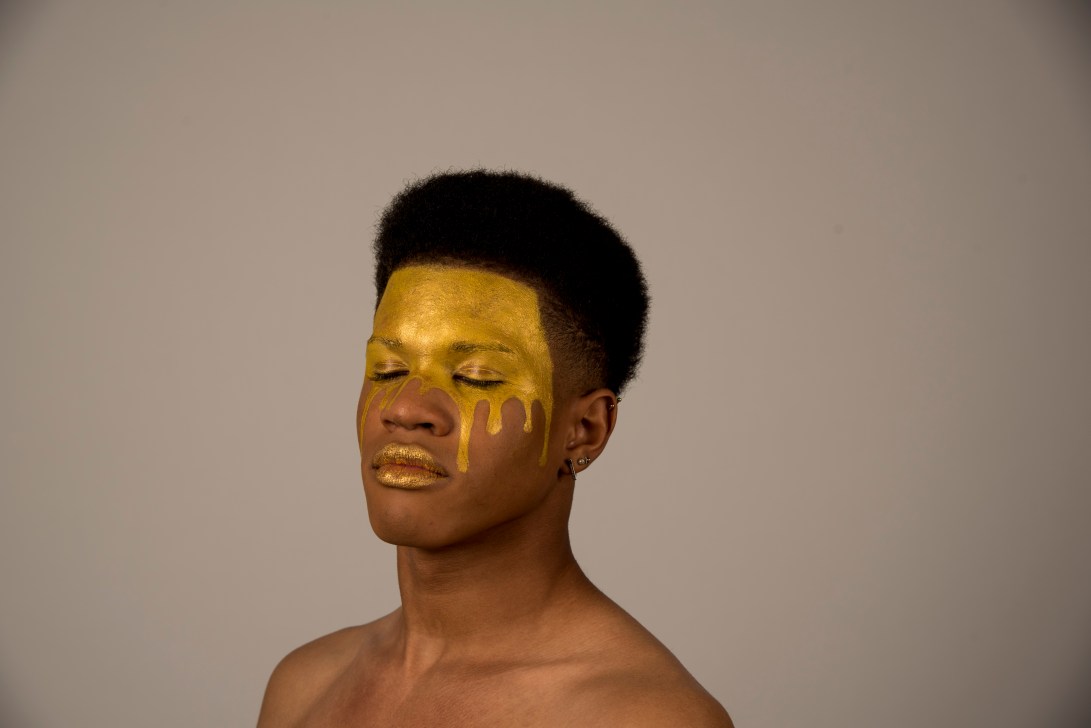
We were asked to shoot for the fashion department in college, soft box lighting was used for all shots and the subjects were directed by the stylists, so we didn’t really have much of an input apart from our camera settings (shutter speed: 1/125, aperture:f.8 and ISO:100) and actually taking the picture. Here are the images I got.
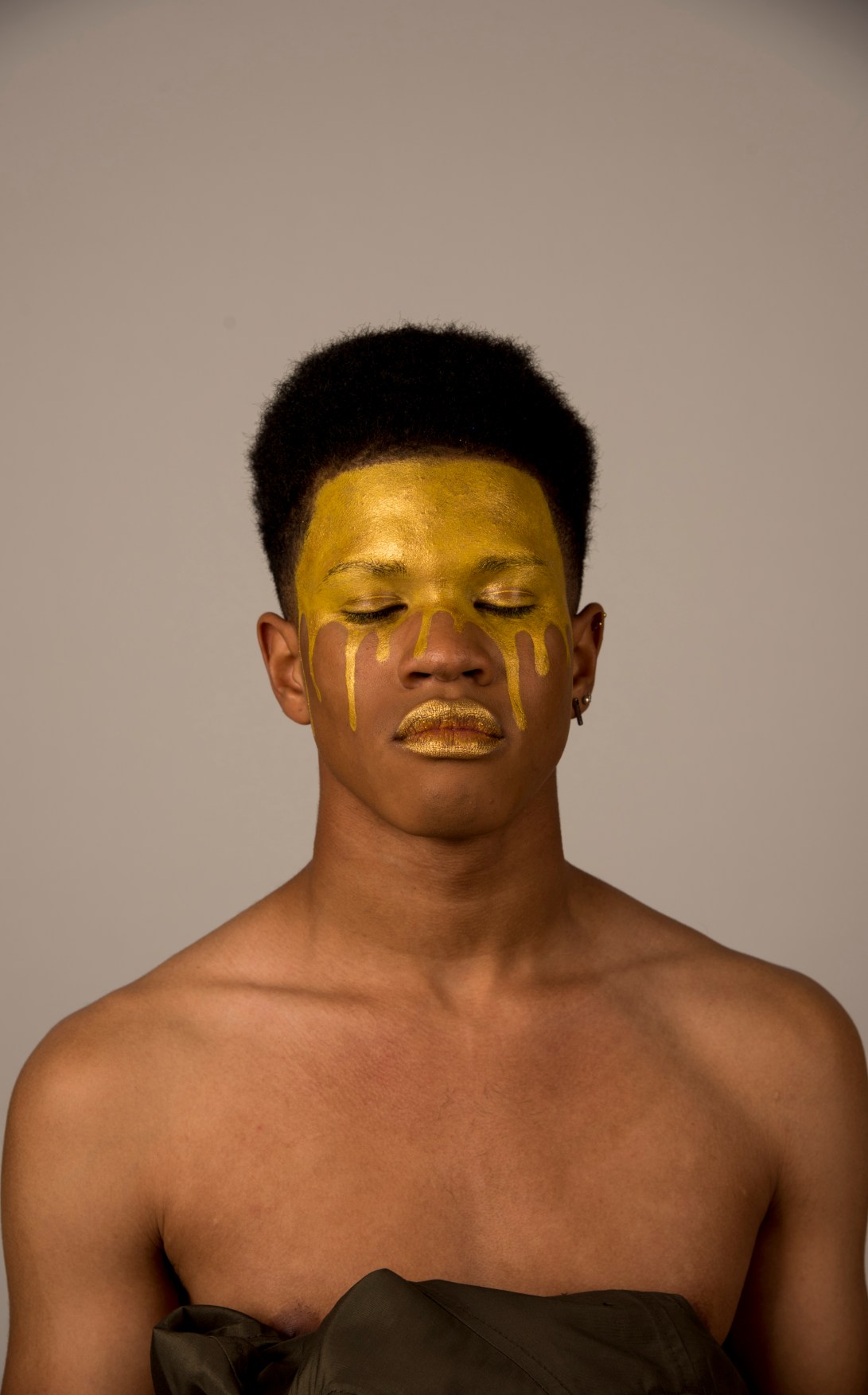
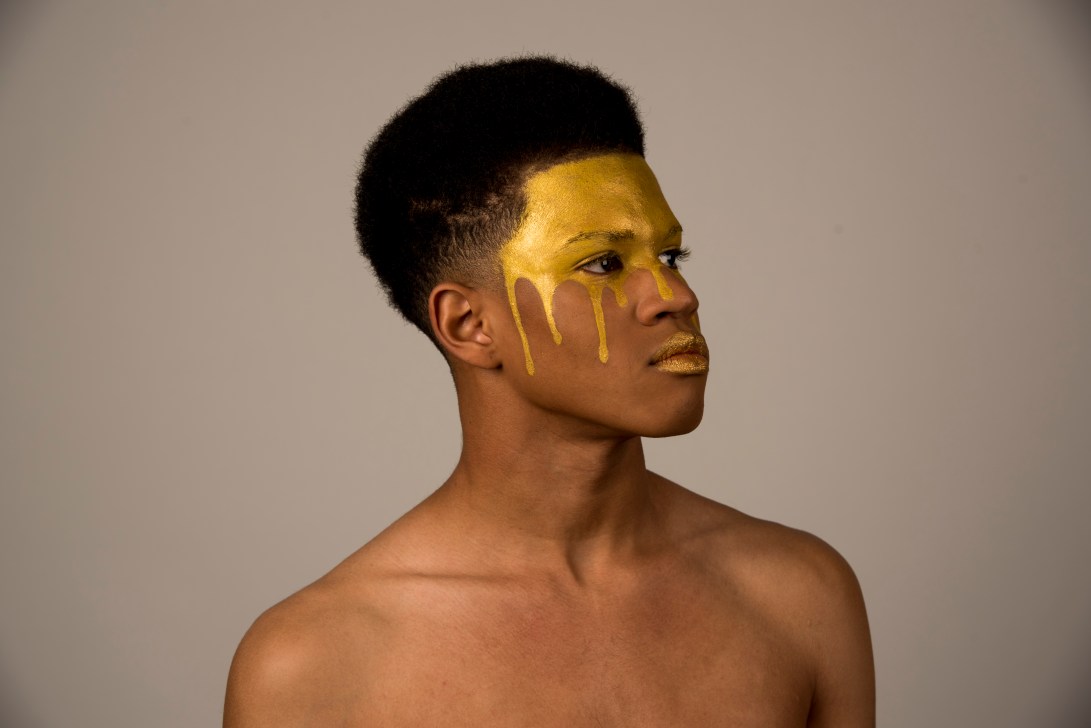
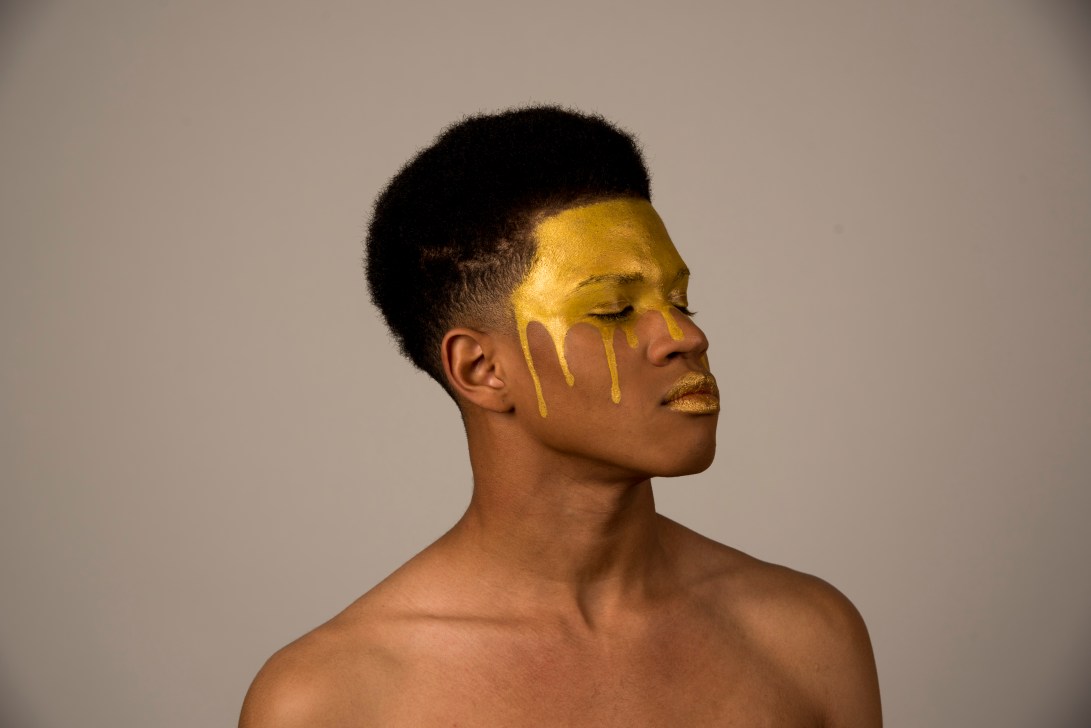
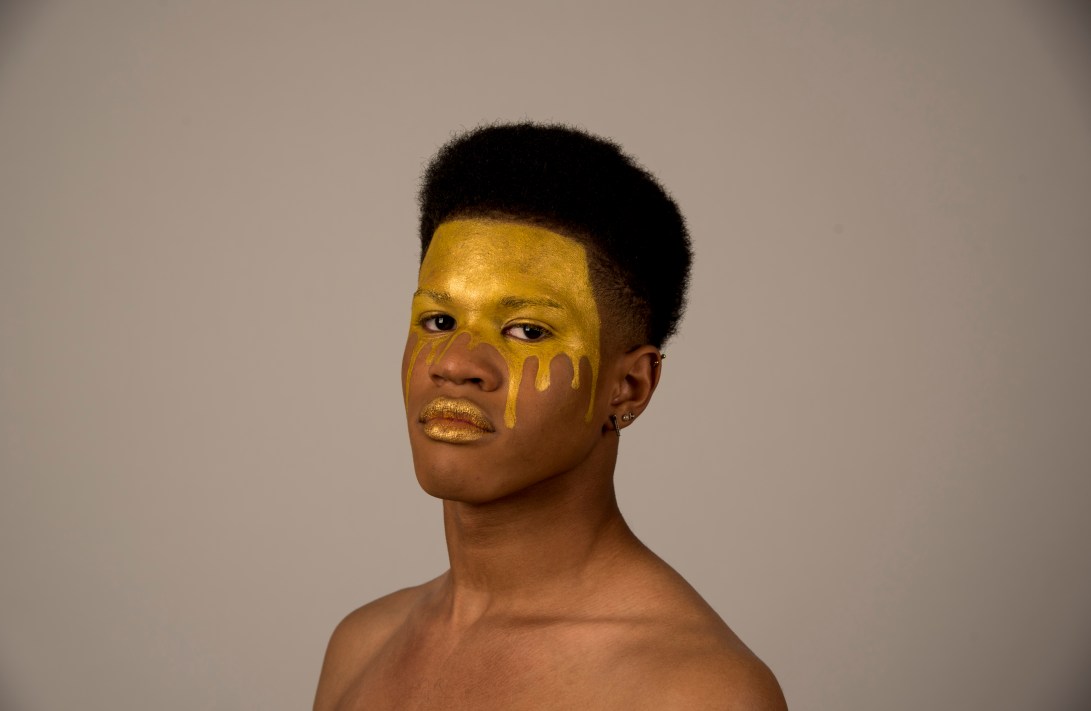
Jonathan Bielaski
Based in Toronto, Canada, Jonathan Bielaski is an environmental photography specialist. With his father in printing and his mother a graphic designer, he fell in love with images and wanted to make his own. He always finds a way to capture the story of the person in his pictures, as he feels it should be told.

It is made very clear on this image what the subject’s profession is, the hives, the protective hat, the gas dispenser and (the dead giveaway) the bees on the board. This would be questionable for our brief, because although he is not dressed in full gear and isn’t actually doing his job, he is as close as he can be and looks like he may be about to gas the bees. This being said it is an excellent example of an environmental portrait, and I will try to use its simplicity as inspiration for my own work.
Anthony Kurtz

Mark Seliger

Street Photography Idea
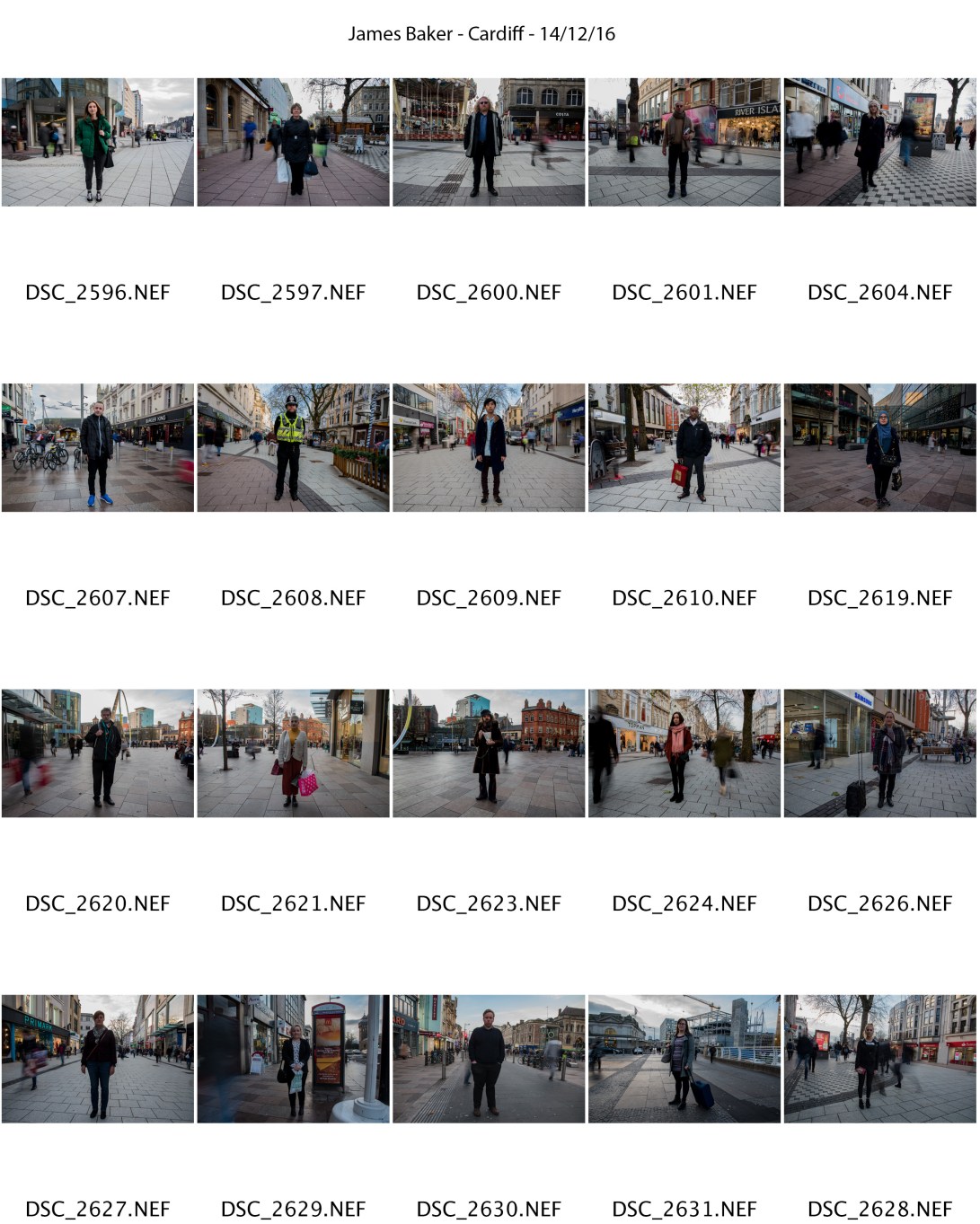
As we have to have a level of consistency throughout the twenty images of strangers on the street, I hope to make the connection between the images visually interesting. I have decided to use a slow shutter speed (perhaps 3 or 4 seconds), and ask the subject to remain as still as physically possible for the duration of the shot, so the end result will hopefully be the subject in perfect (or as close as I can get it to perfect) focus, whilst the surrounding people appear blurred as they move around. I like this idea because it focuses on one person, all their details captured, while the rest of the world walks past as an unrecognisable, forgettable blur.
Street Portraiture Practice
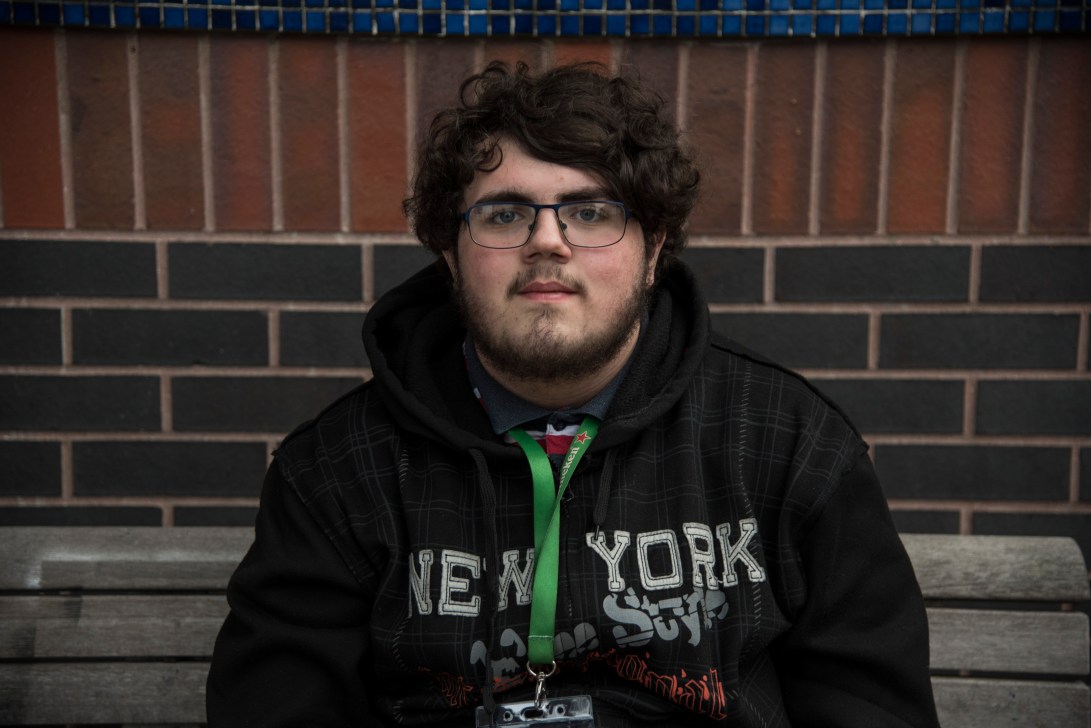
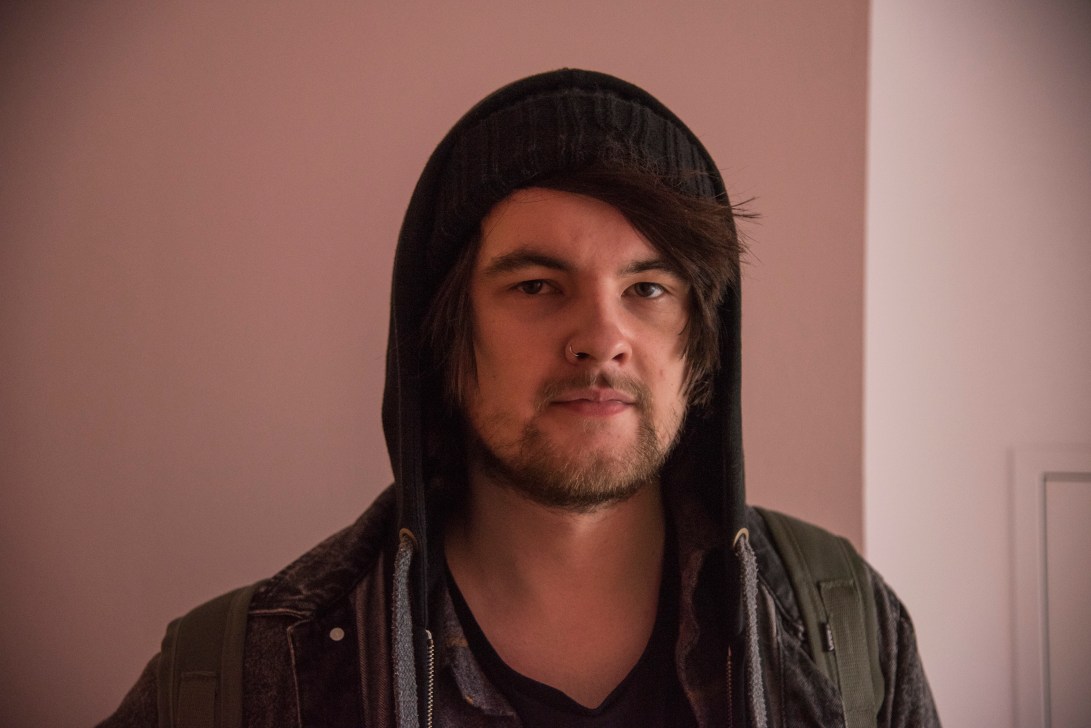
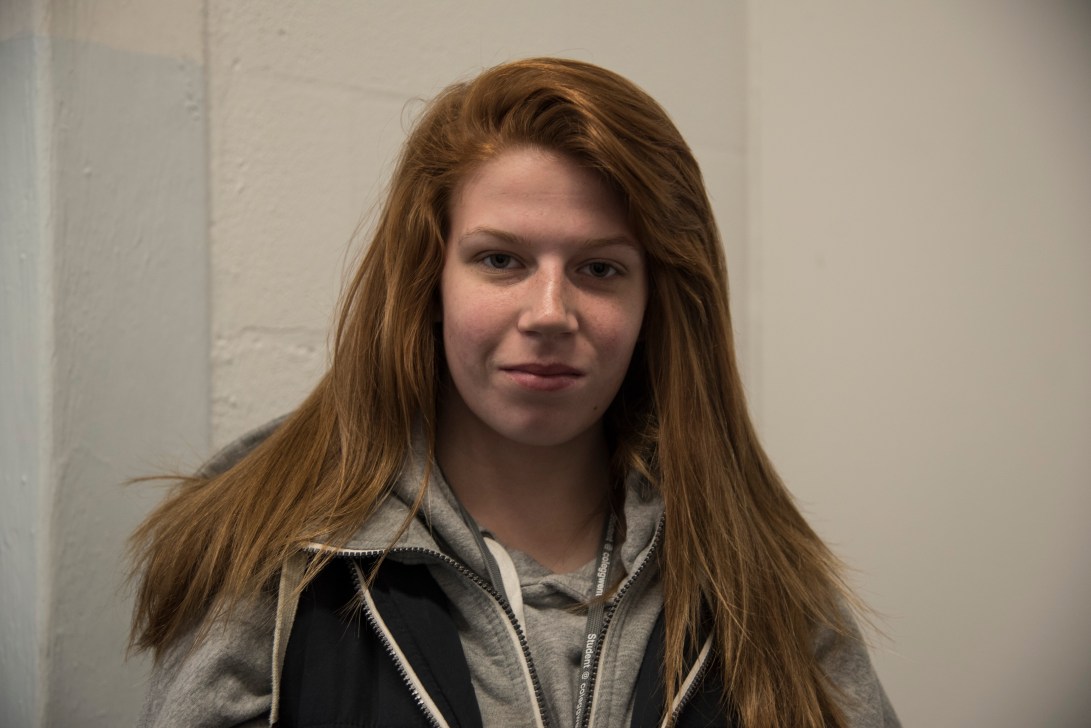
In college we went around asking various people if we could take their picture, we were supposed to practice getting the same effect we plan to with our final piece, but as mine includes a tripod (which I didn’t have) I used it as more of an exercise to get me used to asking people. Obviously I got a few rejections, but undeterred I soldiered on until I had three photos, even if they aren’t in the style I will employ in my submitted body of work.
Environmental Portraiture Practice
Again, we were tasked with finding people willing to have their photos taken in their environment, we had to take into consideration lighting and ensure that what surrounds the subject tells us what it is they do and something about them. Again I had some rejections, this helped with preparing for the street portraiture aspect, but eventually I got the four I needed.
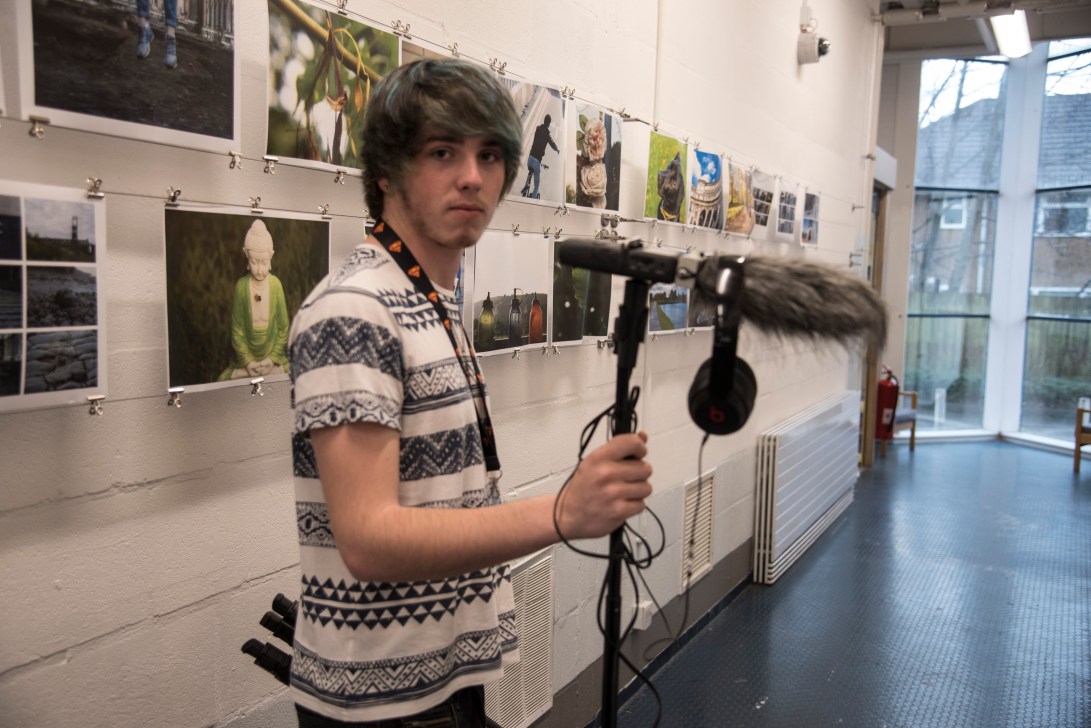
Probably the worst effort of the day, as it’s not as in focus as it could be and even though it wasn’t, it looks fairly rushed. The mic and headphones show what he does, so that’s a redeeming feature, but overall no the best.
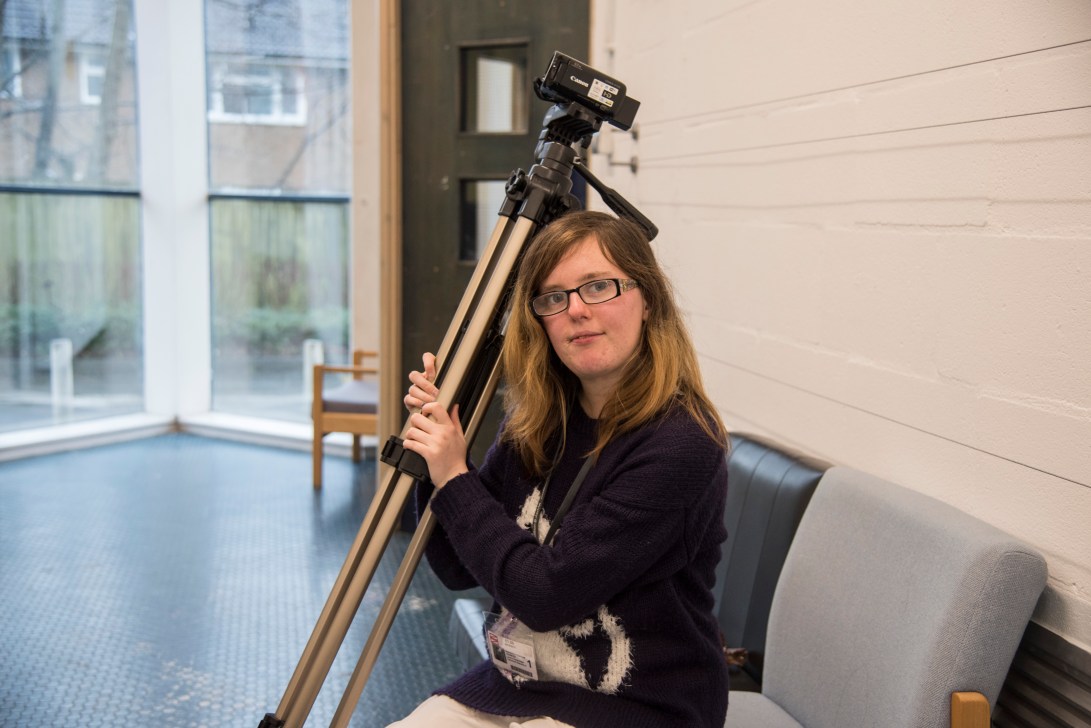
This was a much better effort, the subject is definitely in focus, the lighting is better and again, the presence of the tripod and camera indicate something about the person.
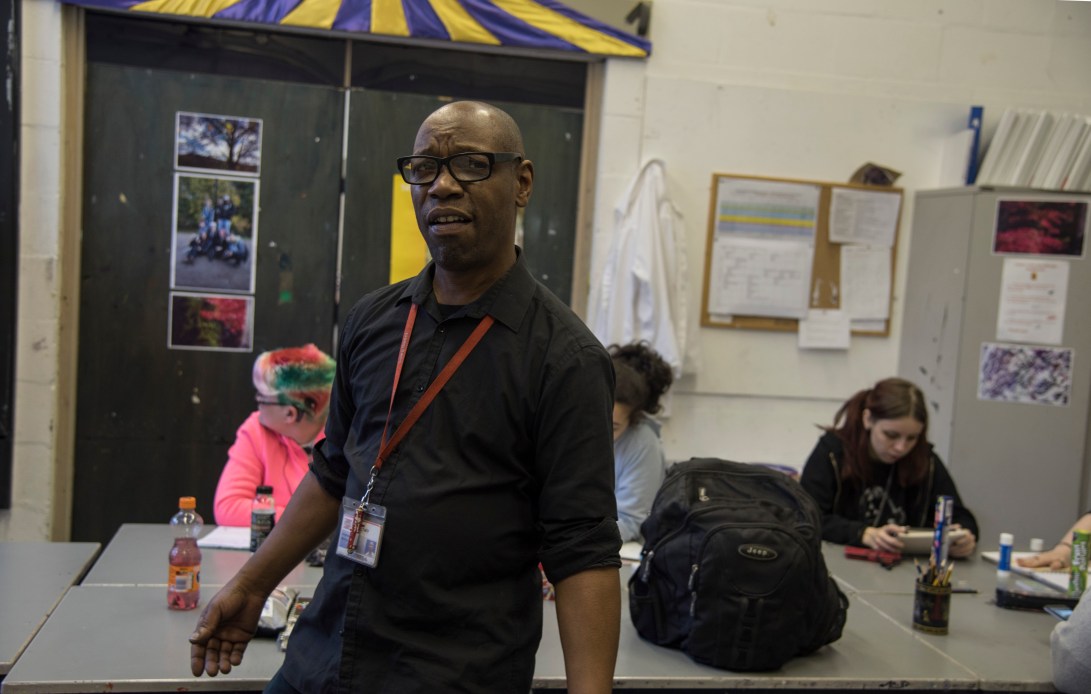
This one wasn’t really supposed to turn out this way, but I couldn’t resist including it because of the face being pulled. Aside from this, it is demonstrating that he is a teacher, and I like the light on the right side of his face from the window.
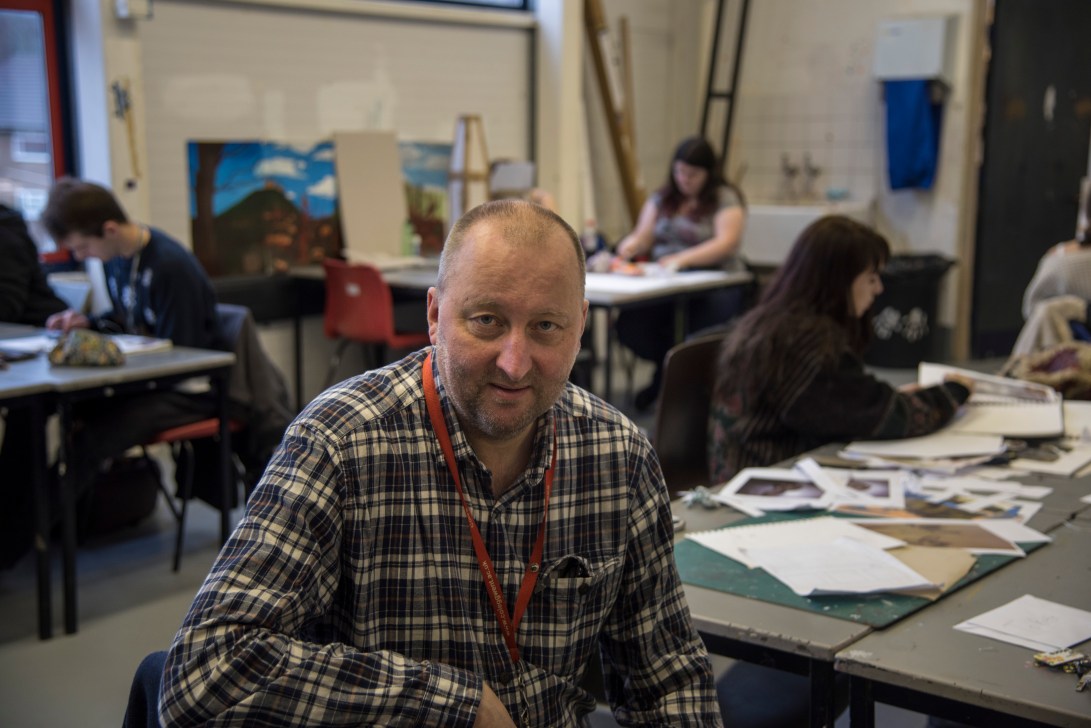
This was probably the best effort of the day, the shallow depth of field is on point and the lighting worked very well. Again the kids in the background and the lanyard show that he is a teacher. Overall this was probably the most professional looking shot I took on the day.
Street Portraiture in Cardiff
We went to Cardiff just before the Christmas break to take our 20 street portraits of strangers. I had the idea to have an exposure time that would be long enough to capture movement blur (I went for 2.5 seconds), and have the subject standing perfectly still in the middle of the blur of the passers by, obviously I had to use a tripod for this effect. I had some minor apprehensions about the prospect of just asking strangers for their picture, but as I found out, the camera is the perfect icebreaker, and none o that awful small talk, just take the photo and move on.
Here is what I got from my day.


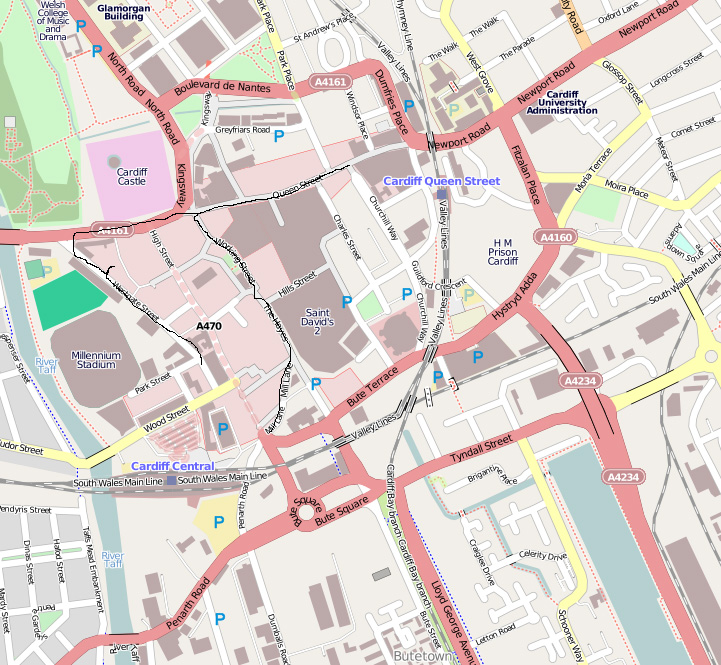
Where We Went
Environmental Portraiture: The Biker
I chose my friend and his motorbike as the subject for this particular foray into environmental portraiture, fortunately he rode to my house and so was wearing the full getup (and I didn’t have to get the excruciatingly stop filled bus journey to his).
Natural Light
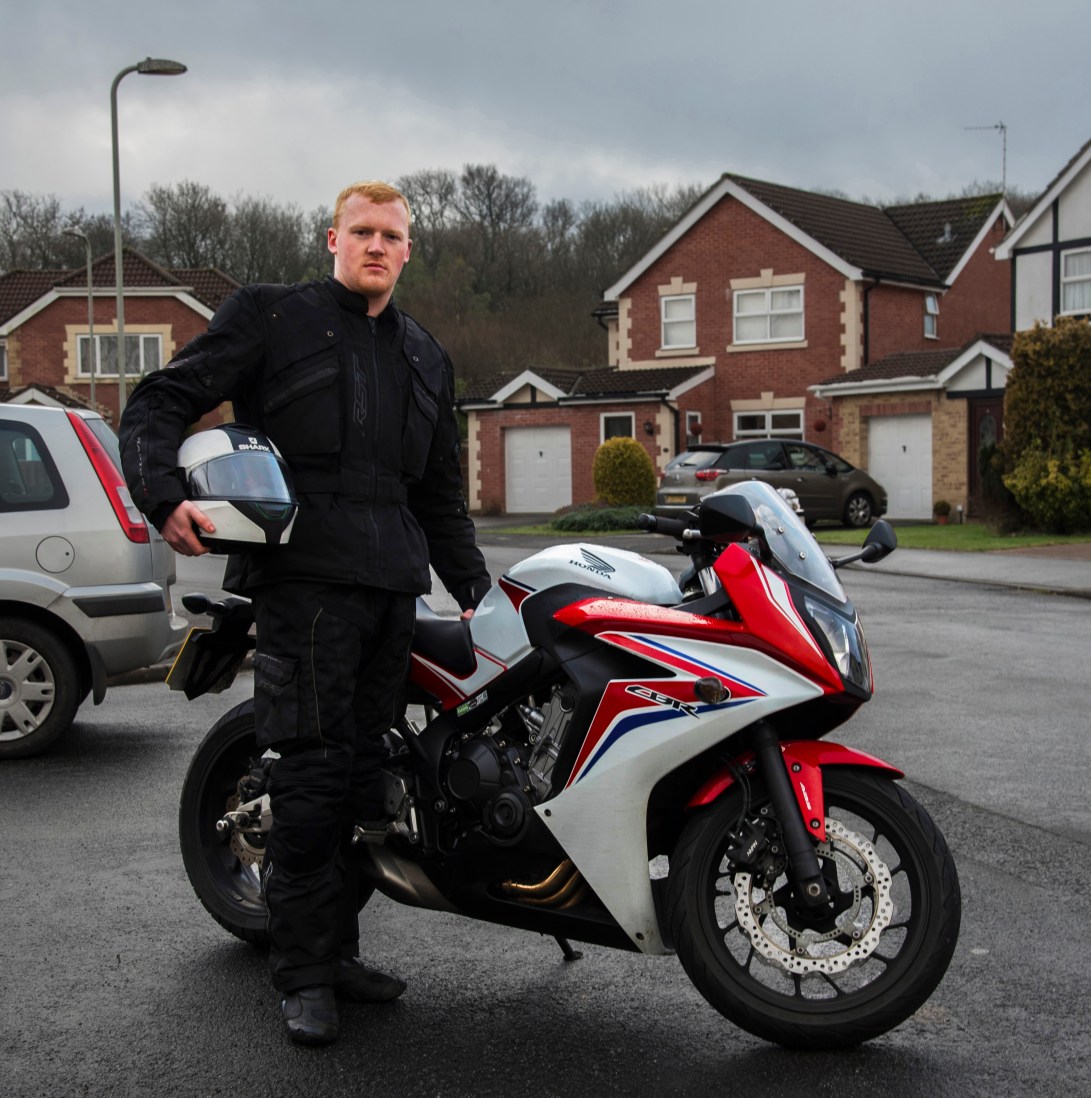
I feel like although it was a fairly overcast day, the even lighting over his face is beneficial to the photo. Both the bike and the subject appear to jump out of the scene somewhat and distinguish themselves from the relatively dreary background. As for the background, I felt it was imperative that I included the road in the image (seeing as obviously this is where the bike riding would occur).
Artificial Light
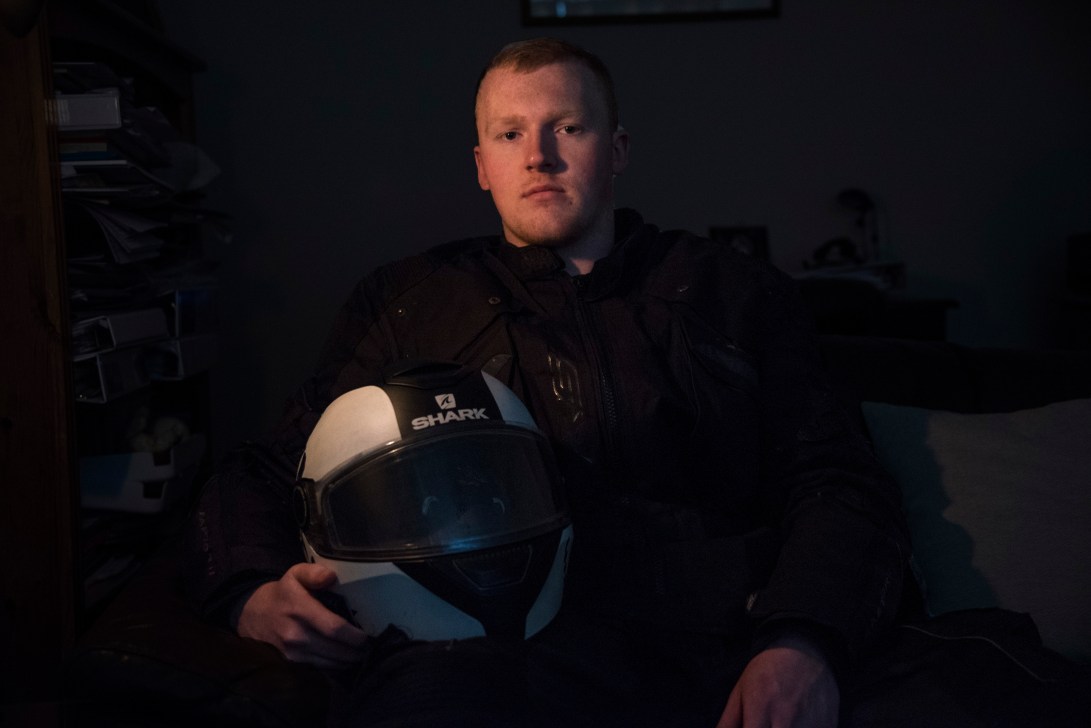
For this shot I had originally planned to use the garage, but as that was unavailable I made do with the front room. We have a spotlight lamp that I thought would be very useful for this shot, so I got the brightness to the level I was happy with and took the shot. I made sure that he was still in bike gear and had the helmet with him so it was still apparent what the photo was about. I like the warm light cast across his face, but if I have another opportunity, I may try and re-shoot this one.
Yousuf Karsh
Yousuf Karsh was an Armenian-Canadian portrait photographer. time magazine called him one of the great portrait photographers of the 20th century.

Here he has photographed Albert Einstein, it is a relatively simplistic image as he appears to just be sitting, deep in thought. The simplicity extends to the lighting as well, as it seems to be relatively evenly spread over his face, hands and body. I would probably try using a softbox for this effect and position it facing the subject but slightly above them.
My Attempt
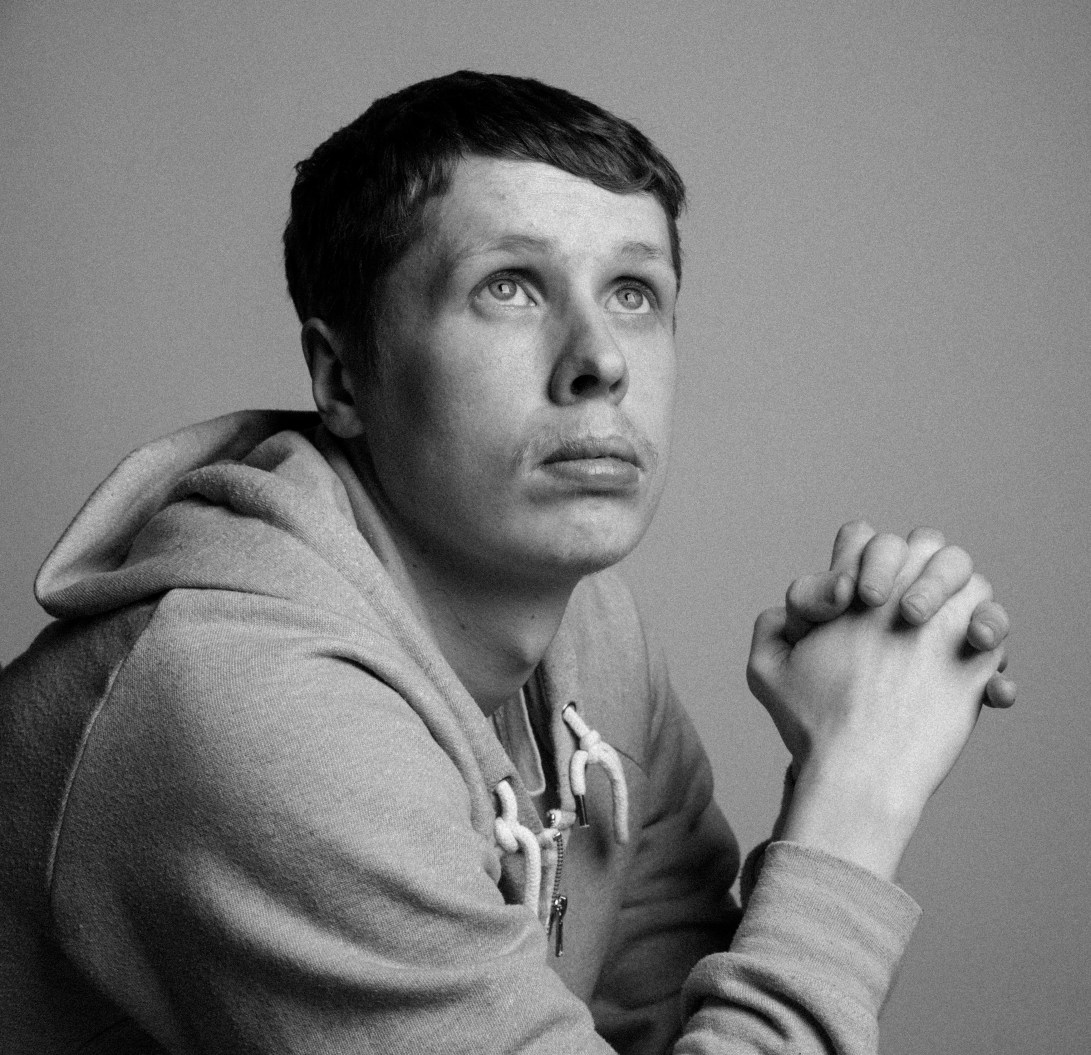
I used the softbox to achieve light coverage and shadows on the cheek as close to the original as I could. In editing, I obviously changed the image to black and white, and then added a touch of grain as I felt it would cause the image to be a truer reflection of Karsh’s. Obviously the clothes and the background aren’t the same and this could not really be helped, but overall I feel that this is a solid recreation.
Craig Wetjen
Craig Wetjen took 101 photographs of men in their sheds, he did this not only to explore the inner workings of the male mind by discovering the variation of ‘man caves’, but also to promote awareness of male mental health issues, and the loneliness and isolation caused by retreating into the shed in order to get away from the stresses of life.
From these images, I took one that was very relevant to me, a man on a motorcycle in a very well lit and spacious garage/shed area. Unfortunately I have nowhere near this type of environment in which to shoot, though this is the type of image I had envisioned prior to shooting.
Environmental Portraiture: The Driving Instructor
I chose my driving instructor as the focus for this set of environmental portraits, fortunately at the time of shooting it was a lovely evening with nice, clear skies, yet not too bright thankfully. I feel the shots worked well and were much better than my previous efforts.
Natural Light
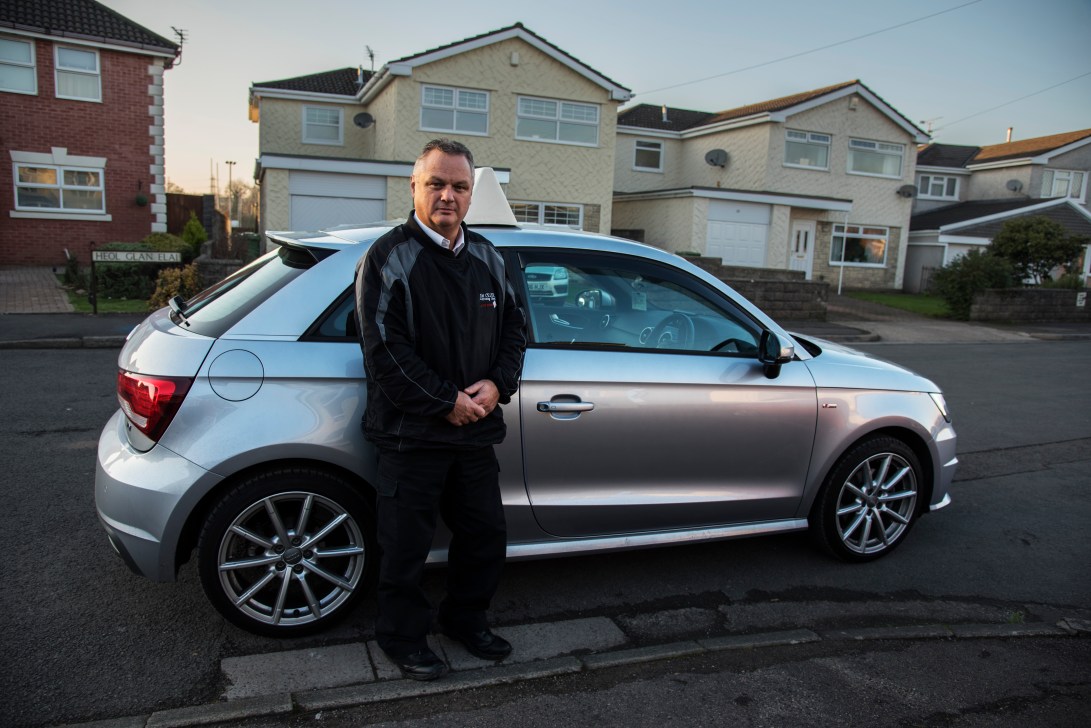
Same as with the bike shot, I felt it important that the road was the backdrop as it is an incredibly important part of what he does. The light from the sunset across the right side of his face works very well, and the car reflects enough light to become interesting, but not a distraction. I used an aperture of f.5, a shutter speed of 1/125 and an ISO of 100 for this shot.
Artificial Light
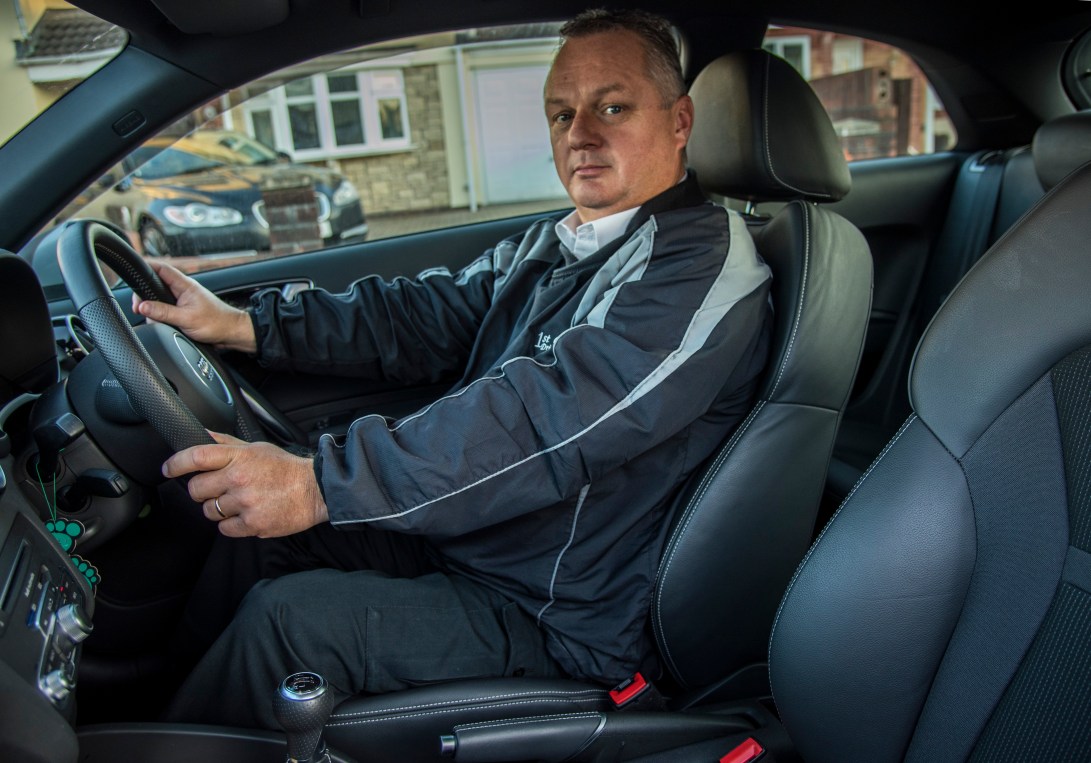
To involve artificial light in this shot, I turned on the lights on the car ceiling and used them as my light source, this may have been more effective at night, but unfortunately that was not possible. Overall I do like this shot, it has the colour tone that I had hoped for before shooting. Also, this goes without saying, but the car interior was the perfect place to take this shot. I used f.4, a shutter speed of 1/100, and an ISO of 500 to achieve this shot.
Environmental Portraiture: The Fisherman (Final Hand In)
My Dad has always had a fairly big interest in fishing, when I was young he’d always take me down to the river by my house and (usually unsuccessfully) try and catch whatever was lurking in the murky waters of the River Ely. I felt that as not much is needed for river fishing apart from a fishing rod, I’d not complicate the shots and just have him holding that.
Natural Light
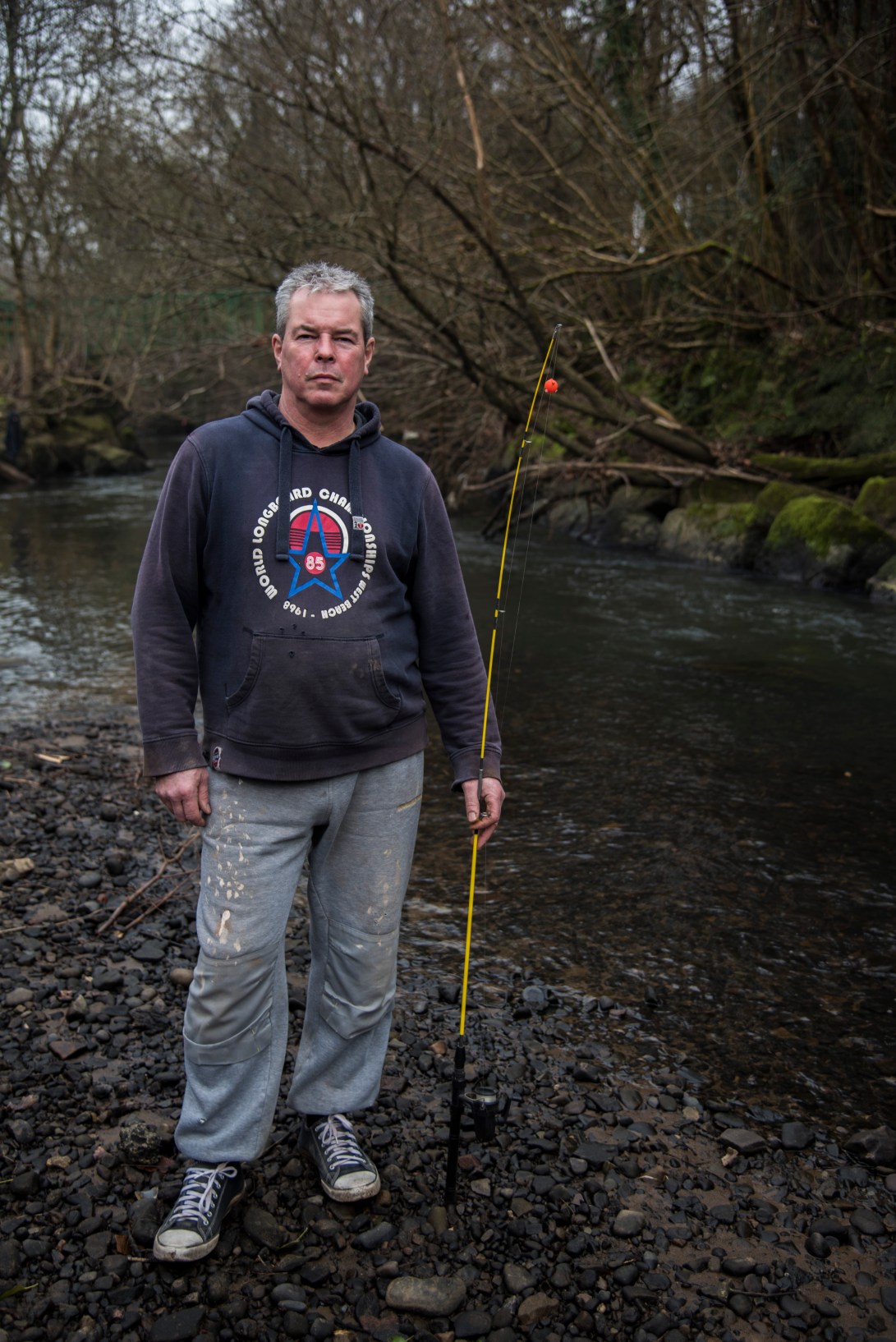
I used the river as a backdrop for this shot as it is where the fishing would be taking place, unfortunately my Dad doesn’t use any special clothing like waterproof trousers to make him look the part more (like those mad men on TV who go wading in up to their waist). I used a shallow depth of field (f.4) to make him stand out more in the image, yet still get a feel for the place it was taken. The day was an overcast one, but I feel I still got some decent soft light across the face. Overall I am very happy with this image.
Artificial Light
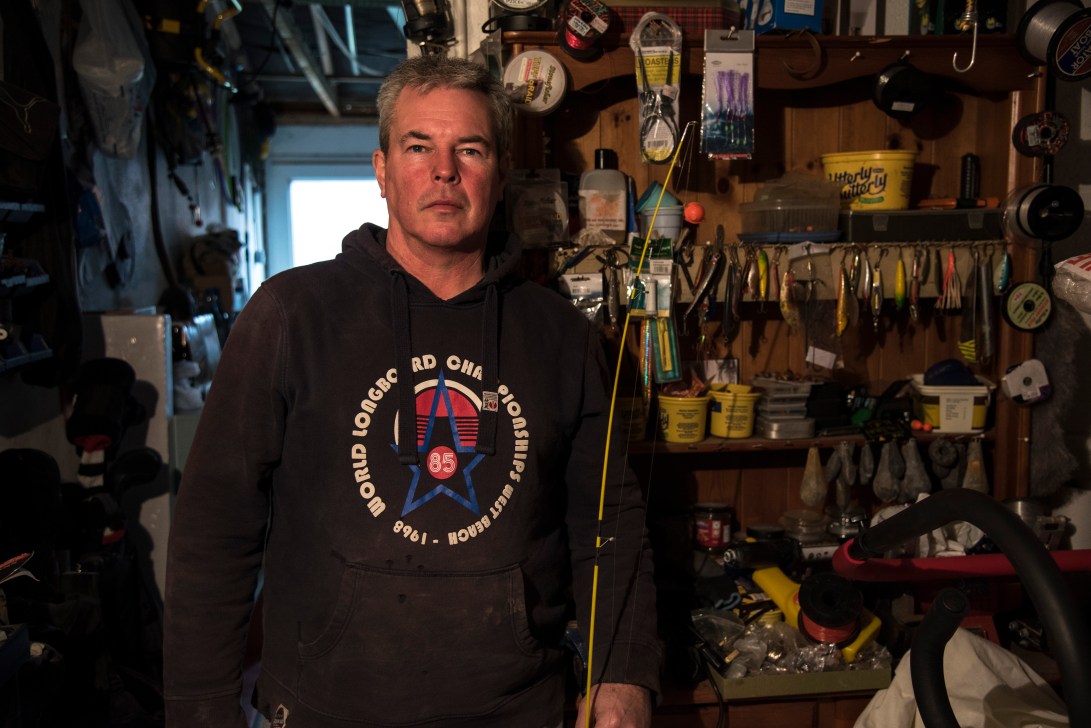
This was taken in our garage in front of all his fishing equipment, I would have gotten a better angle on the shot, but unfortunately there isn’t much room for manoeuvre so this was the best position I could get. I used a spotlight to illuminate the right side of his face (my artificial lighting techniques have been very DIY), and I think it worked well. Again I used f.4 for this shot. I think this is better than my previous two attempts at artificial lighting with these portraits as it has both a backdrop that ties in with the image, and noticeable artificial lighting, whereas the others had one or the other.
 jb photography